Latest articles on Audio Time Travel
LATEST TOPICS


2025.02.20

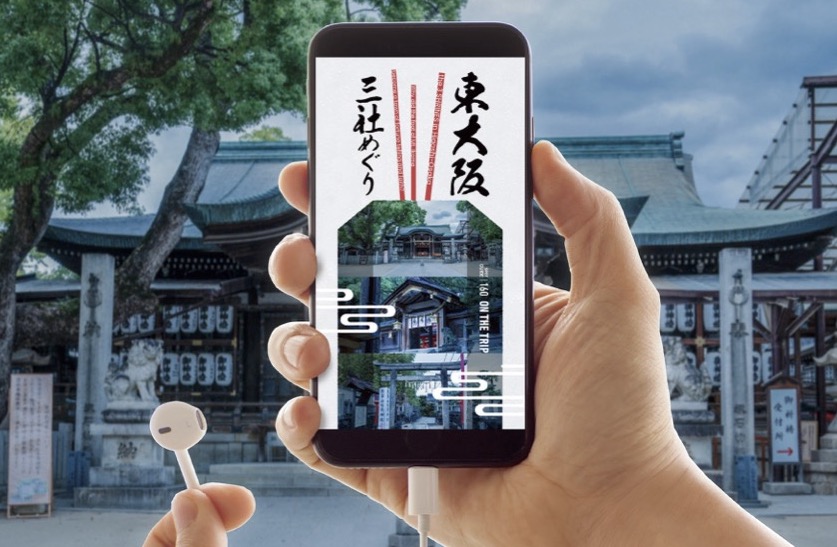
Audio Time Travel is an article that allows you to enjoy your trip to Osaka while listening to a guide. In this article, you can enjoy a portion of the audio guide. You can experience the entire audio on the ON THE TRIP app.
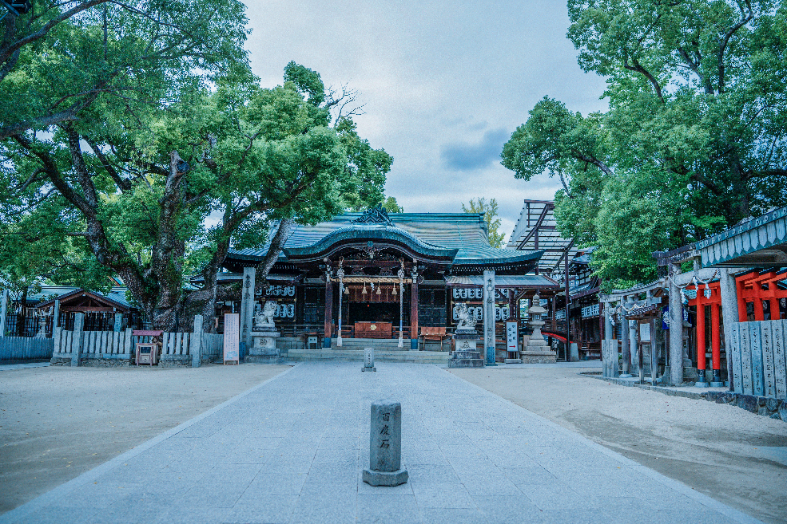
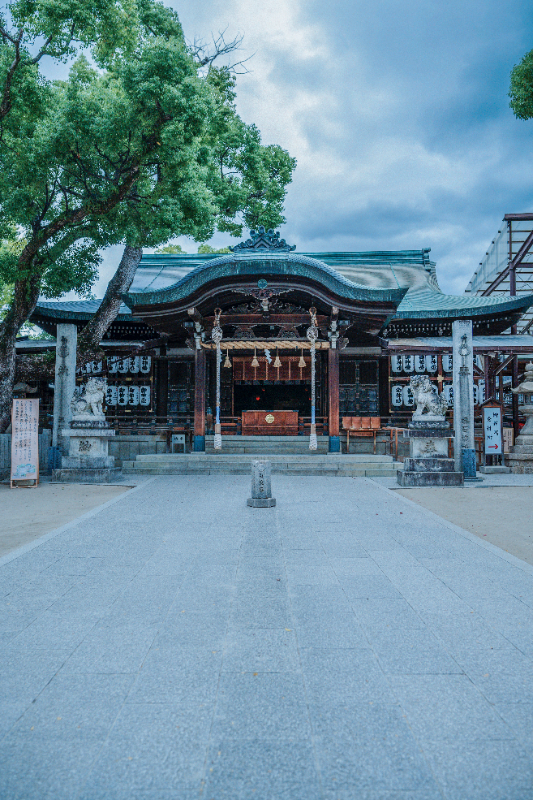
When you arrive at the Ema-den, take a moment to look up at the roof. There, you’ll find a magnificent sword and arrow. The name of the shrine reflects the powerful abilities of the enshrined deity, “Goshin’i,” who is believed to have the ability to cut through and penetrate even the strongest rocks.
A long time ago, during the period of myths in the “Kojiki” and “Nihon Shoki,” the deity Nigihayahi-no-Mikoto received the Ten Divine Treasures from Amaterasu Omikami. When Mikoto came to this land, he married and had a child with the sister of Nagasunehiko, who was the leader of the clan that lived there before. Ishikiri Shrine honors both of these deities.
There’s an interesting story about this shrine. When Emperor Jimmu moved east to bring peace to the land, Mikoto was already in charge there. When Emperor Jimmu arrived, Nagasunehiko fought back strongly. However, when Mikoto and Emperor Jimmu each showed the Ama no Hahaya arrow to each other, which proved they were descendants of heaven, it became clear they both descended from Amaterasu Omikami.
Mikoto advised Nagasunehiko to become his subordinate, leading to the foundation of Yamato Province in this area. Over time, Mikoto’s lineage evolved into the Mononobe clan, which served the emperor.
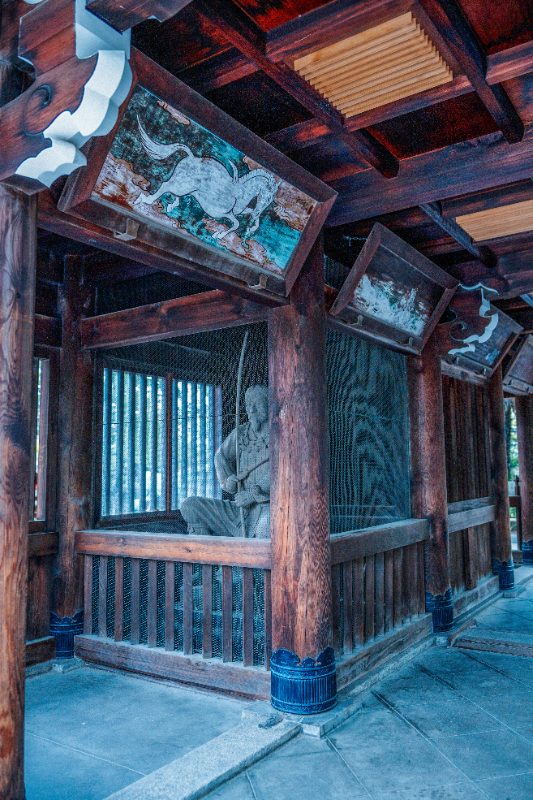
Hozumi Hall is north of the main shrine. "Hozumi" refers to the Hozumi clan, which is linked to the Mononobe clan mentioned earlier. The Kozumi clan comes from the Hozumi family name and has carried on the rituals of the Ishikiri Shrine for many generations.
Ishikiri Shrine, referred to as the “God of Denbo,” is associated with the term “Denpo,” which denotes a secret method preserved by the Kozumi clan. In the Kansai dialect, “denbo” means “swelling” or “growth,” and many visitors come to the shrine seeking healing for cancer.
Hozumi Hall is typically closed to the public. However, there’s a treasure museum on the first floor that opens to the public several times a year. This museum features many sacred treasures owned by Ishikiri Shrine, so be sure to visit when you have the chance.
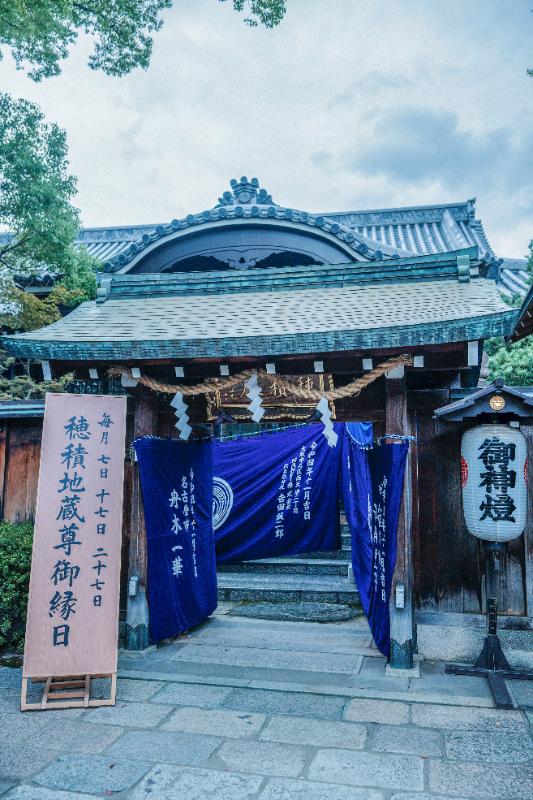
When you stand in front of the shrine grounds you’ll notice people praying by moving back and forth between the two Hyakudo-ishi stones. In Japan, the practice of “Oyakudo Mairi” has been followed since ancient times. It’s said that if you pray to the gods 100 times, your wish will come true. Many visitors participate in Oyakudo Mairi here.
You can obtain a string of prayers called “Oyakudo Himo” at the gift shop on the right side of the shrine grounds or at the Sukei Kaikan. By folding the string of prayers each time you complete a circuit of the shrine, you can keep track of how many times you've gone around.
Ishikiri Shrine is known as the “God of Denbo,” and it’s also revered as the “God of Cancer Prevention,” as it’s believed to help remove tumors. In today’s world, where peace reigns, medical technology has advanced, and life expectancy has increased, we still need to navigate the compromises of living with illness. Ishikiri Shrine has become a refuge for those facing such challenges.
The tops of the Hyakudo-ishi stones show signs of wear and have changed shape over time. This erosion may symbolize the deep desires of people who seek healing from their illnesses.
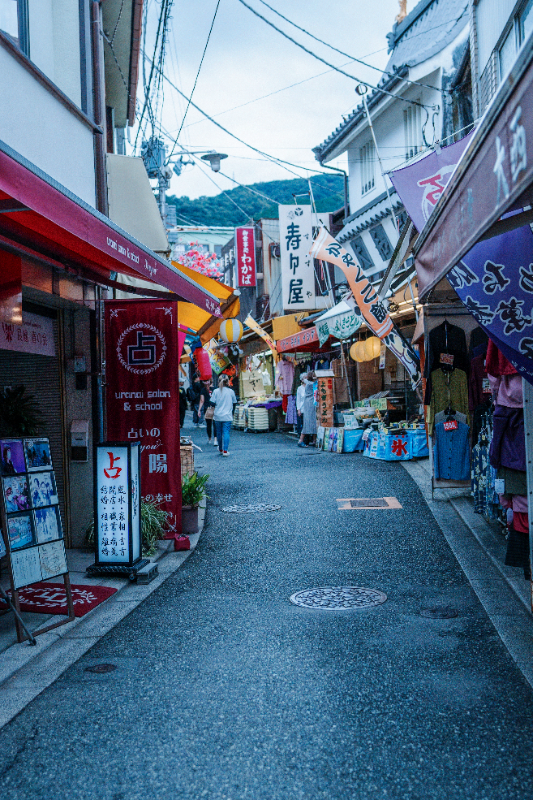
Ishikiri Sando Shopping Street is located on the approach to the shrine that connects the main shrine and Kaminosha, which requires about a 15-minute climb towards Mt. Ikoma. The shopping street features a variety of shops selling sweets and souvenirs, as well as many fortune-telling establishments. But why so many fortune-tellers? Let’s take a look at the history.
Mt. Ikoma served as a training ground for ascetic monks who lived in the mountains and became experts in plants and minerals. The plants that thrived in mineral-rich areas were used for medicinal purposes, leading these monks to barter their harvests with local villagers. In exchange, villagers ground these plants into powder using water wheels and sold them as medicine. Many Japanese and Chinese medicine shops in the Edo Period established themselves along the shrine’s approach for this very reason.
With the advent of the railway and the opening of Ishikiri Station in the Taisho Period, the approach experienced significant development, and tourists from across west-central Japan started to visit. However, as the Showa Period began and electricity became more prevalent, the water wheels gradually disappeared. You can see a restored water wheel at Zushidani Water Wheel Village, located further inland from Kaminosha.
After World War II, Ishikiri became known as a “god who wards off cancer,” and this belief grew stronger within the community. Along the path to the shrine, life counseling centers opened to support those feeling hopeless. Over time, these centers transformed into what we now call “fortune telling.” Our worries and fears have remained constant, prompting us to seek comfort in various ways. This need for comfort has persisted from the past to the present.
This guide was created based on documents and interviews and includes some interpretation done by us at ON THE TRIP. Theories differ between experts, so try to find out what really happened on your travels!
*The information listed is current as of February 2025. Please check the website of each store or facility for the latest opening hours.