Latest articles on Audio Time Travel
LATEST TOPICS





2025.02.20

Time Travel is an article that allows you to enjoy your trip to Osaka while listening to a guide. In this article, you can enjoy a portion of the audio guide. You can experience the entire audio with the ON THE TRIP app.
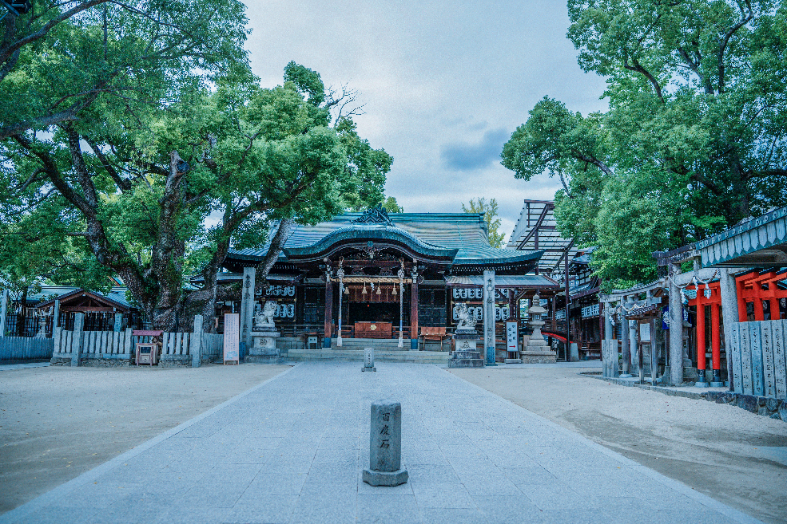
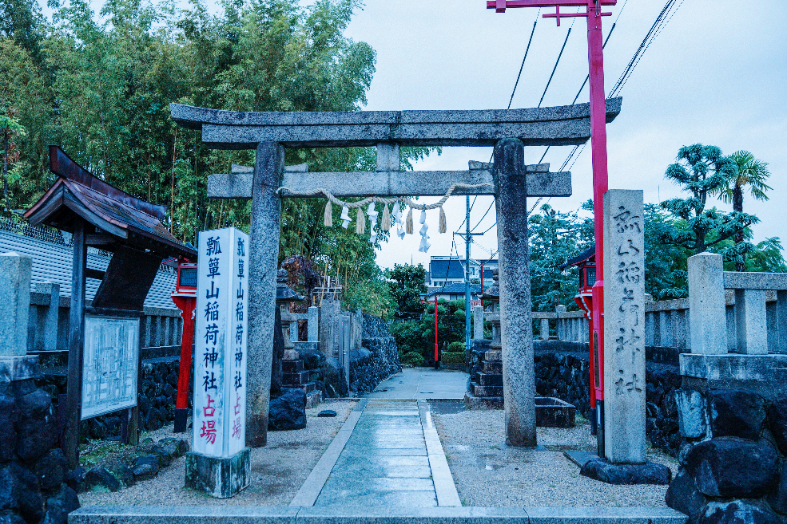
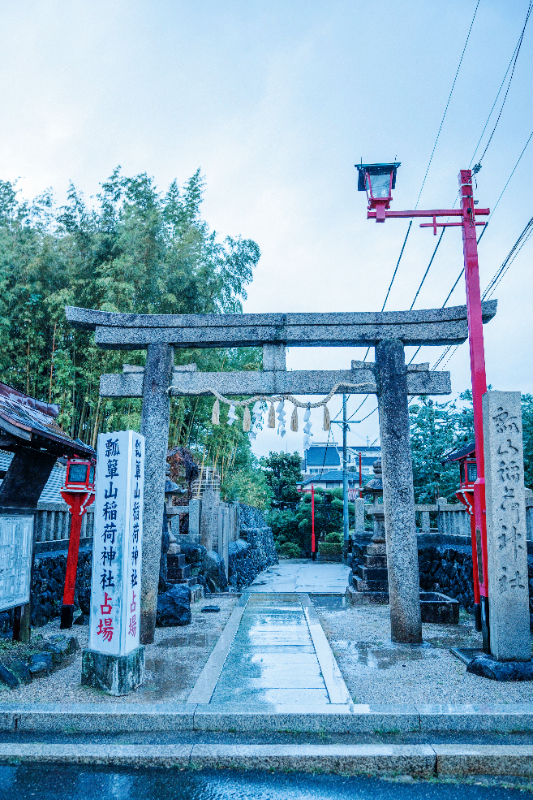
Hyotanyama Inari Shrine is one of the three major Inari shrines in Japan. The main hall is situated atop a double-circular burial mound known as Hyotanyama Kofun.
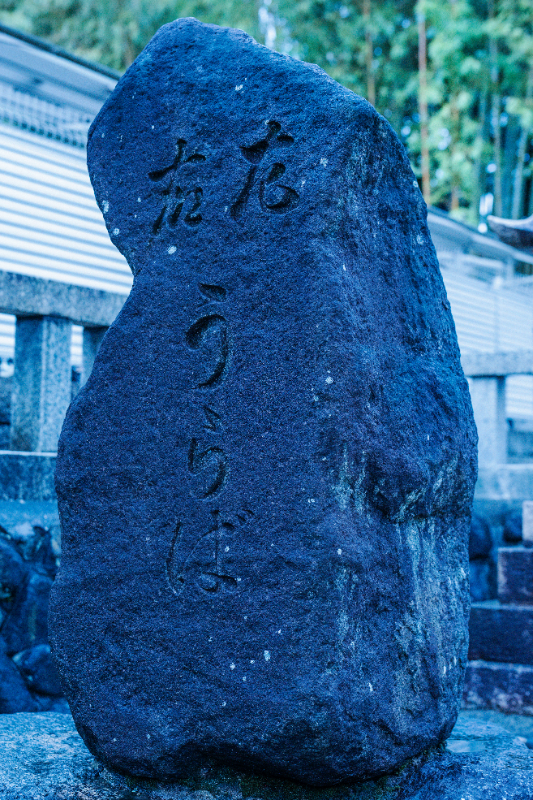
To the left of the main hall is an area called “Otsuka,” while the right side is referred to as “Onizuka.” It’s said that a fox, which is a messenger of the gods, once inhabited the stone chamber at Otsuka.
According to legend, Toyotomi Hideyoshi founded the shrine when he constructed Osaka Castle. He chose this location because the gourd-shaped mountain points in an auspicious direction, and aligned with his battle insignia. Additionally, he enshrined the gourd god “Fukube Inari” along with a golden gourd.
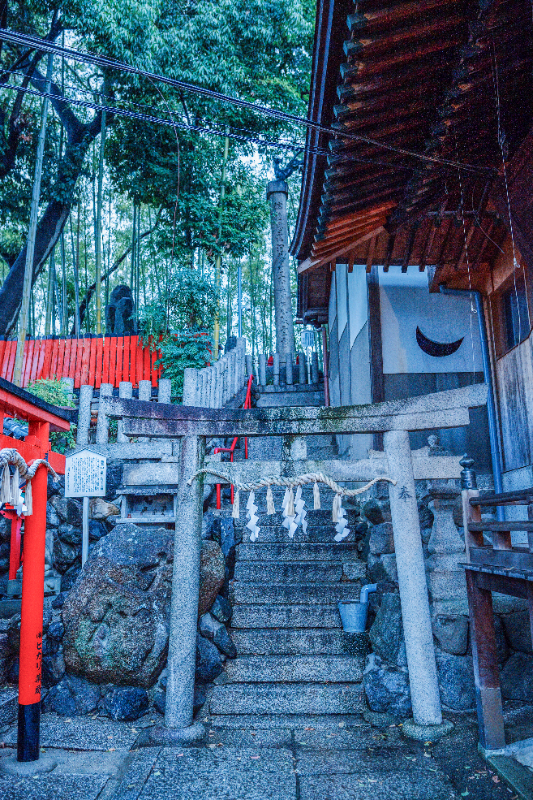
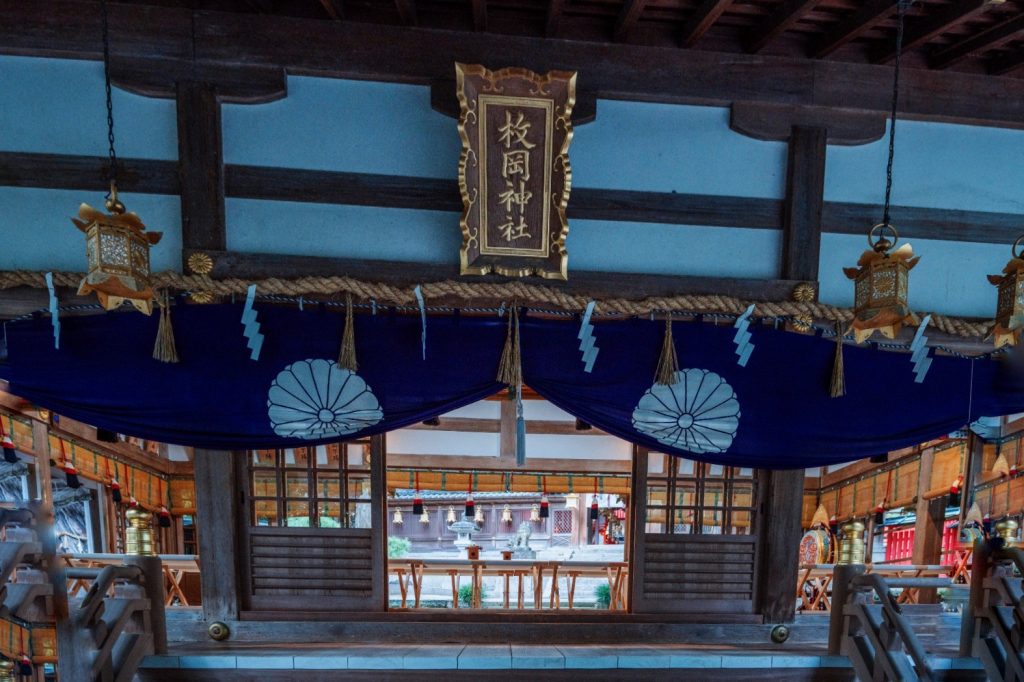
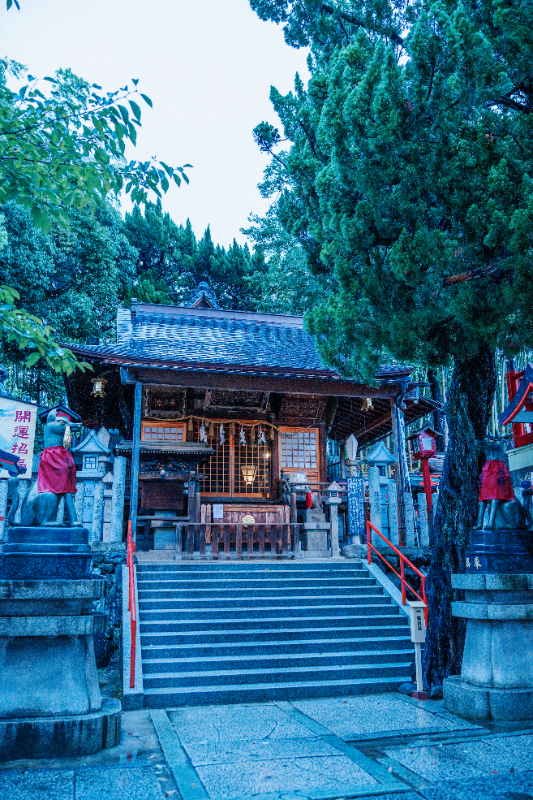
The shrine is built on the slope of Hyotanyama Kofun. Its layout features a worship hall, offering hall, and main hall connected in a straight line, allowing visitors to naturally gaze up toward the worship hall at the back. Although the shrine was originally built during the Edo Period, the worship hall received a copper roof during a major renovation in the Heisei Period, giving it the appearance it has today.
Several deities are also enshrined around the main hall, including gods of art and knowledge. Visitors are encouraged to take a stroll around the area and pay their respects. Of particular note are Otsuka Shrine, which is believed to bring good fortune in safe childbirth and fertility, and Togawa Shrine, recognized for granting luck in victory and wealth. Many people travel from far away to worship here.
The popularity of this Inari Shrine can largely be attributed to fortune telling which was popularized toward the end of the Edo Period.
Hyotanyama Inari Shrine is located next to the Higashi-Koya Highway, which connects Kyoto to Mt. Koya. During the Edo Period, the shrine became a popular stop for travelers on pilgrimage. An old woman known for her fortune-telling skills began to attract many visitors who wanted their fortunes read.
She would observe the clothing and conversations of passersby to predict their fortunes, often saying things like, “If the next person turning the corner is a woman, your love will come true,” or, “If two people sitting in a teahouse are discussing making money, your business will thrive.” Gradually, the number of fortune tellers in the area increased.
The chief priest eventually formalized these fortune-telling methods into “tsujiura,” a practice that continues to this day. Its reputation expanded beyond Osaka and gained wide recognition.
A notable story that brought Hyotanyama’s fortune-telling into the spotlight involves a masterless samurai from Noto at the end of the Edo Period. He visited the shrine to seek guidance on opening a shop after giving up his samurai status. The chief priest advised him to set up his shop in a busy area to the west, suggesting a fish shop in Osaka and recommending that he name it “Maruman.” The shop prospered, and in gratitude, the “ronin” donated a sacred torii gate and a “tamagaki” fence to the Inari shrine. Today, the crest of the shop is still engraved on the torii and fence located within the shrine’s grounds.
This success attracted many merchants from the Senba district to come to Hyotanyama. The chief priest began creating fortune-telling slips for those unable to visit in person, and his slogan, “Fortune Telling at the Crossroads of Love,” gained popularity. Customers traveled from all over Japan, and even Taiwan, to purchase these fortune slips.
By the end of the Meiji Period, the area was filled with teahouses and inns, making it a vibrant town. Frequent visitors included speculators from the Senba district, who arrived in lines of rickshaws. However, not everyone could have their fortunes read by the renowned chief priest.
One merchant from the Senba district hired a rickshaw to go to Hyotanyama and shared his concerns about his nephew with the driver. The driver suggested visiting a fortune-teller to find relief from his troubles, while secretly planning to profit from the information he learned by sharing it with the fortune-teller.
However, as time went on and railways were introduced, everything changed. With trains passing through Hyotanyama, it became a popular day trip destination.
The number of inns and teahouses diminished, and shady fortune-telling became less common.
Today, Hyotanyama Inari Shrine still provides fortune-telling, as it has for generations, with reservations available for readings. The shrine office also offers fortune-telling slips featuring three types: one that you burn to reveal your fortune, one that you heat with fire to reveal hidden letters of your fortune, and one inserted in a mochi cake, reminiscent of fortune cookies. This last item is a well-known product treasured by those in the know.
Why don’t you conclude your visit by having your fortune told?
During the Edo Period, Osaka transformed from an economic hub focused on manufacturing and selling goods into a prominent financial center. Rice traders were busy in the market, buying and selling based on expected price changes because of harvest conditions. Some traders were profitable while others suffered heavy losses.
For merchants in Edo-Period Osaka, gods and Buddhas were reliable sources of support. Expressions of gratitude like “okagesama” acknowledge the deities’ role in their well-being.
Mt. Ikoma, a site of ancient divine presence, served as a spiritual anchor for the people of Osaka, guiding them through the challenges of life, both in the past and present.
This guide was created based on documents and interviews and includes some interpretation done by us at ON THE TRIP. Theories differ between experts, so try to find out what really happened on your travels!
*The information listed is current as of February 2025. Please check the website of each store or facility for the latest opening hours.