Latest articles on Audio Time Travel
LATEST TOPICS


2024.02.13

Audio Time Travel is an article that allows you to enjoy your trip to Osaka while listening to a guide. In this article, you can enjoy a portion of the audio guide. You can experience the entire audio on the ON THE TRIP app.
Sakai was once a port city of such great power that it was even called "Golden Days." But where are the traces of that time? When you get off at Nankai Sakai Station, you may not sense any sign of it. That's because the area around the station was once the sea and was reclaimed land. The coastline and port at that time were located further inland.
On this journey, we will go in search of stories from the golden age of the port city of Sakai. You may discover the unique people who played an active role in Sakai, the intellectual pastime of the tea ceremony, and the hidden stories that lie behind the glorious prosperity.
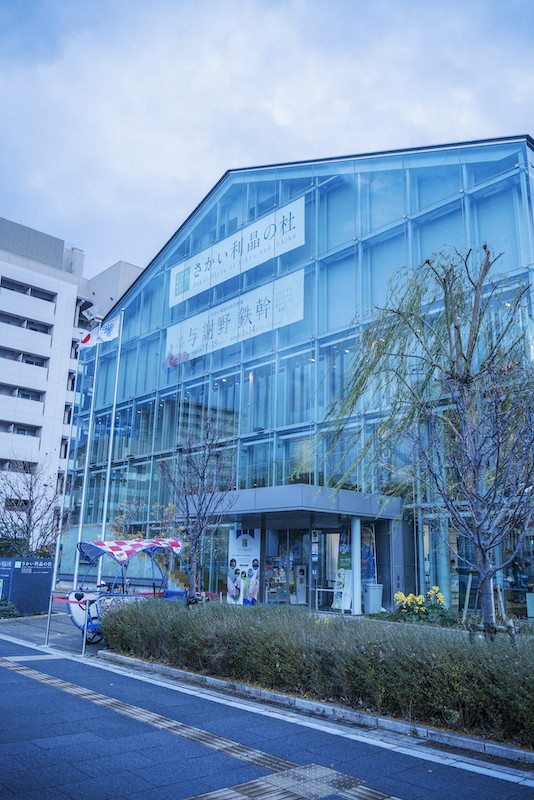
The Sakai Rikyu Forest, a popular tourist spot, is located on the site of the Sakai Shogunate. Here, you can follow in Rikyu's footsteps at the Sen no Rikyu Chanoyukan, which sheds light on the history and culture of Sen no Rikyu and the tea ceremony.
Here is an anecdote about Rikyu. Rikyu had a friend named Nekan who had the same teacher. One day, Rikyu was invited to a tea ceremony and visited Nekan. When he looked at the ground, he saw traces of a pitfall. Moreover, he noticed smoke rising from the bath.
Rikyu realized Nekan's intention, but pretended not to notice and fell into the trap. Nekan himself said, "I've prepared a bath," with a look on his face as if to say, "Who would do something like that?"
Rikyu decided to go along with the principle that tea tastes best after a bath to wash away the sweat.Like a comical game of tricks between a fox and a raccoon dog, the tea ceremony developed by the tea masters of Sakai is a highly intellectual game in which the two sides compete with each other to show their wits.
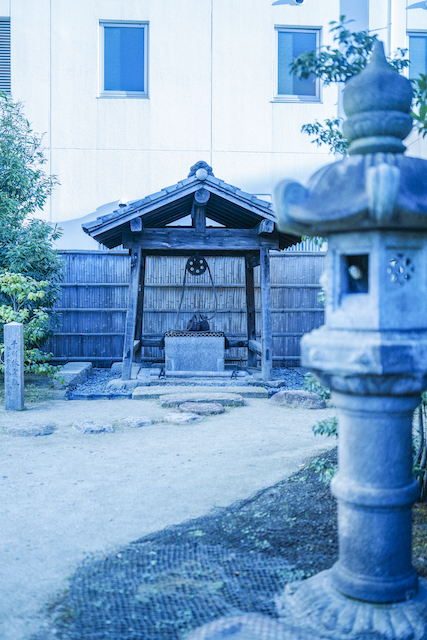
Opposite Sakai Rikyu no Mori is the site of Sen no Rikyu's residence. The well house there is made from wood from the main gate of Daitokuji Temple in Kyoto, which has an inseparable connection to Rikyu.
Toyotomi Hideyoshi, the great ruler of Japan, was taught the tea ceremony by Rikyu. Hideyoshi highly valued Rikyu, and they were said to have been close enough to consult not only about tea but also about politics. However, Sen no Rikyu incurred Hideyoshi's wrath and was ordered to commit seppuku. What on earth happened?
There are various theories as to why this happened, but one of them has to do with the temple gate of Daitokuji Temple. Rikyu funded the renovation of the gate, and as a token of appreciation, the head priest placed a wooden statue of Rikyu atop the gate. Hideyoshi was furious, saying, "Every time I pass through the gate, it's like Rikyu is trampling on me."
He was also accused of "selling out" for attempting to mass-produce tea utensils without permission. Even though it was considered a samurai's honor to own rare and valuable tea utensils, Rikyu had his personal craftsmen create original tea utensils. Rikyu feared that if the top tea master made tea utensils, the expensive tea utensils Hideyoshi had collected would become secondary and lose their value as a reward.
For a number of reasons, Hideyoshi ordered Rikyu, a mere merchant, to commit seppuku. Sen no Rikyu perfected the tea ceremony and had a great influence on the powerful people of the time. I want you to try to imagine for a moment what kind of person Sen no Rikyu was.
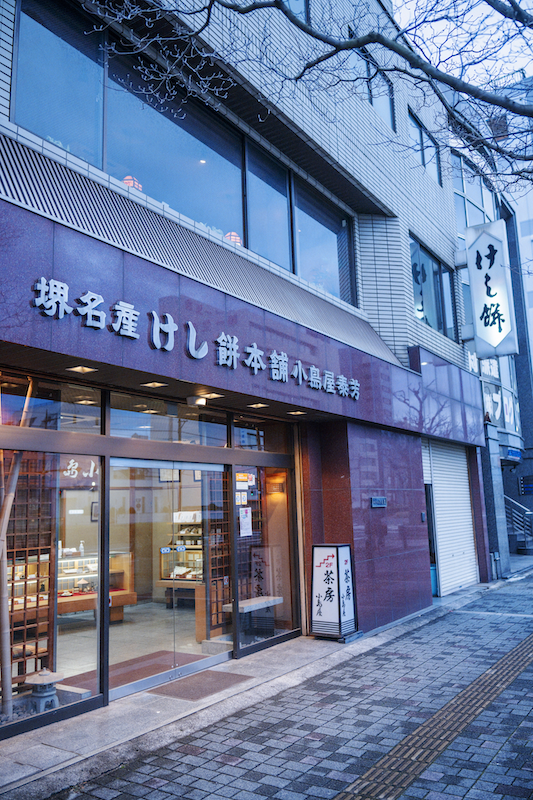
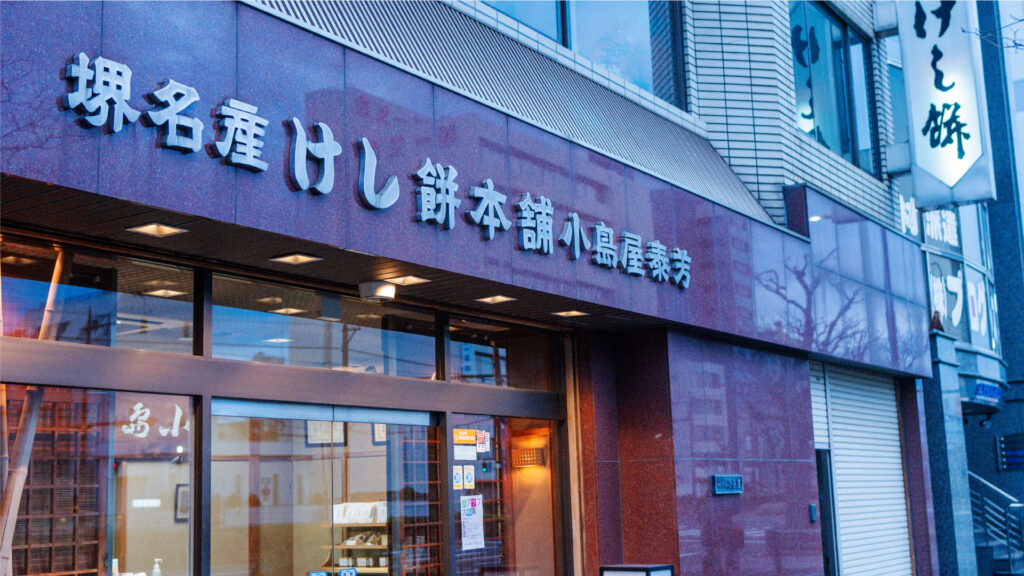
Near Risho no Mori, there is a Japanese confectionery shop that sells poppy mochi. Stop here for a sweet break and enjoy something delicious. Poppy mochi is made from poppy seeds that were brought to Japan through trade with the Portuguese. It is said that Sen no Rikyu was fond of it, and it became widely known as a tea snack.
In fact, mustard seeds contain small amounts of opium, and were imported as a raw material for sedatives such as morphine during the Nanban trade. Of course, poppy mochi does not contain any such dangerous ingredients, so please feel free to try it. The crunchy texture of the mustard seeds, combined with the soft mochi, makes it very delicious.
But why was mustard needed? The answer is deeply connected to the Warring States period. It was used to treat injuries and as a sedative for soldiers who had killed someone and were in a state of agitation. Tea, which actually contains caffeine, was also an essential medicine when sieging castles. It was valued as an alarm clock in preparation for night attacks and as a stimulant to boost morale.
However, once the war-torn era ended, it became a beloved luxury item, a tradition that continues to this day. Gunpowder used in guns was turned into fireworks, and poison gas was turned into pesticides. War can also give birth to new industries. In Sakai, swordsmiths began making knives that support the food supply in Osaka. This is the story that follows the end of the golden days.
This guide was created based on documents and interviews and includes some interpretation done by us at ON THE TRIP. Theories differ between experts, so try to find out what really happened on your travels!
*The information listed is current as of February 2024. Please check the website of each store or facility for the latest opening hours.