Latest articles on Audio Time Travel
LATEST TOPICS




2024.02.13

Audio Time Travel is an article that allows you to enjoy your trip to Osaka while listening to a guide. In this article, you can enjoy a portion of the audio guide. You can experience the entire audio on the ON THE TRIP app.
Sakai was once a port city of such great power that it was even called "Golden Days." But where are the traces of that time? When you get off at Nankai Sakai Station, you may not sense any sign of it. That's because the area around the station was once the sea and was reclaimed land. The coastline and port at that time were located further inland.
On this journey, we will go in search of stories from the golden age of the port city of Sakai. You may discover the unique people who played an active role in Sakai, the intellectual pastime of the tea ceremony, and the hidden stories that lie behind the glorious prosperity.
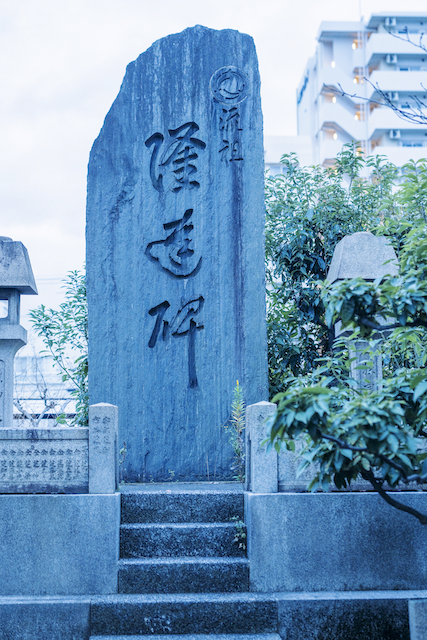
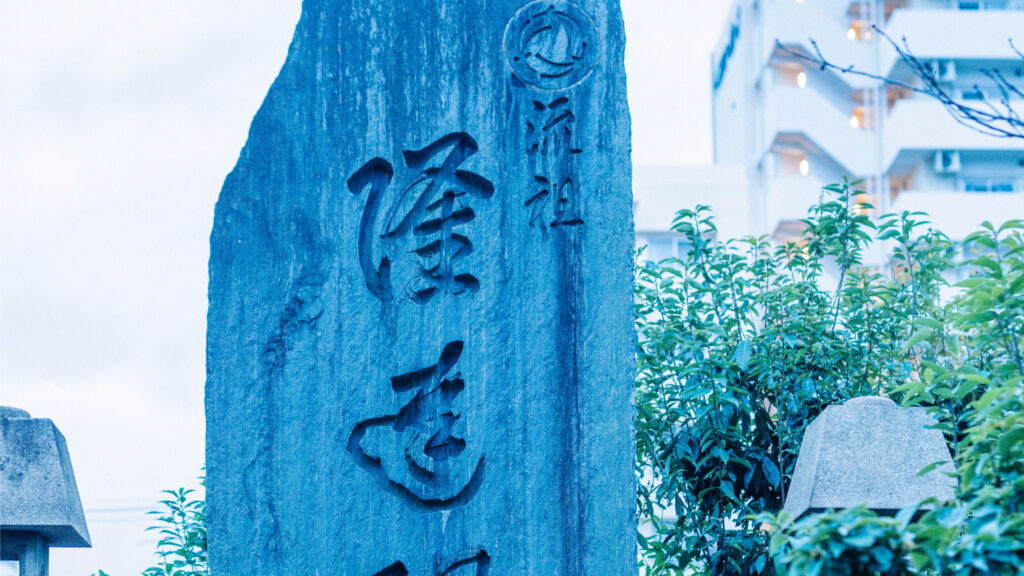
Heading east along the main street in front of Risho no Mori, you will come across a temple called Kenhonji Temple. The remains of Japan's first singer-songwriter, Takamitsu Ryutatsu, are buried here. The shamisen, an arrangement of the snake-skin instrument introduced from the Ryukyu Islands, is an instrument that originated in Sakai. Instead of snake skin, which is difficult to obtain in Sakai, the shamisen was made using dog and cat skin. Although he was a monk, he played the shamisen, wrote his own lyrics, and sang short songs with his own unique melody.
A painting in the possession of Kenhonji Temple depicts Ryutatsu singing as a wandering poet. Ryutatsu had a song list like a jukebox, with an astounding number of songs, numbering over 500. Among them was the well-known Kimigayo. In modern times, it is known as a song filled with wishes for the long and prosperous reign of the Emperor, but in those days it was actually sung as a love song.
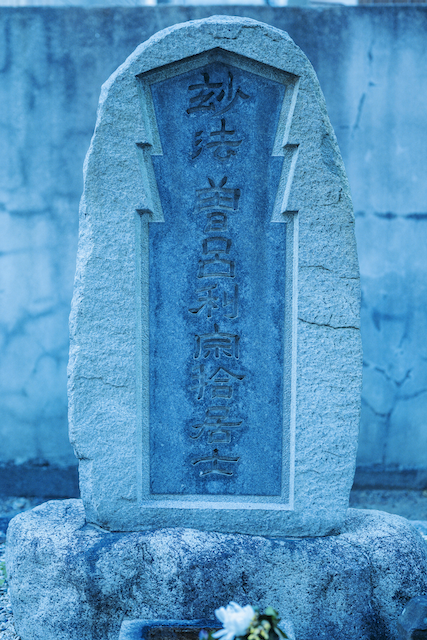
Myohoji Temple is home to the grave of Sorori Shinzaemon, the founder of Rakugo. Sakai during this period was truly full of talented people. His name "Sorori" comes from the fact that he was a sword sheath maker. Sorori was a master at making sheathes that fit the sword perfectly and smoothly without having to measure the length. This also shows that Sakai's manufacturing was based on a division of labor, with experts in each field.
Sorori was a master of comedy. He served Hideyoshi as a caretaker of the Otogishu, or storytellers. According to one theory, Hideyoshi had around 3,000 Otogishu. Sorori was particularly favored for his unique storytelling skills. The Otogishu served as speechwriters for particularly important occasions, such as inspiring allies in battle or in meetings to demonstrate power. For Hideyoshi, who rose from peasant farming to power, storytelling was his greatest weapon.

Leaving Kenhonji Temple, let's return to the main street that was once called Kishu Kaido, where Osaka's only remaining tram line runs, and from here you can head into Osaka city.
When we look back at the traces of the Golden Days, we can see that Toyotomi Hideyoshi and the Sakai merchants, including Sen no Rikyu, were at the center of the story. And when Toyotomi's reign came to an end, Sakai's Golden Days also came to an end.
After Hideyoshi's death, a war broke out between the Tokugawa and Toyotomi clans, who had established a shogunate in Edo. Sakai, which controlled the manufacture and distribution of guns, received orders for guns from both sides. Tokugawa ordered approximately 10,000 guns, while Toyotomi ordered 5,000. Looking at the order numbers, it was clear who would win. So, Tokugawa, who was likely to win, was told that they were willing to pay later, while Toyotomi, who was likely to lose, was told that they had to pay in advance. However, one could not keep quiet. This angered the Toyotomi side, and rather than allow guns to fall into the hands of the Tokugawa, they burned down the city of Sakai. The fire was so intense that it was said to be visible from Osaka.
The Tokugawa family helped rebuild the devastated city of Sakai, but it never regained its former prosperity. Perhaps this prosperity and decline brought about by weapons is a case of karma. Behind the dazzling gold, there is always darkness. Perhaps this is what this work is trying to convey to us today.
This guide was created based on documents and interviews and includes some interpretation done by us at ON THE TRIP. Theories differ between experts, so try to find out what really happened on your travels!
Information presented here is current as of 2024. Please check the websites of the individual shops and facilities for up-to-date information on business hours.