From Umekita Park to the Midosuji Hokomichi, we spoke to a key figure in urban regeneration about how to appreciate Osaka's changing public spaces.
2025.03.31
SHARE
Osaka is currently undergoing urban development that effectively utilizes the city. In this episode of "OSAKA Mania Exploration," which delves into the charms of Osaka with guests who are passionate about what they love, landscape designer Kutsuna Hiroki introduces us to the current state of Osaka's public spaces.
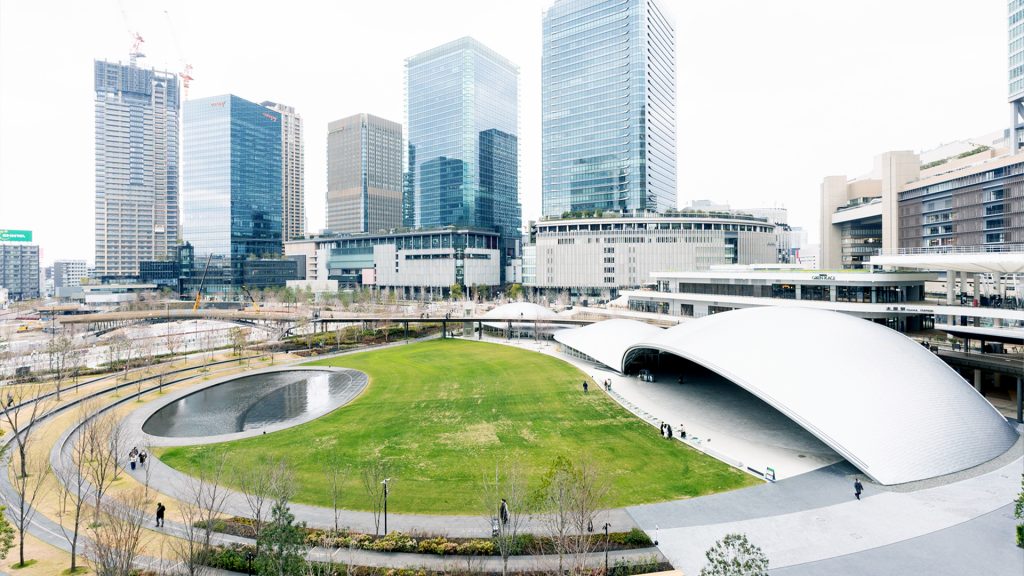
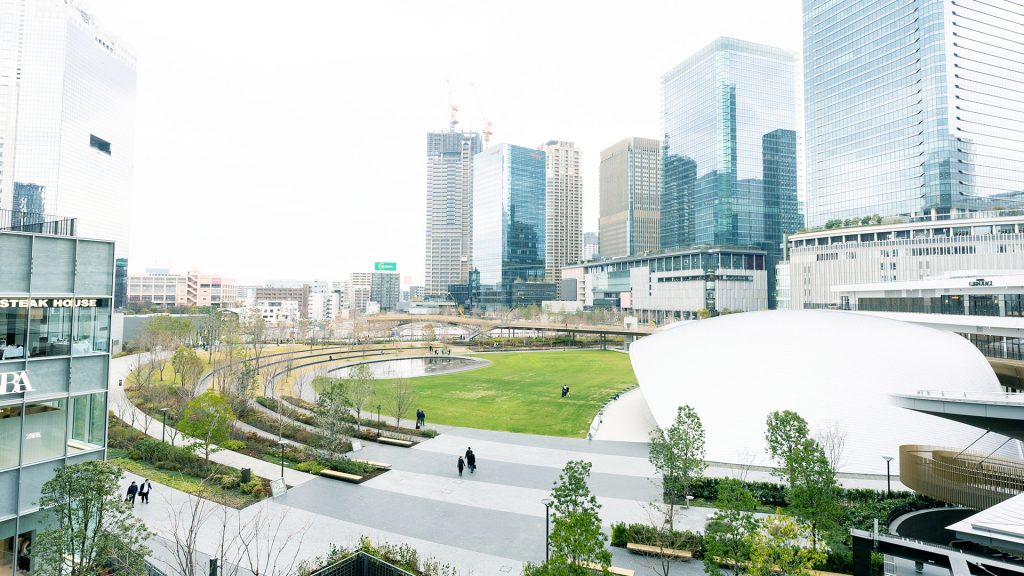
Gran Green Osaka is scheduled to open early in September 2024. This commercial complex, located in a prime location in Umeda, Osaka, is centered around Umekita Park, an urban park filled with 45,000 square meters of greenery, and is attracting attention from across the country for its unprecedented use of public space in the city center.
In addition, public spaces in Osaka, such as Nakanoshima Park, which symbolizes the "Water City," and Namba Square, the new face of Minami, are becoming places where people can "master" new uses. Their value lies in the fact that they are places where people can gather and use as they wish, whether they are to play or eat freely. And what supports their appeal is the various wisdom and ingenuity that go into supporting each "public" space.
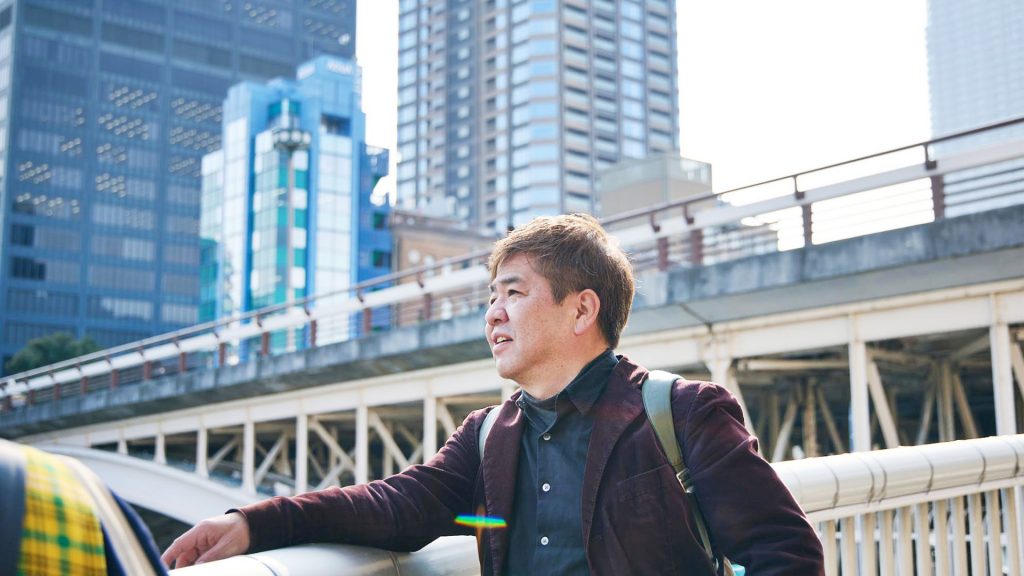
Our guest this time is landscape designer Hiroki Kutsuna, who is also the landscape design director for the Osaka-Kansai Expo. This key figure, who has transformed many public spaces in Osaka, will introduce us to the landscape of Osaka, which is changing like a living thing.
\Today’s Guide/
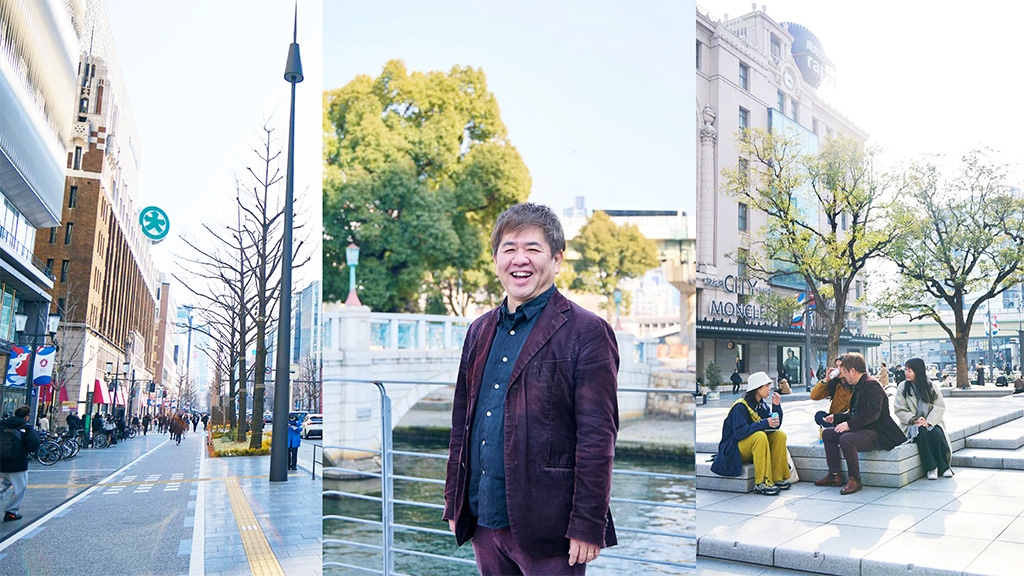
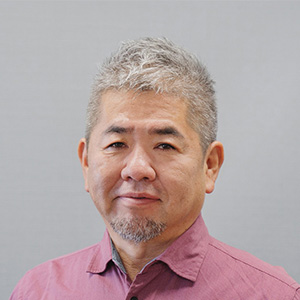
Hiroki Kutsuna
Born in Osaka Prefecture in 1966. Landscape designer and CEO of E-DESIGN Co., Ltd. He aims to create new public spaces and attractive public spaces by mastering the landscape and environmental design of parks, plazas, roads, and rivers, and building sustainable management systems. His major projects include "Aqua Metropolis Osaka Urban Development" (joint winner of the 2016 Ishikawa Award from the City Planning Institute of Japan), "Morineki: Daito City Public-Private Partnership Hojo Urban Development Project" (joint winner of the 2024 Architectural Institute of Japan Award), and "Sea Path Park" (2024 Urban Parks Competition, Ministry of Land, Infrastructure, Transport and Tourism Director-General's Award for Urban Affairs / Land Use Model Grand Prize, Minister of Land, Infrastructure, Transport and Tourism Award).
01. Nakanoshima Park and Nakanoshima GATE South Pier
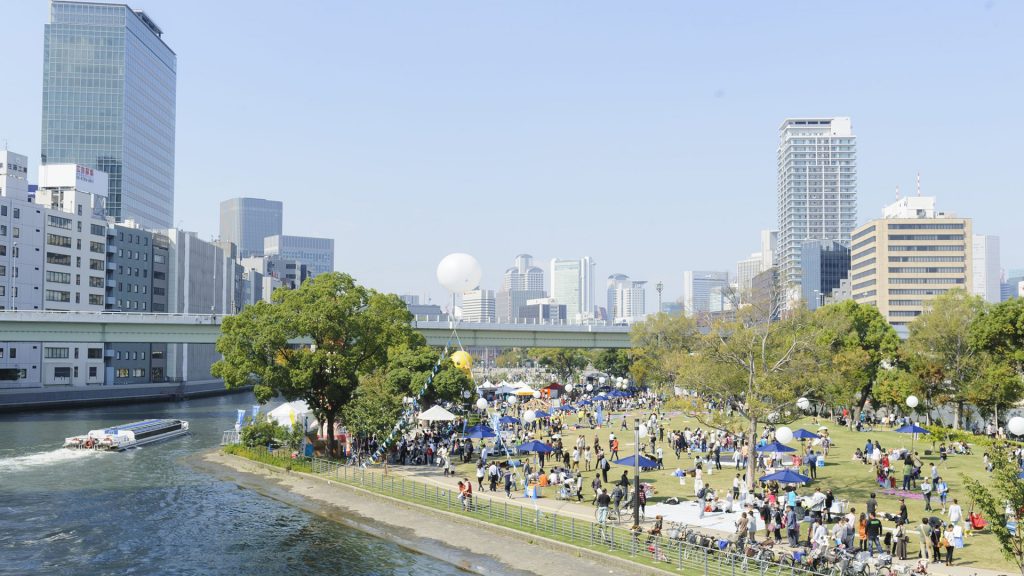
The charm of this "water city" is further enhanced by the reborn "playable" riverside
(Image provided by E-DESIGN)
Nakanoshima Park is a landscape representative of Osaka, the city of water. Sandwiched between the Dojima River to the north and the Tosabori River to the south, the area is home to modern architecture such as the Osaka City Central Public Hall and Nakanoshima Library, as well as The Museum of Oriental Ceramics, Nakanoshima Children's Book Forest, a rose garden, cafes, and more. This area, where time flows more slowly than you might expect from the vibrant city of Osaka, was first developed in 1891, and was the first park in Osaka city.
The park, which was born at a former waterfront trading hub, underwent a turning point in 2001, the year the 21st century began. A public-private urban regeneration project called "Aqua Metropolis Osaka Urban Development" was launched, and efforts were made to revitalize the rivers and waterfront spaces that had long supported the prosperity of Osaka. Kutsuna played a leading role in revitalizing Aqua Metropolis Osaka.
Kutsuna first became involved with Nakanoshima Park in 2007. He was involved in the preparatory stages of the "Aqua Metropolis Osaka 2009" project, which was implemented at Nakanoshima Park before its renovation, and subsequently continued to use Nakanoshima as a stage for social experiments such as markets and events, as well as leading the way in attracting cafe restaurants.
(Image provided by E-DESIGN)
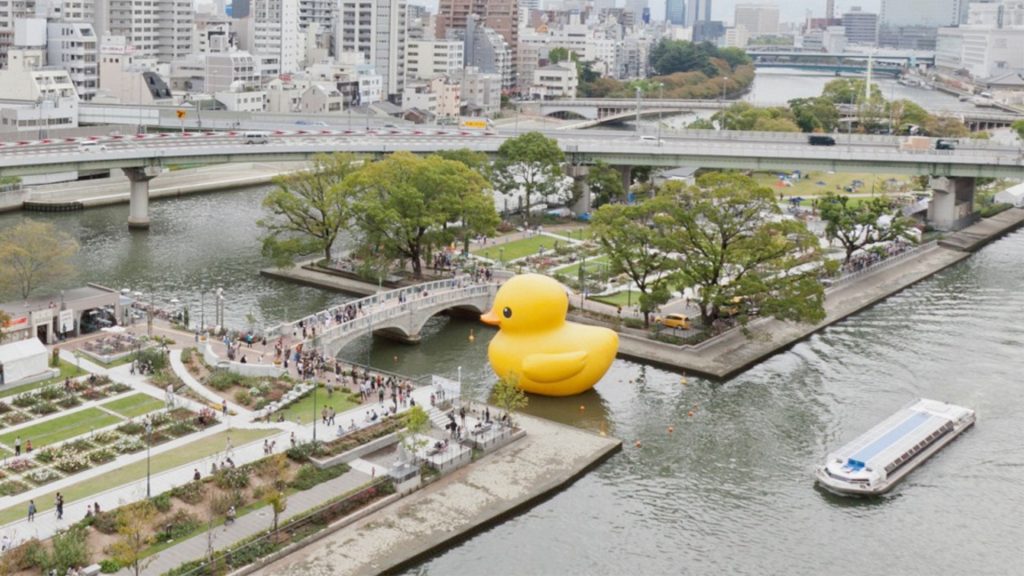
A symbolic example is the floating of a giant rubber duck on the Tosabori River, which was supported by neighboring building owners. Art has the effect of creating excitement. It also serves as a test for how to "use" things in a different way than usual, and is actually a great means of social experimentation.
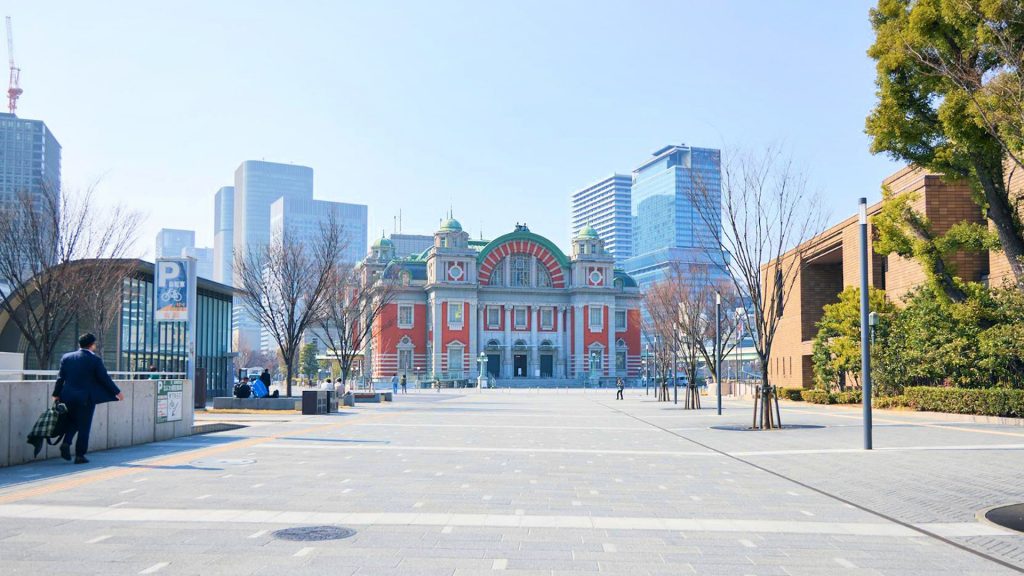
Nakanoshima Street becomes a photo spot with the red brick Central Public Hall
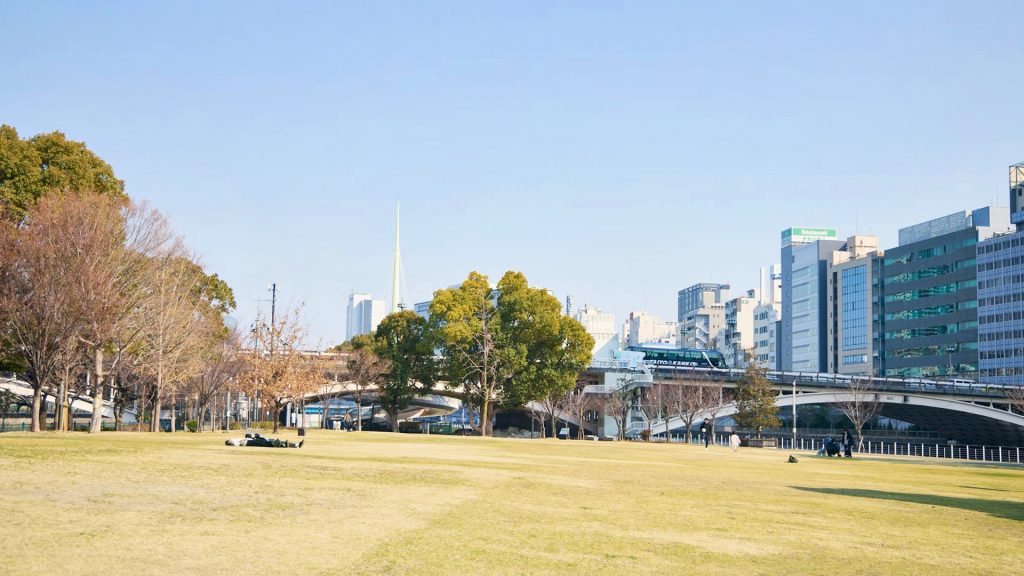
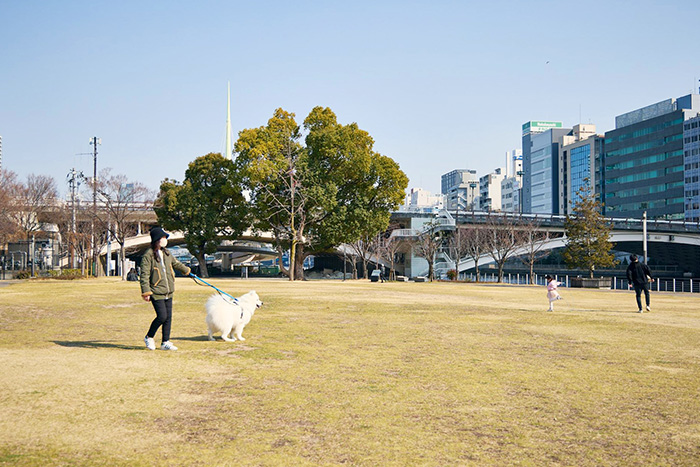
Then, in 2019, Nakanoshima-dori from the Central Public Hall to Nambabashi Bridge was opened to pedestrians. A sidewalk resembling a "plaza" appeared in front of the iconic building, and people became the main focus of the space. Kutsuna had in mind creating a place where people could enjoy themselves. Nakanoshima Park's grass plaza is free to enter and exit. At first, visitors had the preconceived notion that "you shouldn't go on the grass...", but gradually that feeling loosened, and the area became a place where children and dogs could play.
(Image source: G-Lion Co., Ltd. press release)
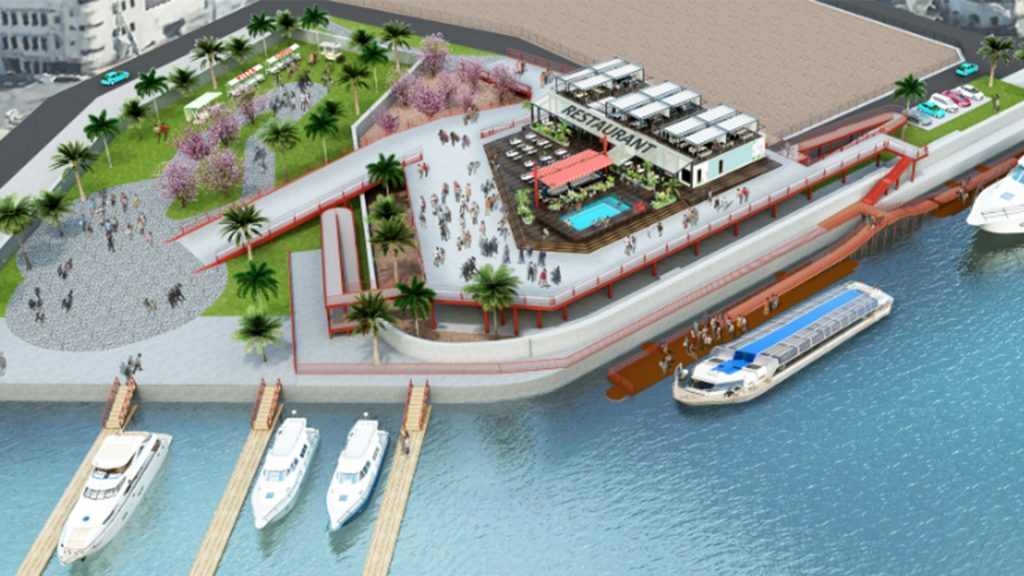
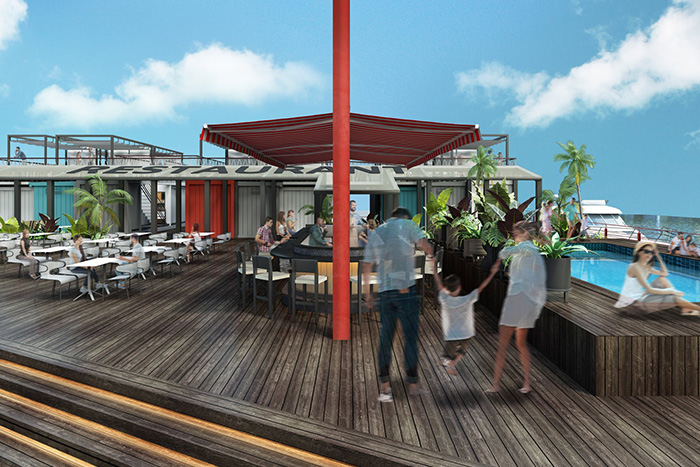
Meanwhile, developments are also underway on the "west side" of Nakanoshima. In April 2025, Nakanoshima GATE South Pier, a waterfront terminal, will open on the banks of the Aji River, where the Dojima River and Tosabori River meet, and boats will begin operating to Yumeshima, the site of the Osaka-Kansai Expo. The experience of taking part in a global festival while experiencing the charm of this aquatic city will surely be a special one.
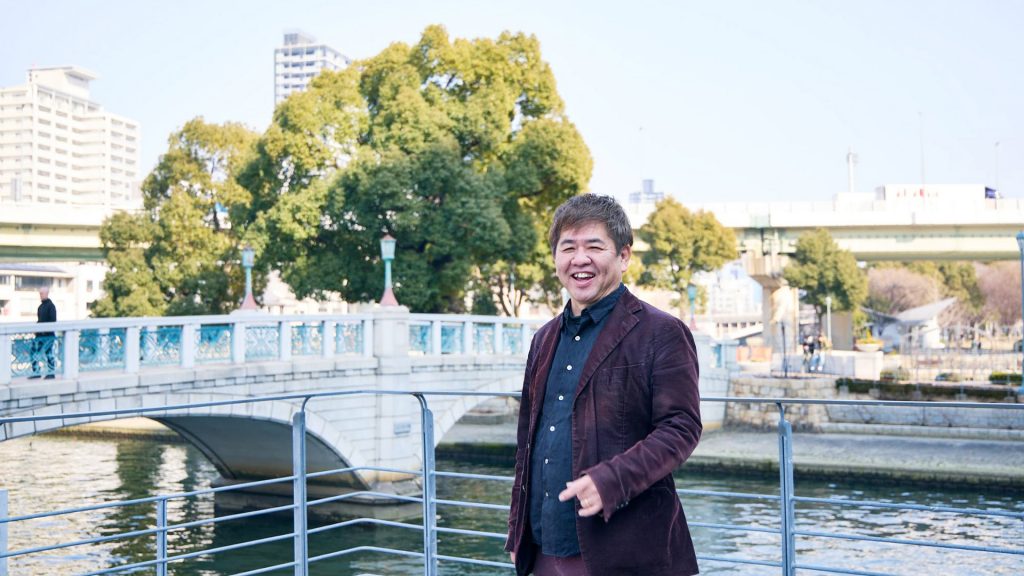
Kutsuna says that cities that can use these technologies well have a "rich ecosystem."
Changing an existing space to its current state is a difficult task. There was some resistance, but that just shows how attached people are to the place. We also saw some happy scenes, with people who initially said, "Why?" stepping forward to mow the grass in the lawn plaza. To use the analogy of food, you create a "container" called the environment, "present it" in the form of an event, and show examples of how to use it, such as "you can make this kind of dish." This leads to free "uses" such as lying down outside or talking about love.
Nakanoshima Park
1-1 Nakanoshima, Kita-ku, Osaka City, Osaka Prefecture
By providing more space for people to walk, mobility in the surrounding area has also improved significantly.
Mayor Seki's legacy will be transformed into a "Central Park that makes you want to walk"
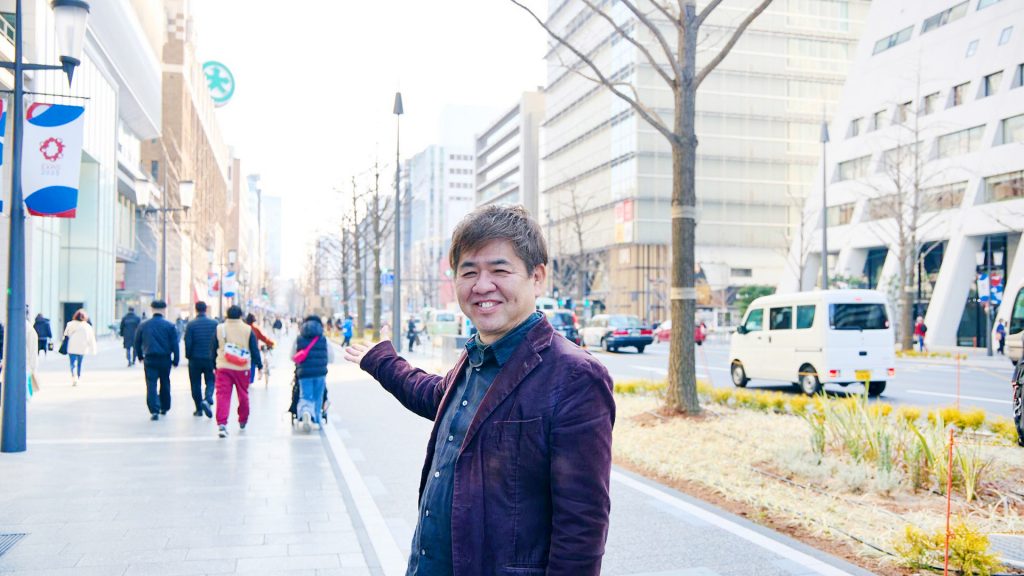
Midosuji runs north to south through the center of Osaka city. For a long time, this commercial city's main street was a narrow street just six meters wide. Seki Hajime, who served as mayor of Osaka from the end of the Taisho period to the early Showa period, undertook the redevelopment of this street. Although he died in office before seeing the completion of the project, in 1937 Midosuji was expanded into a 44-meter wide boulevard. Later, with the arrival of automobile society, the street underwent a major remodeling, with the south side now being one-way.
A social experiment to close side roads on a section of Midosuji and narrow the six-lane road to four lanes began in 2013. Kutsuna is also involved in this major project.
Just before the plan was proposed, Midosuji's sidewalks were becoming overcrowded due to a dramatic increase in tourists. At the same time, car traffic was decreasing. So the idea was proposed: "Why not create a street where pedestrians could set up shop and perform, a sort of Central Park, while ensuring pedestrian safety?"
To begin with, Mayor Seki faced strong opposition from the citizens, who said, "Are you planning to build an airport?" But he still managed to realize a plan that looked to the future. I wanted to inherit that strong will and hand it over to the next generation in a form that is suitable for them. I believe that laws and rules can be changed to suit the times.
In 2020, the Road Act was revised, creating a system to promote the creation of pedestrian-first roads. As of March 2025, plans are underway to turn the sidewalks from Namba Station to Shinbashi intersection, where Midosuji and Nagahori-dori intersect, into pedestrian paths, creating a multi-use road known as a "hokomichi." As a result, food truck events and street performances are now being held in areas that previously only functioned as roads.
A social experiment to utilize Hokomichi (Image provided by E-DESIGN)
The widening of the sidewalks has given the road its function as a park, broadening the ways in which it can be enjoyed. Urban development groups along the road had been working separately in each area, but thanks to Kutsuna's efforts, they came together to discuss the issue, and shared the idea of "changing from a road for cars to a road for people" and "making the road versatile," which made it possible to carry out the redevelopment with a sense of unity.
The new Midosuji is adapting to the times, making it much more enjoyable to walk and stand on. By 2037, the 100th anniversary of its completion, the entire street, including the Kita area, is planned to be completely pedestrianized.
Now, tables and benches have been installed on the Hokomichi, and it has become a place where a variety of people can use it in a variety of ways. I think it's a beautiful sight. As I mentioned earlier with the analogy of food, it's not good for the tableware in the environment to be too assertive. I think a space where people can gather there to play or work freely is beautiful. That's exactly what I want to do: increase the number of situations in the city where people can be as open as possible, like lovers hugging each other.
Located at the gateway to Osaka, this new stage has become a reality, allowing anyone to become a performer.
(Image provided by Namba Plaza Office)
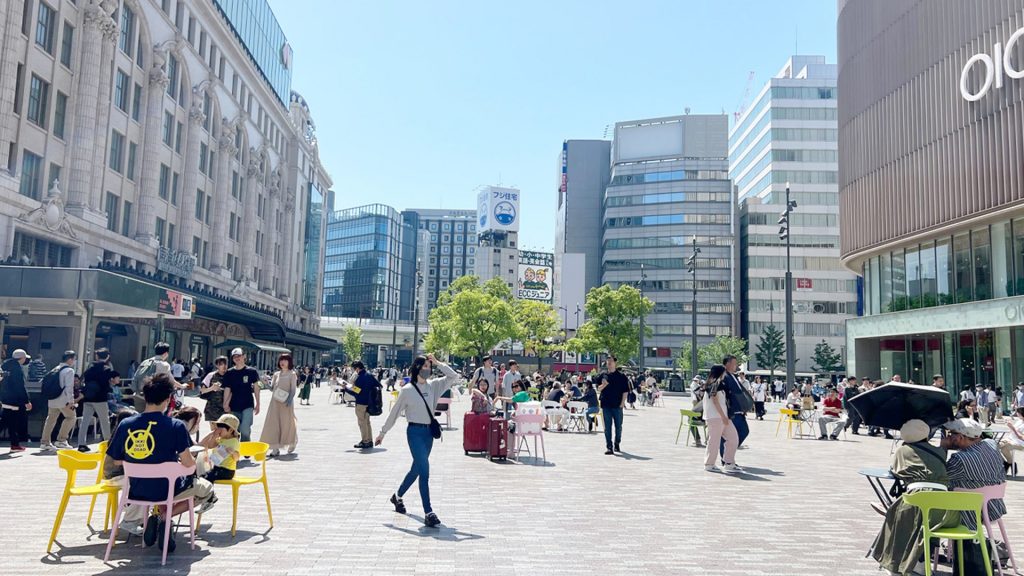
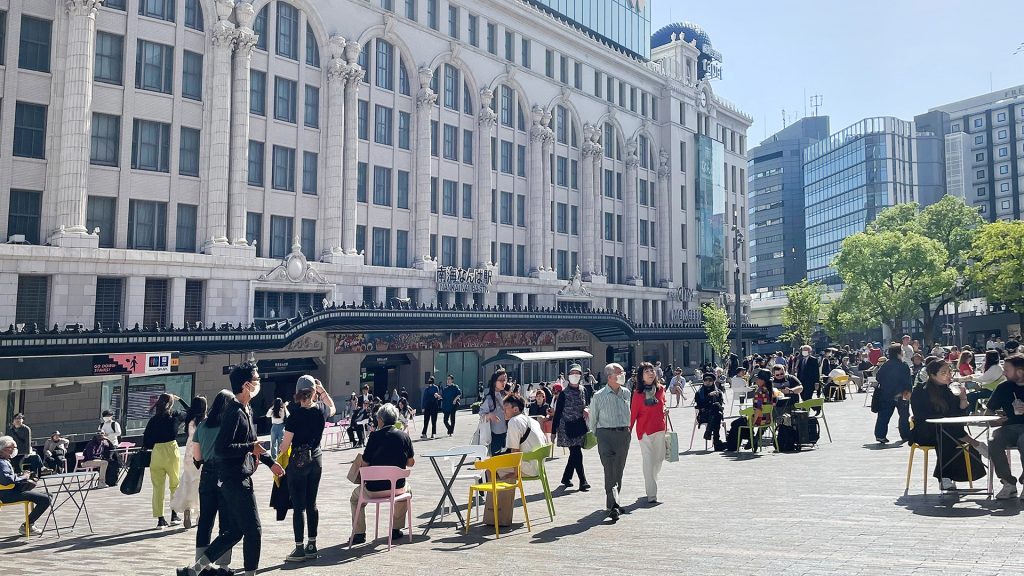
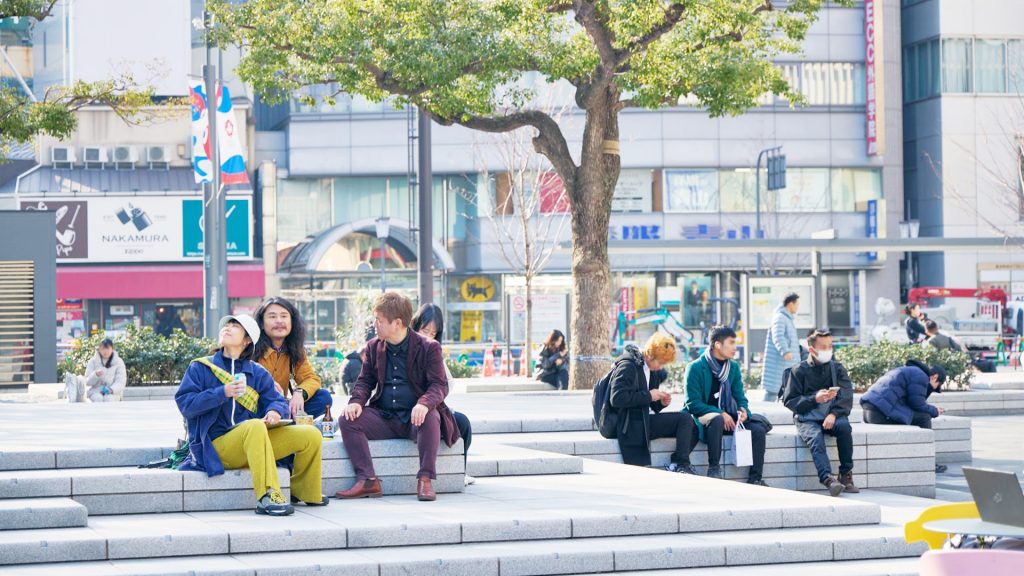
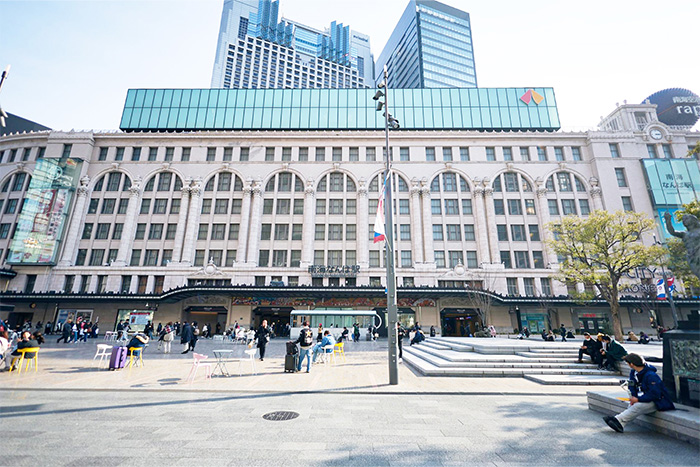
Namba Square was created in 2023 as a public plaza by reorganizing the taxi pool and roadway in front of Namba Station. It features tables and benches that users can move freely, terrace benches that can be used to position themselves using different steps and angles, and planted areas, creating an urban landscape perfect for meeting up or taking a break.
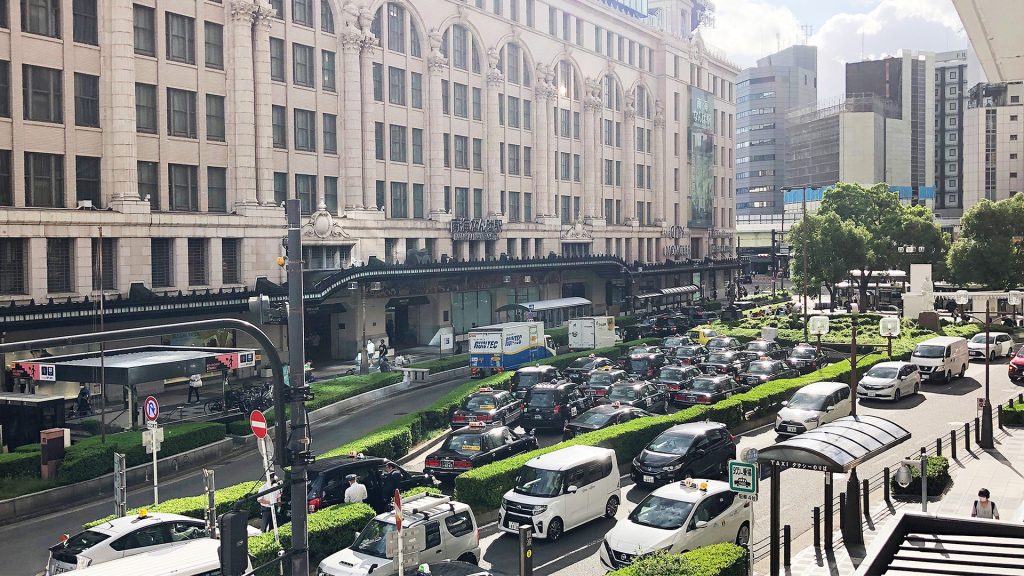
The area in front of Namba Station when taxi pools and roadways hindered mobility (Image provided by Namba Plaza Office)The area in front of the station, which was once overflowing with cars, has been transformed into a space where people can walk leisurely (Image provided by Namba Plaza Office)
This redevelopment project was conceived by businesses from the surrounding shopping district and associations, and was completed after collaboration with the railway company and numerous discussions with the police.
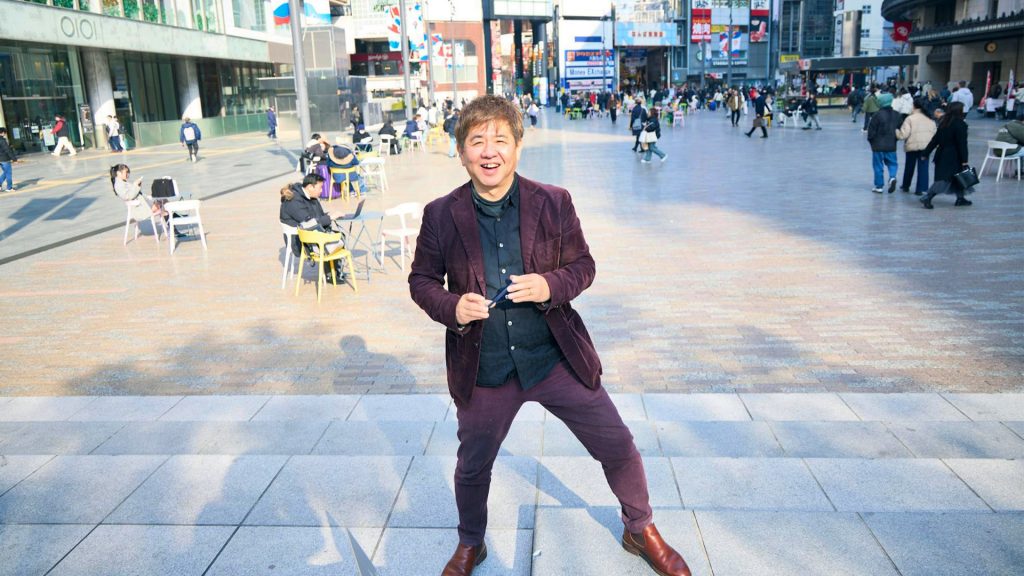
Behind Kutsuna, there is a man working on the former roadway.
Namba is the first place that many people who arrive in central Osaka from Kansai International Airport land. You could say that the view from here determines the first impression of the area. However, in the past, it was hard to see how people lived in the area, with only buses and taxis available. That's why we tried to create an atmosphere that would be exciting to walk through. We worked hard to make it a place where actors and actresses from a variety of backgrounds could exist, rather than one where cars were the main focus.
Each person can spend time in a comfortable place.
Kutsuna describes the huge stepped terrace bench as a "stage." People who happen to be there can sit wherever they like, work, eat, and various other "scenes" unfold. It took 15 years of planning, and the meticulous design concepts and mechanisms, with the blueprints revised countless times, have resulted in the creation of a new stage in front of Namba Station.
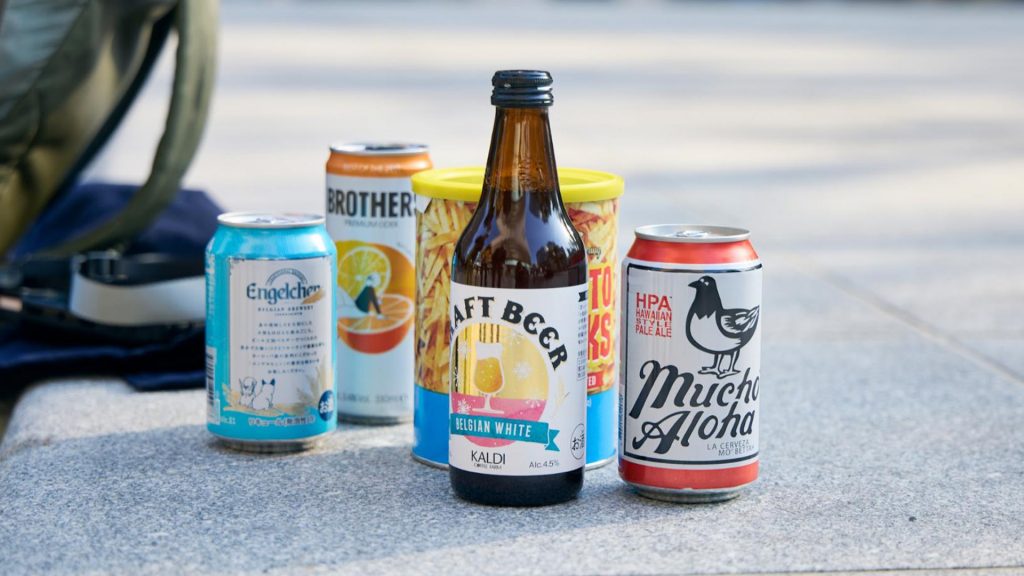
The freedom to toast on the street
People become part of the scenery. Everyone's activities look beautiful. It's fine to drink alcohol or dance on the spot. There are so many different ways to "perform." It was the hardest job of my life, in the sense that I had to involve so many people and groups, as the council alone has 27 organizations, but I'm really glad I created it. Ah, beer is so good.
Of course, you can also toast with beer!
The concept of Namba Square is "Relax, Encounter, and Creation: A Real Media from Osaka." This unprecedented "media" where anyone can become a performer, whether for play or work, will play an important role in adding color to the everyday life of those passing by, as well as the extraordinary life of a wide variety of events.
A park where anything is possible, created through co-creation and experimentation with local residents
(Image provided by E-DESIGN)
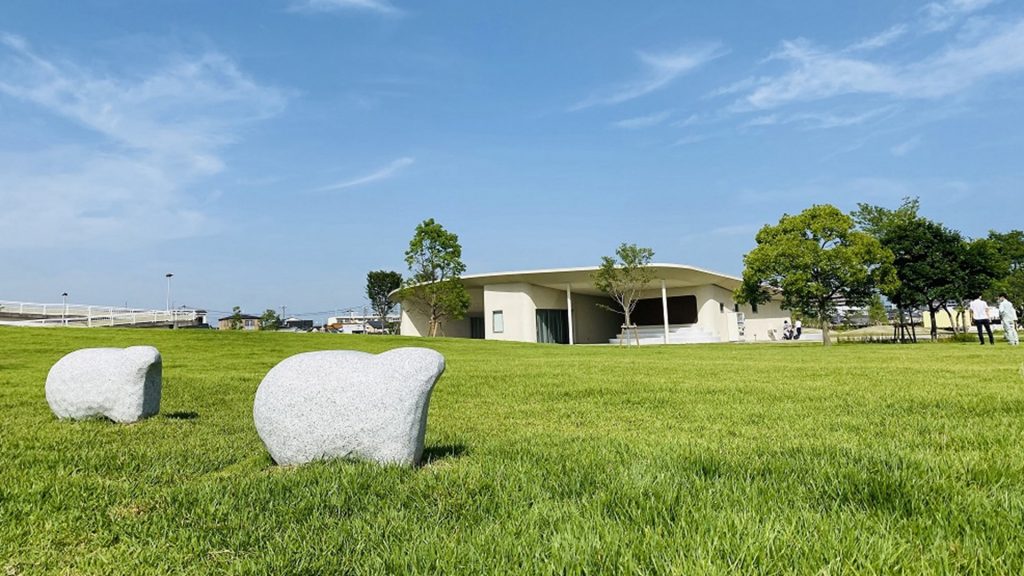
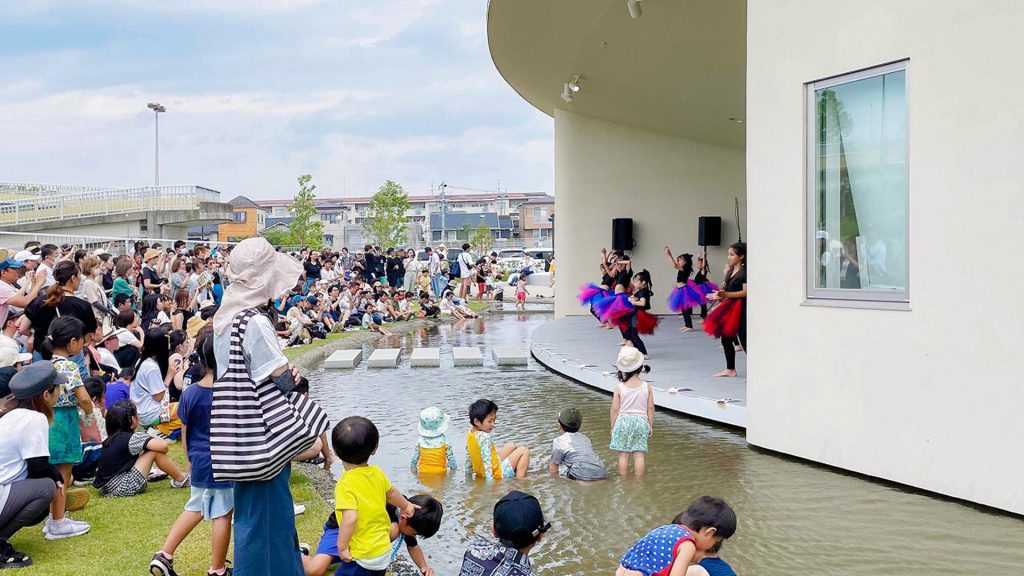
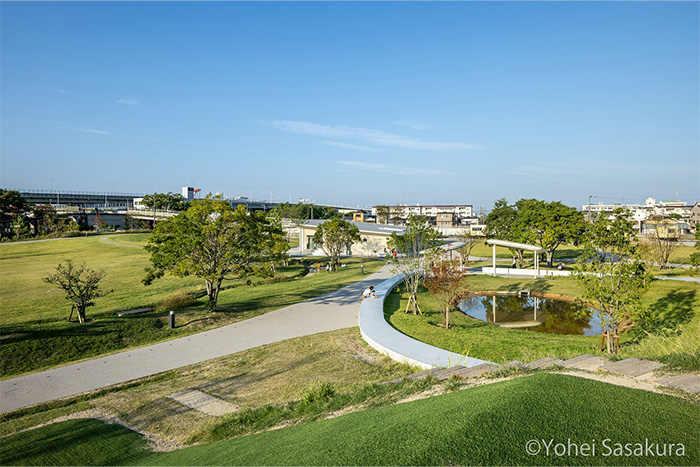
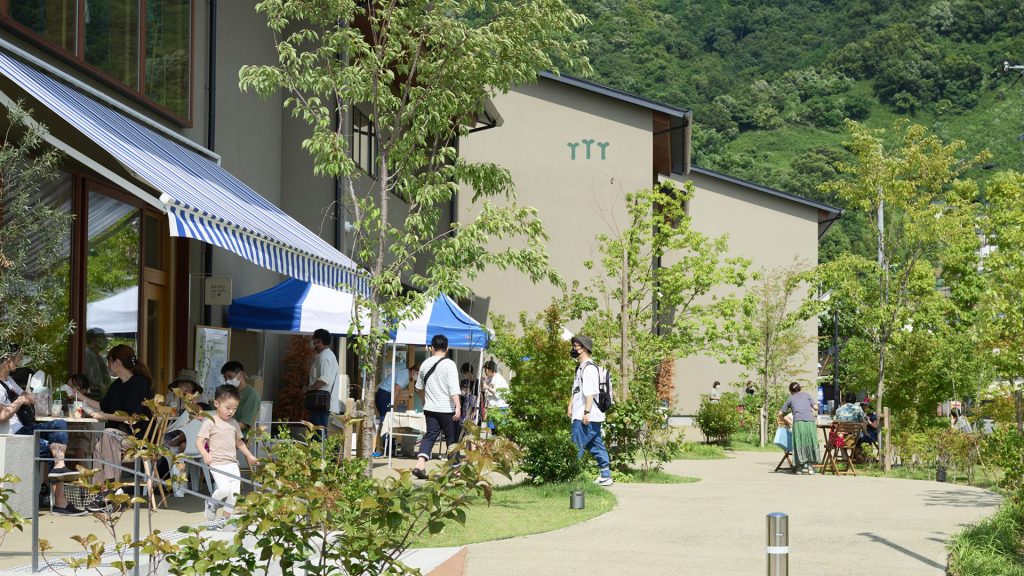
Our final stop is SHEEPATH PARK, which opened in 2023 in Izumiotsu, about 30 minutes by train from central Osaka. This 3.5-hectare recreational space was created on the site of a former civic hall, and is unique in that it is run jointly by the local government and local residents. E-DESIGN, led by Kutsuna, is responsible for the park's design and operation as the designated manager. The plaza is home to trendy shops and restaurants. With the support of amendments to the Urban Parks Act, local residents have become the protagonists of the park's creation.
(Image provided by E-DESIGN)
SHEEPATH PARK is a park and privately-owned land managed together. It is an innovative model that brings in independent private businesses and "manages" the park through public-private partnerships and citizen co-creation. When E-DESIGN was in charge of the landscape, we set the goal of "creating a park where nothing is impossible."
(Image provided by E-DESIGN)
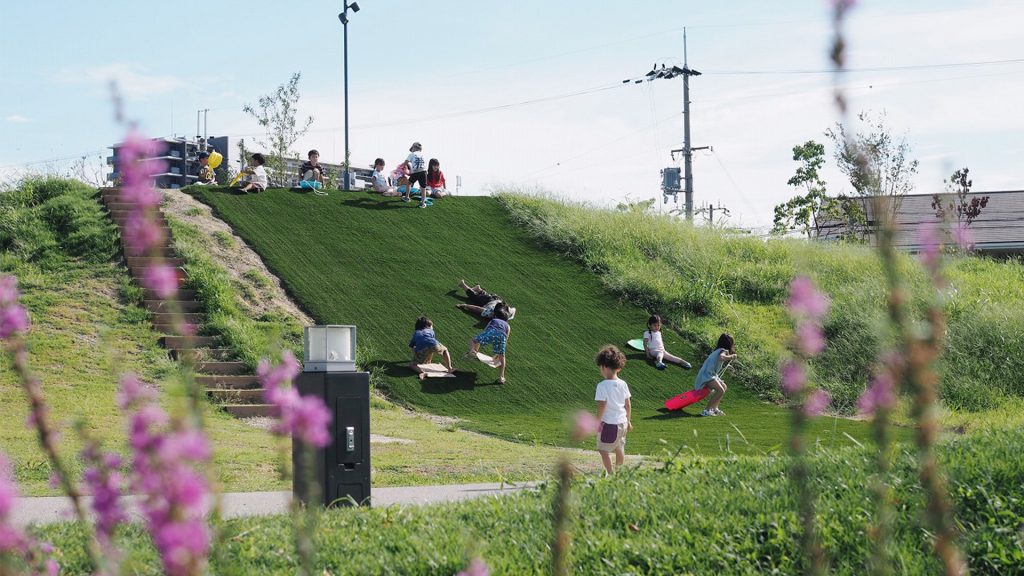
As the name suggests, the park is packed with areas such as a grassy plaza with varying elevations, a "mud ring" where you can play in the mud, and a "splash ring" where you can splash around in the water. "Seapath Mountain" can be used for both sliding down the grass and enjoying a panoramic view of the park, and there is no right or wrong way to use it. Another unique feature is that there are no conspicuous play equipment, and instead outdoor play equipment such as sleds and rubber balls are available for rent, and there are shower rooms and changing rooms. Another unique feature of SHEEPATH PARK is that there are few prohibitions that are common in many parks, allowing visitors to spend their time freely in their own way.
(Image provided by E-DESIGN)
In Kutsuna's words, SHEEPATH PARK is "a park that is full of experiments." The accumulation of these experiments will surely paint a picture of the free-spirited future of the fledgling park.
In addition to collaboration with the private sector, I think there are too many parks that arbitrarily decide what "things you can't do." If the park is one that leaves a lot of freedom to the children, adults can also use the cafe or other facilities for a nice change of pace. We even intentionally let the weeds in the park grow freely. It's a great experience to observe the small insects that gather there.
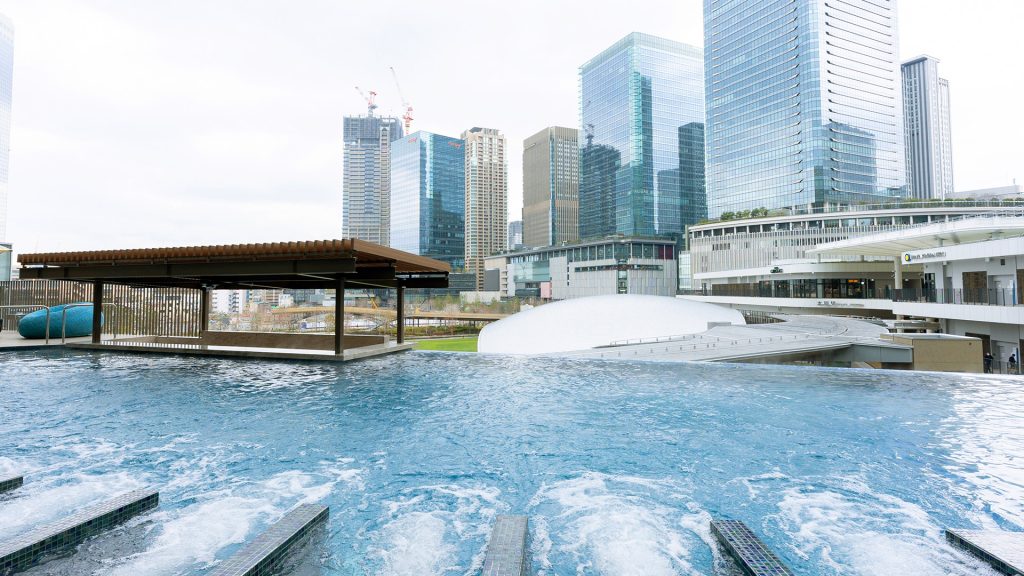
As Kutsuna says, "future urban development cannot be discussed without greenery," and the appearance of the symbolic "vegetation container" that is Umekita Park has once again put the spotlight on Osaka's public spaces. On March 21st, "Gran Green Osaka South Building" and "Umekita Green Place" opened, along with an urban MICE facility that is part of the core functional facility "JAM BASE."
The view from Umekita Onsen Ren Wellbeing Park, which opened in the Grand Green Osaka South Building
If the "shape" and "system" of such a place are carefully designed, and visitors add their own "movements" to it as they play and enjoy themselves, the freedom of the space will be greatly expanded.
E-DESIGN is also currently working on the Morineki project, which combines housing and commerce, in the commuter town of Daito City. (Image provided by E-DESIGN/Photographer: Go Asano)
The main characters of each of the spots featured this time are the people who gather there. Why not try using public spaces in a way that suits you, as they become more and more free to do so?
A person involved in this article
Text
Deccao Sekine
Photo
Mei Hirano
Edit
Aya Shimada
Direction
NINGEN Editorial Department(NINGEN Inc.)
Latest articles from OSAKA Mania Exploration
LATEST TOPICS
The roots of popular chain stores lie in Osaka. Mister Donut, Kura Sushi, KAMUKURA, etc. ... Maniacs of the original stores make a pilgrimage to the holy land
Cyberpunk meets Showa retro! A tour of Nipponbashi 's cool Japan photo spots, including game centers and neo-cafés
Kawachi area
Wine enthusiasts tour Habikino Winery! Taste the cuisine of the "meat town" and enjoy the terroir




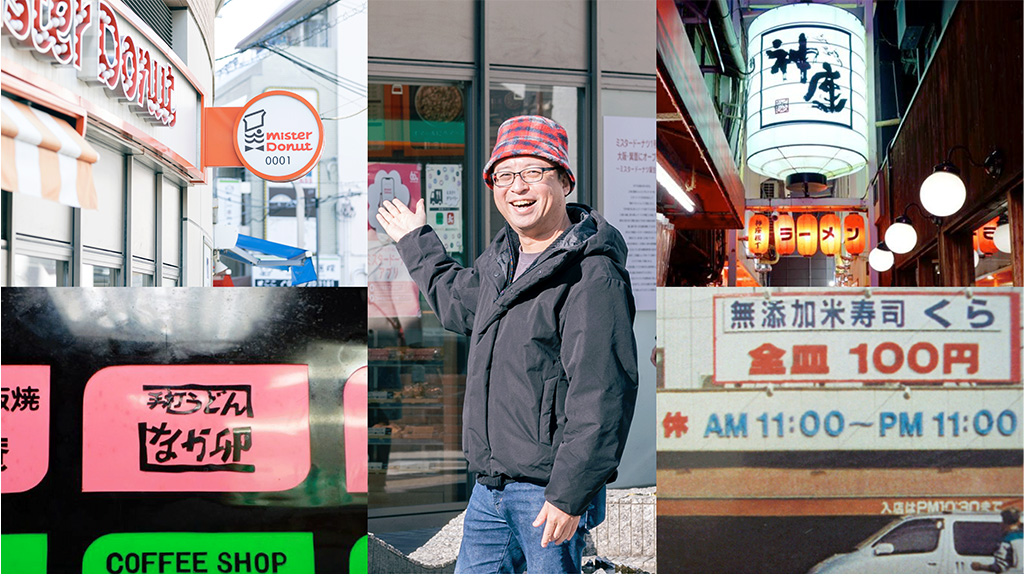 The roots of popular chain stores lie in Osaka. Mister Donut, Kura Sushi, KAMUKURA, etc. ... Maniacs of the original stores make a pilgrimage to the holy land
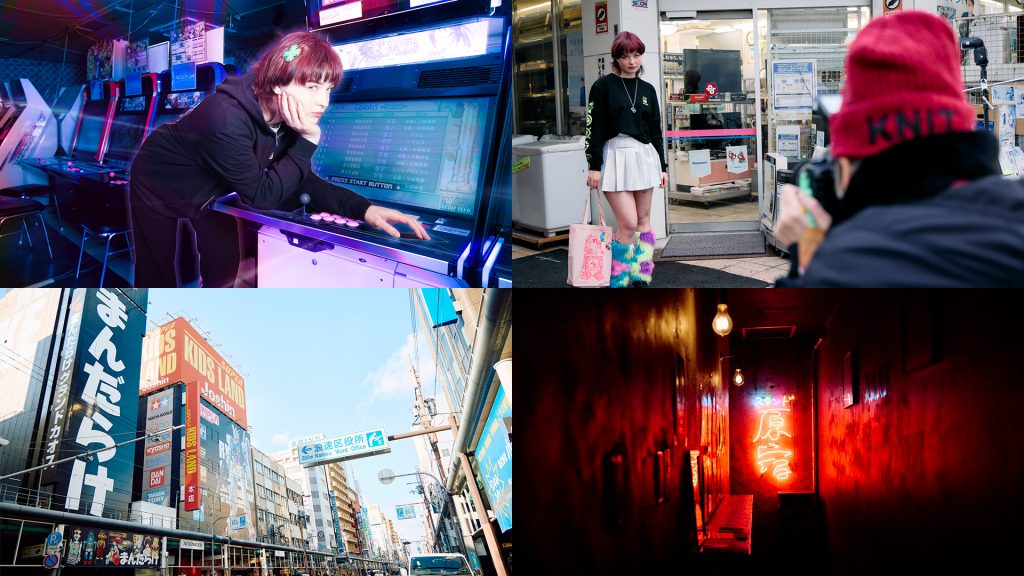 Cyberpunk meets Showa retro! A tour of Nipponbashi 's cool Japan photo spots, including game centers and neo-cafés
 Wine enthusiasts tour Habikino Winery! Taste the cuisine of the "meat town" and enjoy the terroir