Dance, Drums, and Improvisation: The Appeal of Yao’s Kawachi Ondo
2024.10.04
SHARE
Yao City, the birthplace of Osaka’s signature Bon Odori dance, Kawachi Ondo, with the sound of drums and song. Among the dancers is Yukiko Nakanishi, a Bon Odori devotee who once joined 25 festivals in a single season and even built her own portable dance tower. At Jokoji Temple’s “Yao Jizo Bon Odori,” she reveals what makes Kawachi Ondo so captivating — and how anyone can enjoy it.
Located in the Nakakawachi region, Yao City has long thrived as a crossroads between Osaka and Nara, and during the Edo period it prospered as a major producer of Kawachi cotton. Since the period of rapid economic growth, Yao has been known as a ‘town of manufacturing’ renowned for its advanced technology and product development, including toothbrushes, where Yao holds the nation’s top shipping share.
Yao City is also famous as the home of Kawachi Ondo, Osaka's signature Bon Odori dance. The Yao Kawachi Ondo Festival, held every September and October, is the city's largest festival and a summer tradition.
*In 2025, the event will be held on Saturday, October 25th and Sunday, October 26th.
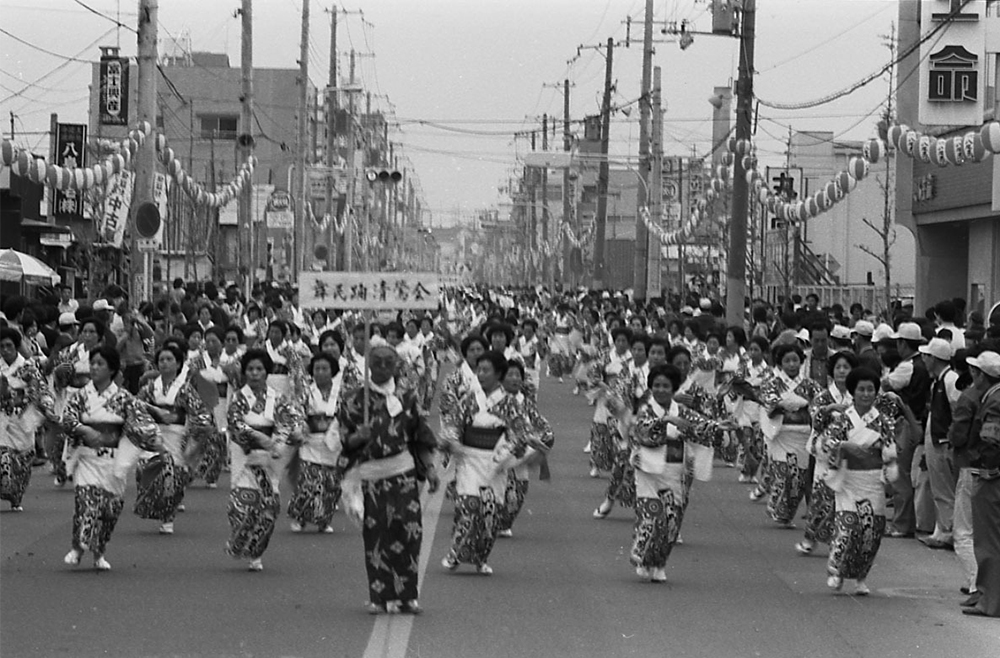
At the first Yao Festival, the ‘Kawachi Ondo Grand Parade’ saw around 700 citizens parade through the streets.
"48th Yao Kawachi Ondo Festival" Date: Saturday, October 25th and Sunday, October 26th, 2025 Venue: Yao Elementary School, LINOAS Learn more
\Other festivals in Yao/ At the Osaka-Kansai Expo 2025, "Osaka Festival! - EXPO2025 Spring Battle" was held, featuring a large gathering of "Danjiri," "Yagura," and "Taikodai," symbols of Osaka festivals, and festival music from each region livened up the venue. Many festivals are held in Yao City every year from summer to autumn, including the "Yahagi Shrine Futon Taiko," which was exhibited and demonstrated within the Expo site. Learn more
*Added on August 19, 2025
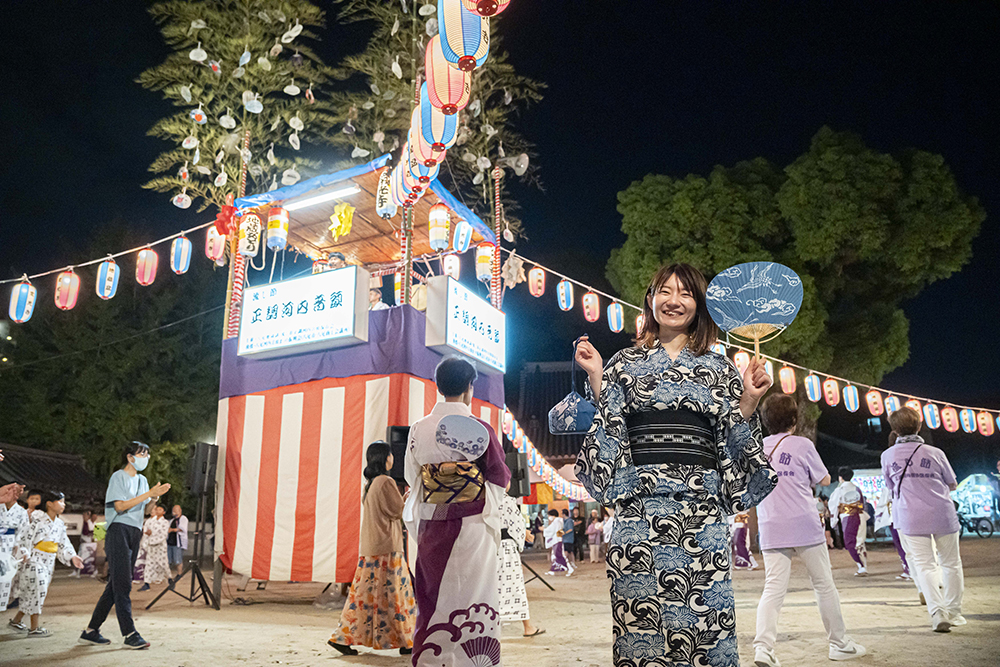
In Yao City, the birthplace of Kawachi Ondo, Jokoji Temple — also known as Yao Jizo — preserves the oldest style of the dance. Every year on August 23rd and 24th, the temple hosts the Yao Jizo Bon Odori. This year, Bon Odori enthusiast Yukiko Nakanishi joined the celebration to experience its timeless charm.
Kawachi Ondo has no set musical notation or lyrics, and is therefore highly flexible, allowing it to evolve in its own unique way by incorporating elements of popular songs and Western music. Kawachi Ondo* was also danced at the 1970 Osaka Expo and the 2005 Aichi Expo. Its appeal continues to evolve in surprising ways.
*Kawachi Ondo will also be danced at the 2025 Osaka-Kansai Expo (added August 19, 2025)
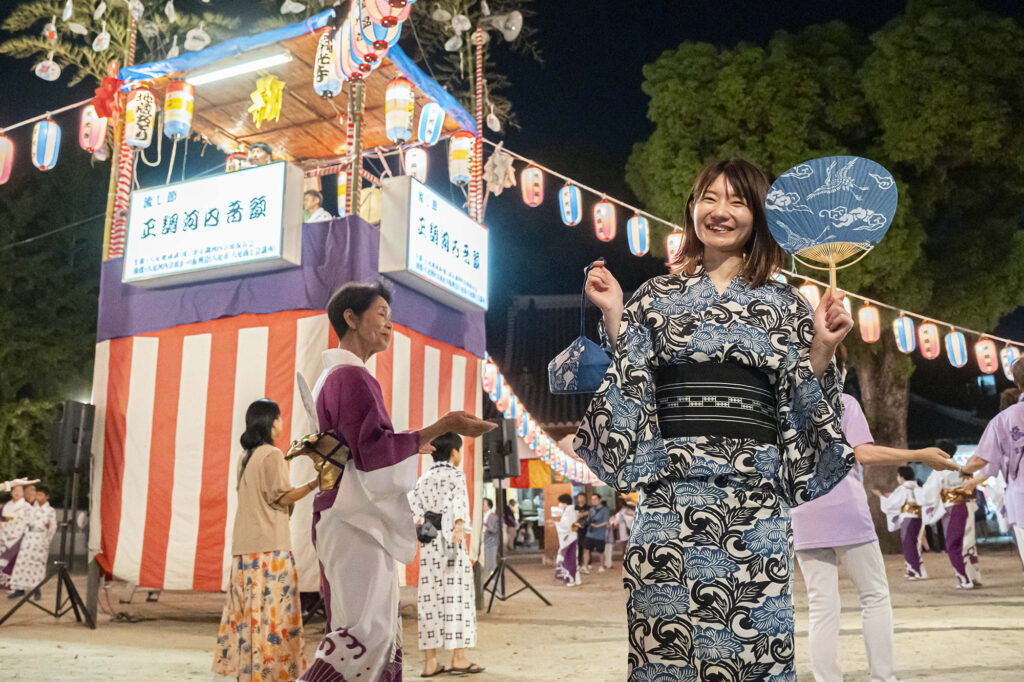
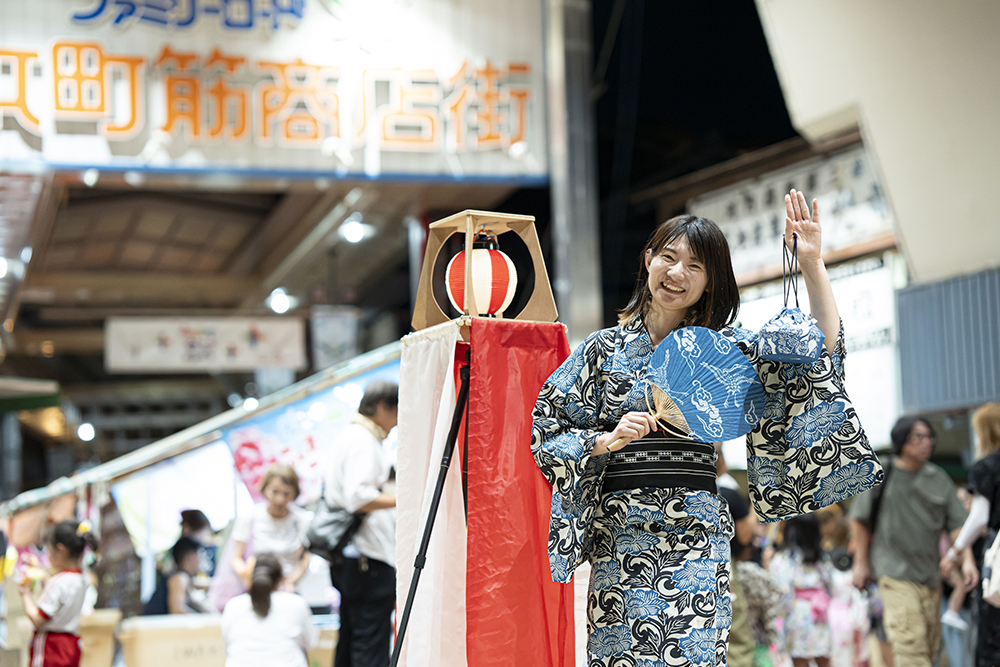
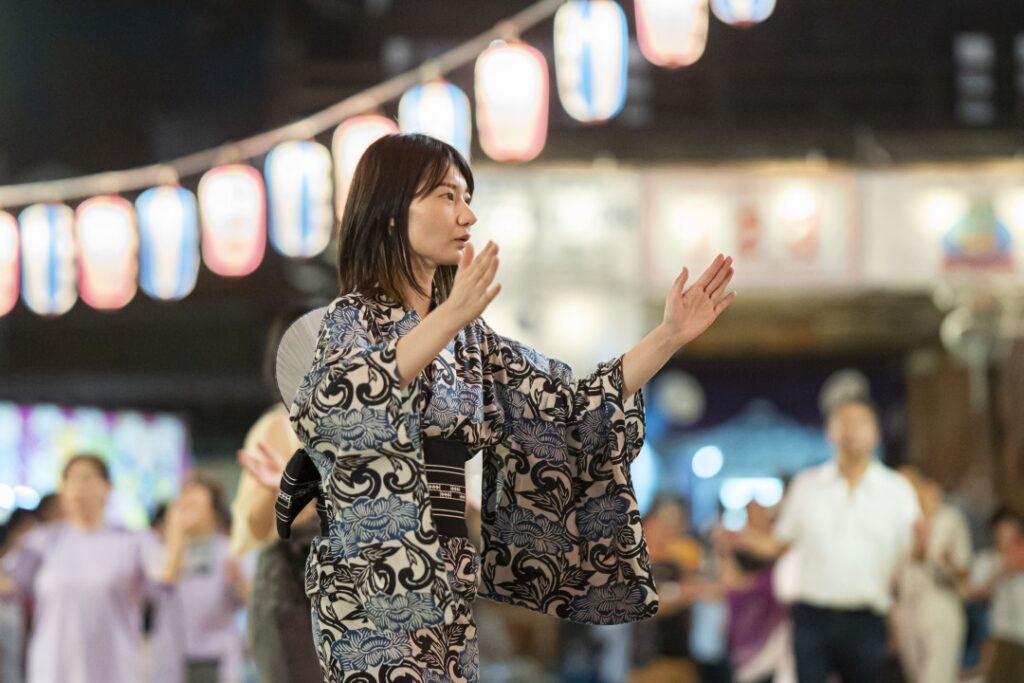
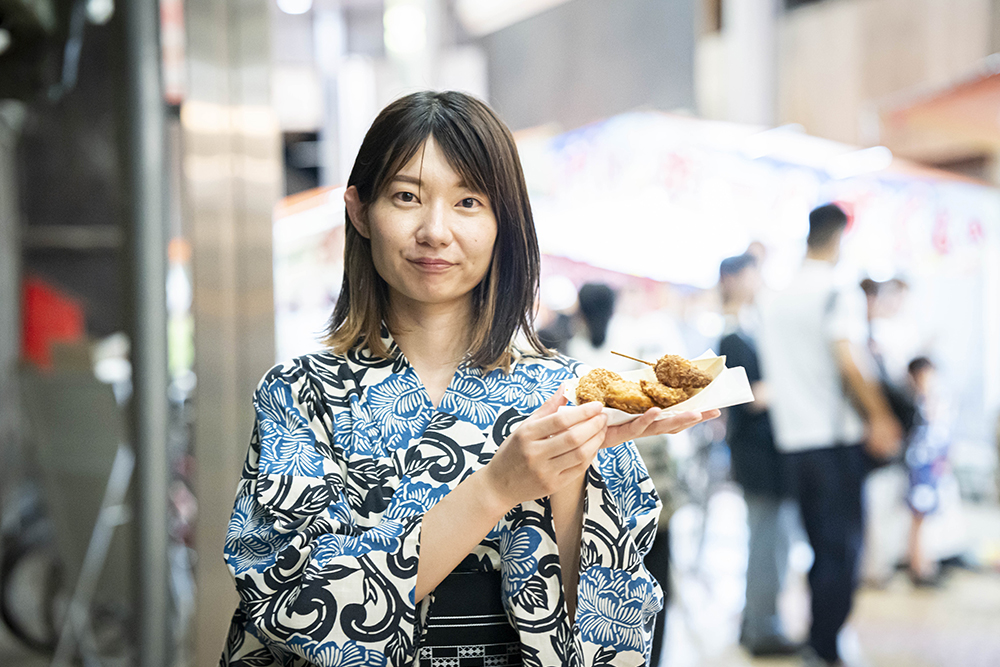
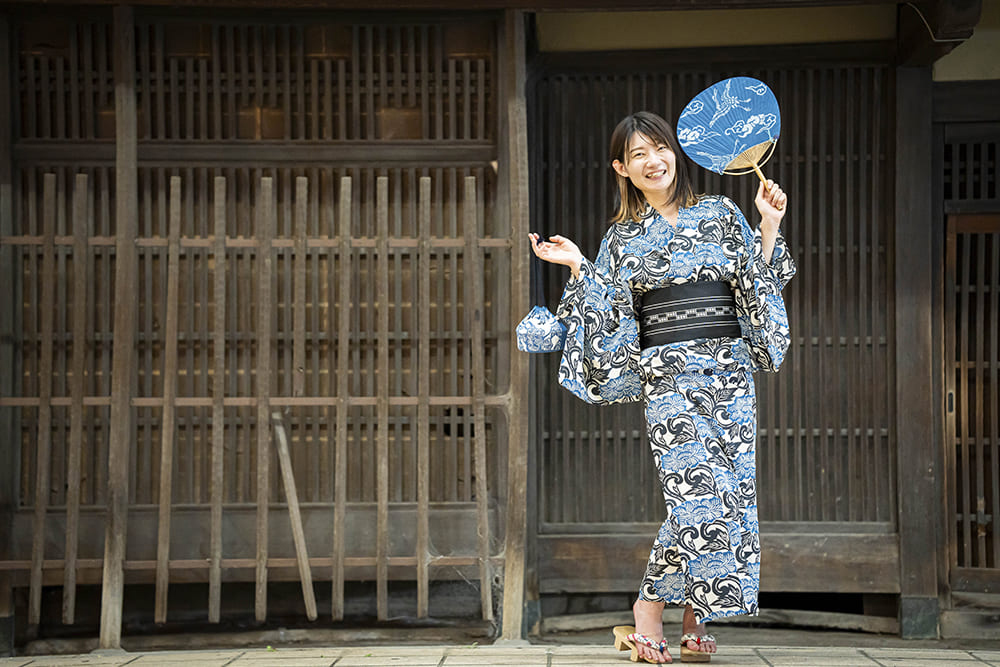
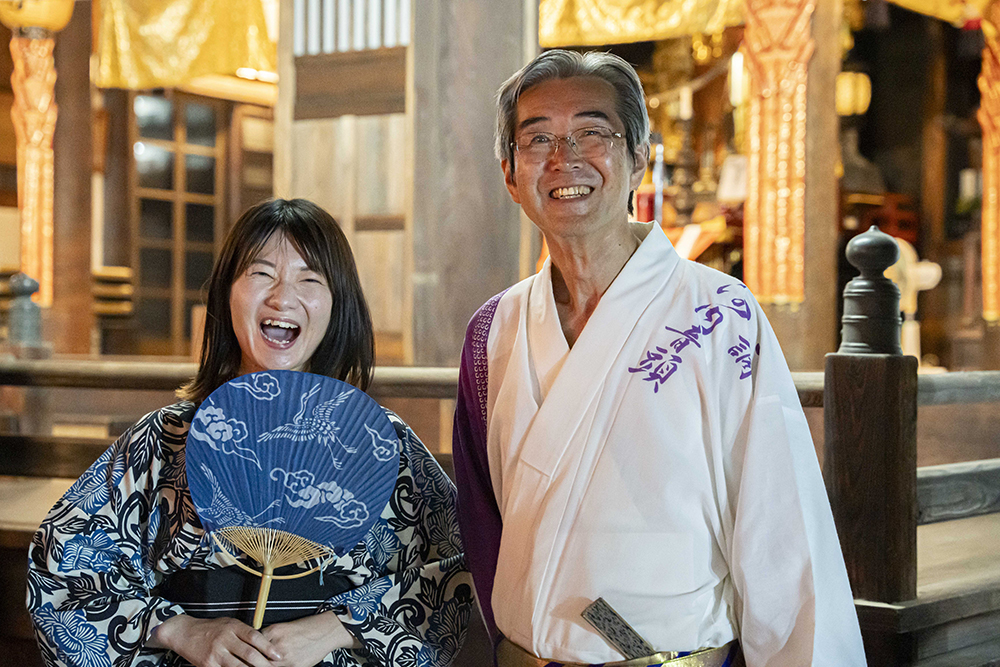
I participated in the event wearing a Kawachi cotton yukata with a cool indigo-dyed pattern. It contrasted vividly with my own dance tower that I brought with me.
\Today’s Guide/
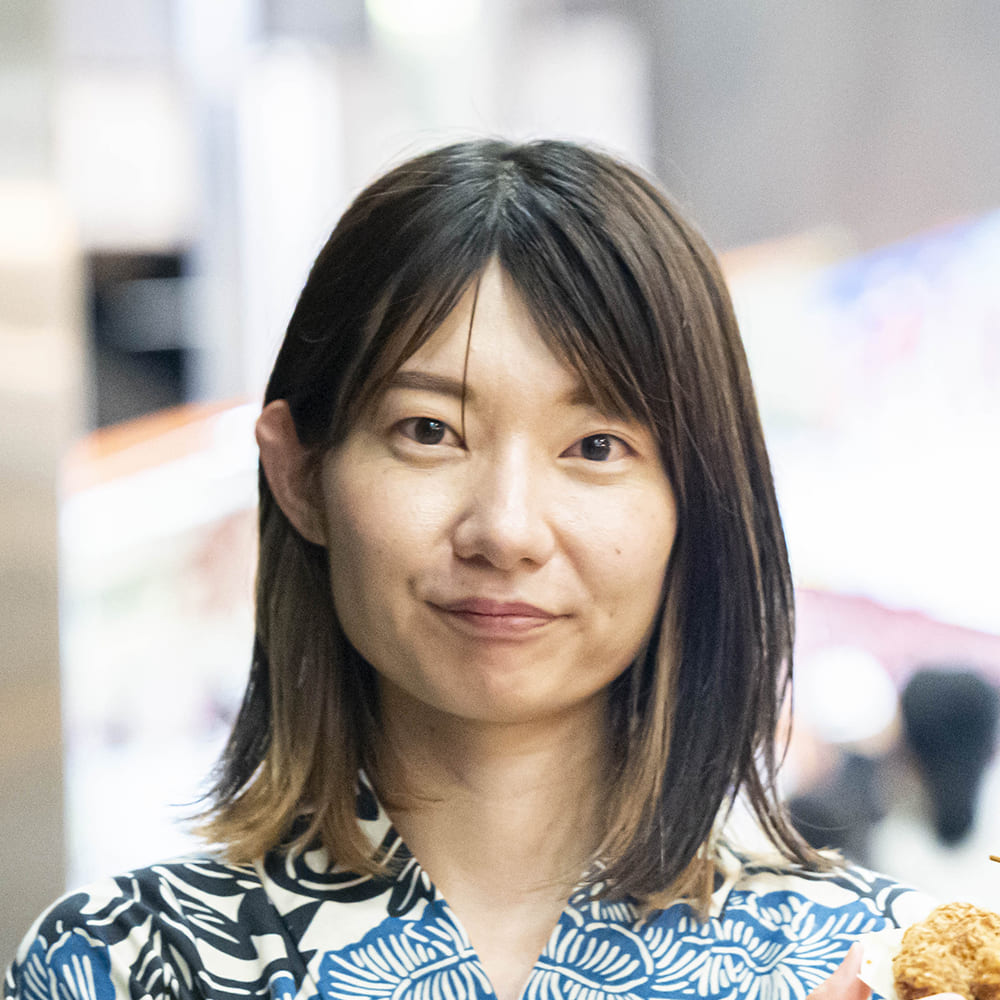
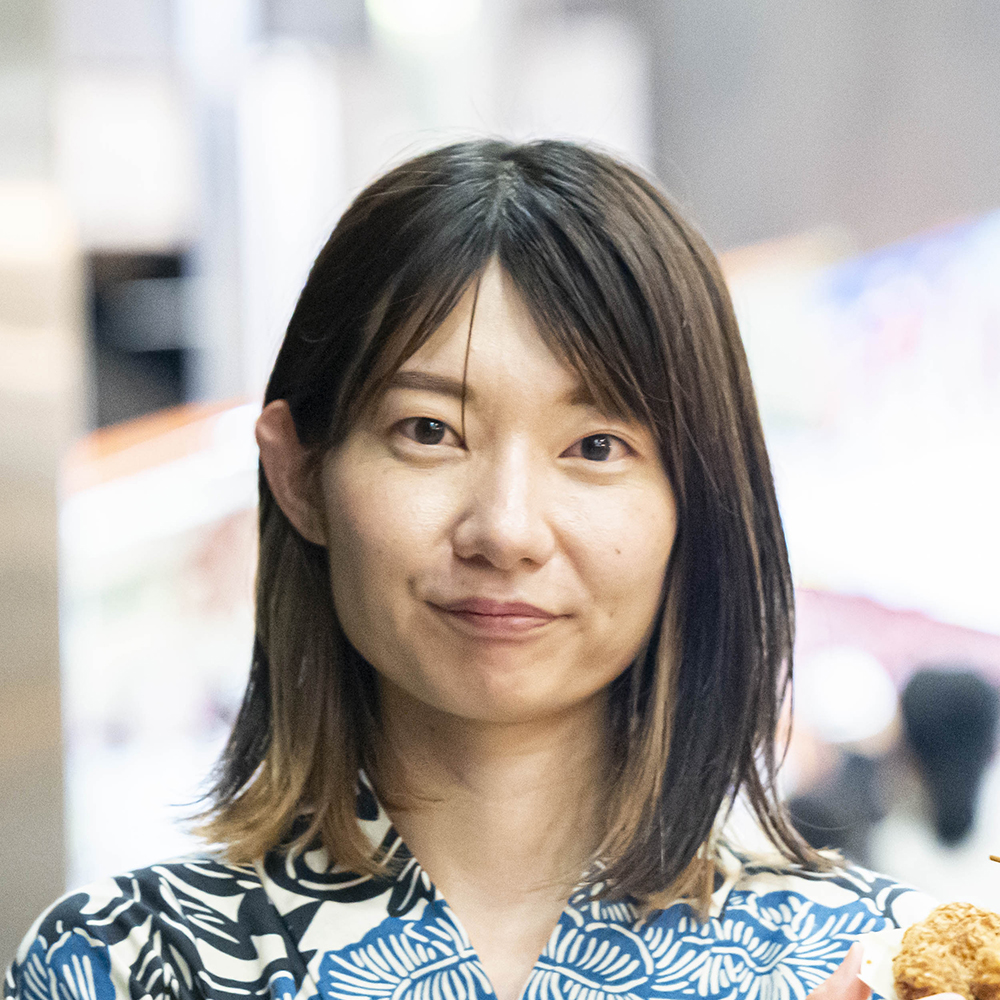
Yukiko Nakanishi
A Bon Odori enthusiast from Neyagawa City, Osaka Prefecture. During her first year at work, she stumbled upon a local Bon Odori dance and was instantly captivated. Since then, every summer she has travelled the country to dance — sometimes almost every night — and once managed to join 25 festivals in a single season. In 2018, she launched an activity called “Everyday is a Dance Hall.” With her collapsible “My Yagura” tower, she sets up and dances wherever she goes, sharing the joy and depth of Bon Odori with others.<br /> <a stt-id="1">Instagram</a> Instagram
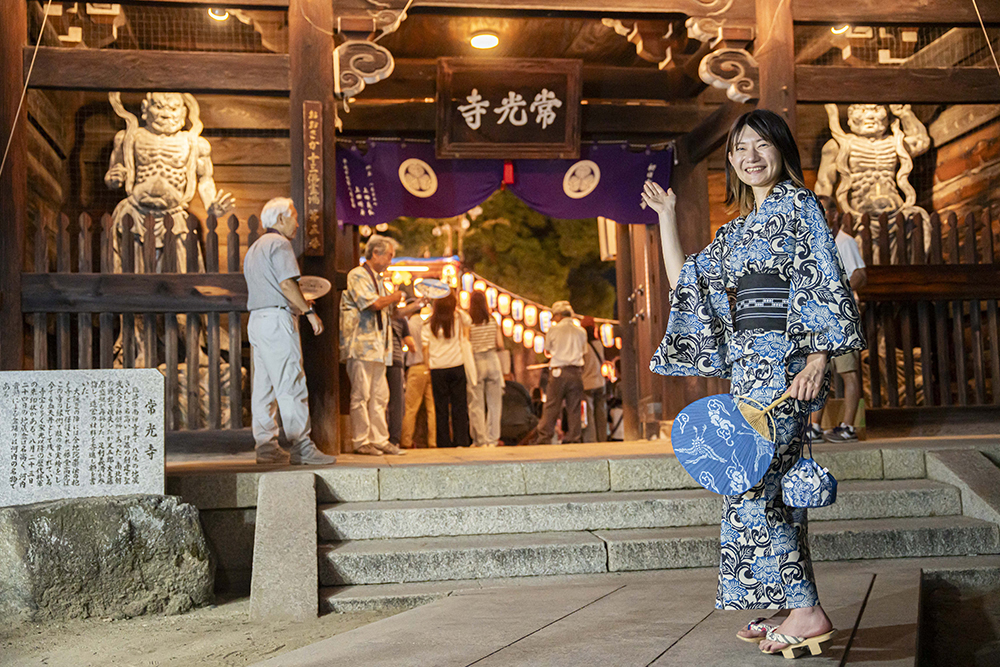
At Jokoji Temple, the home of Kawachi Ondo, you can dance within the temple grounds.
"The appeal of Bon Odori is the sense of exhilaration that comes from moving your body and the opportunity to interact with local people," says Nakanishi. Having participated in Bon Odori in Neyagawa, her hometown, and in Osaka City back-to-back, she noticed the differences between the two regions and began to attend Bon Odori in other areas (by the way, this year she told us that she can't even count the number of places she's participated in!).
This is Nakanishi’s third visit to Jokoji Temple. She was immediately drawn to its Bon Odori — calm and elegant compared to other regions — and has been so captivated that she now returns year after year.
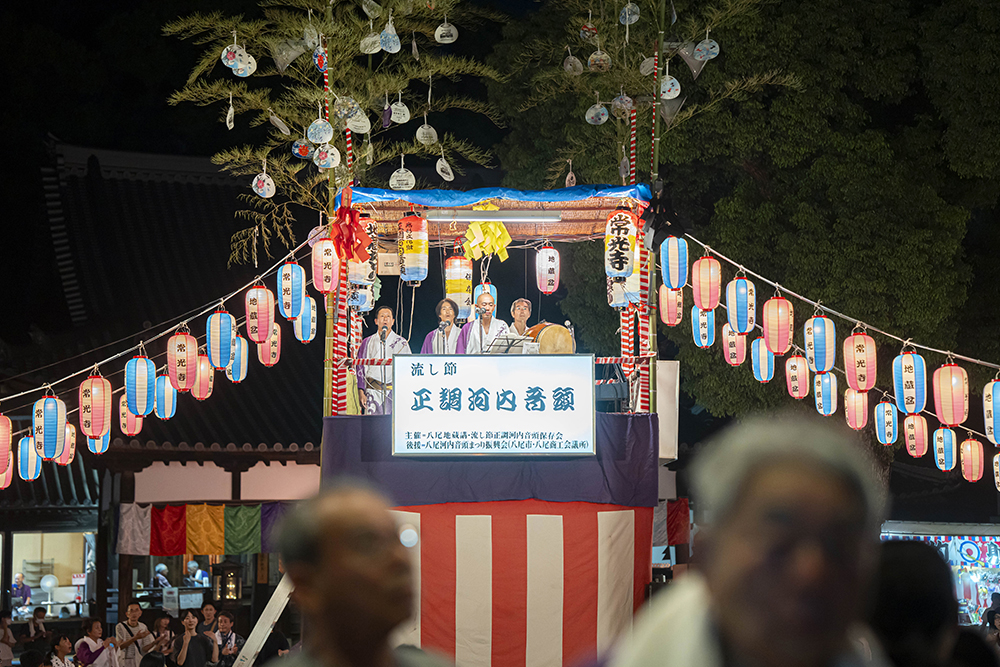
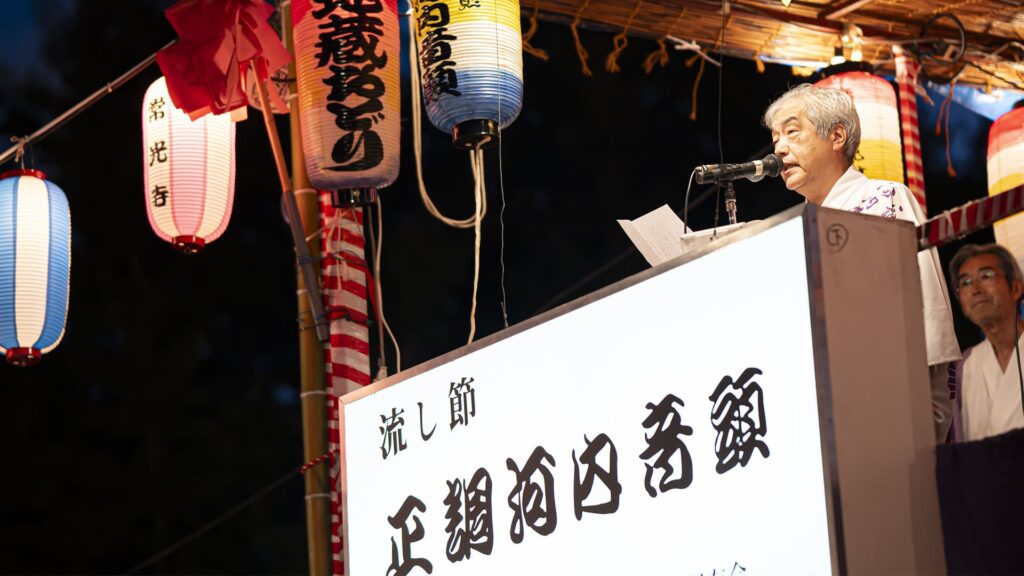
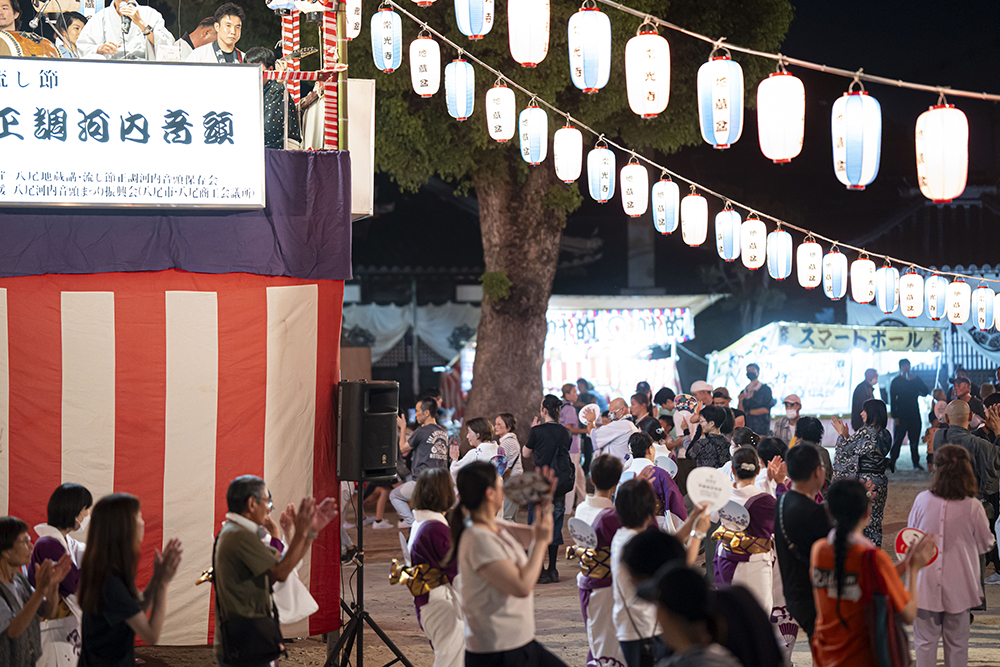
The beat of the drums leads visitors through the temple gate, where a tower stands in front of the main hall. Jokoji’s Yao Jizo Bon Odori is one of the rare Bon dances held within temple grounds. The evening is divided into two sessions, beginning at 7 p.m. with the “Nagashibushi Seicho Kawachi Ondo,” considered the prototype of Kawachi Ondo.
The "Nagashi-bushi" song that has been passed down at Jokoji Temple is so named because of the way the story is sung in a flowing manner, and is said to be the oldest Ondo song handed down in the Kawachi region. It is said to have originated from the "Kiyari Ondo" song that was sung when lumber was transported from the capital when Jokoji Temple was rebuilt during the Muromachi period(1336-1573). With a relaxed tempo, it is simple yet elegant, and the "Nagashi-bushi Seicho Kawachi Ondo Preservation Society" is currently working to preserve the song.
Nagashibushi is accompanied only by drums — a feature that sets it apart. The leader’s lively singing is joined by hayashi (call-and-response interjections), which add energy and rhythm. Heard live, the slow, swaying power of the performance gradually transports you to another world.
Nagashi-bushi feels calmer than other Bon dances. Yet as you give yourself over to the rhythm and keep moving, a strange exhilaration takes hold. It’s as if you melt into the landscape, or dance alongside your ancestors. Perhaps it’s the simplicity of the drum-only accompaniment that creates this sensation.
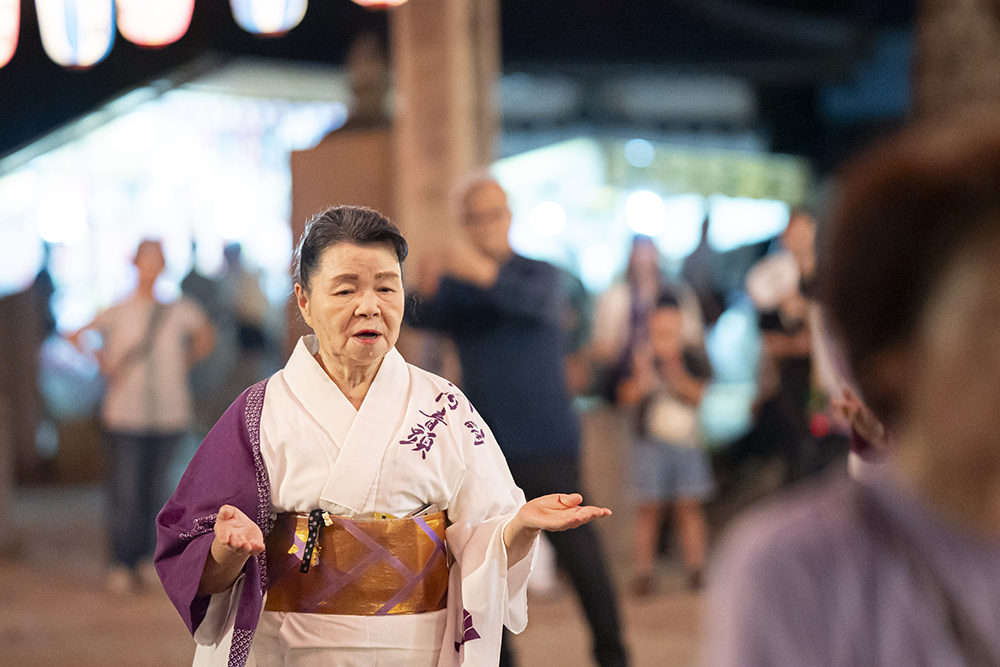
Learn the graceful movements of local dancers. The open atmosphere is friendly even for beginners.
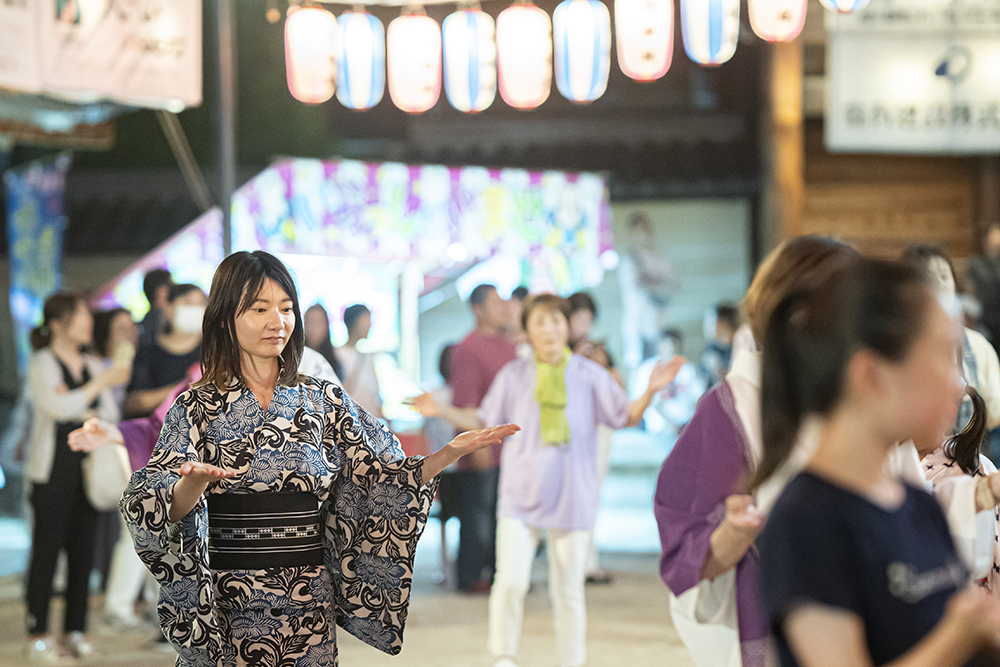
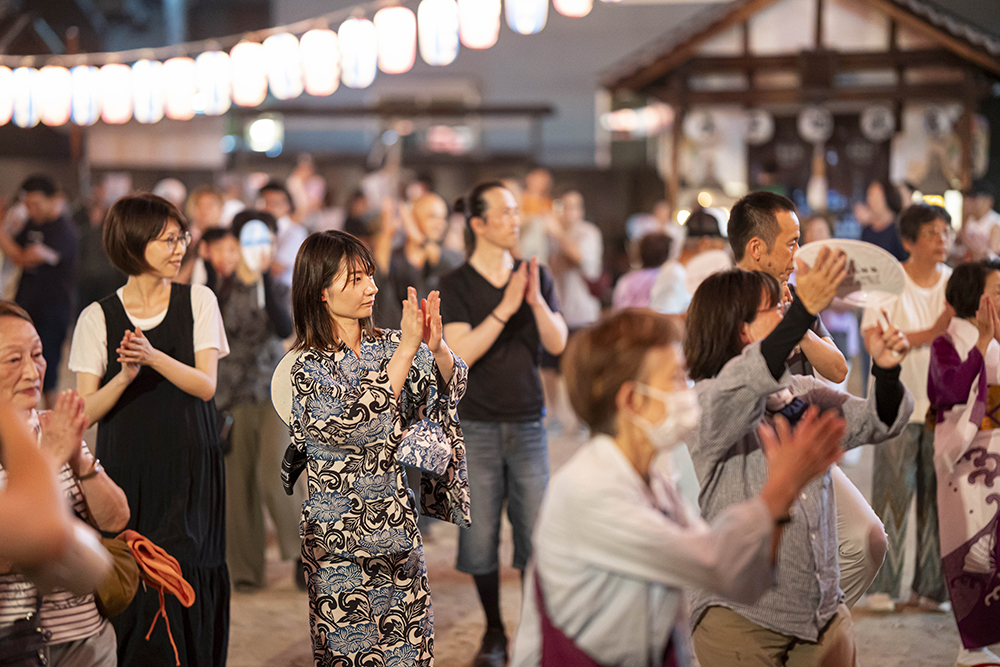
Nakanishi couldn't sit still and immediately joined in the dancing. She was placed between the dancers wearing a purple yukata and learned the movements by imitating them.
Meanwhile, the dancers continue their graceful dance, keeping an eye on those around them. If they see someone who seems inexperienced, they will make their arm and leg movements a little bigger and demonstrate the dance as if giving a lecture. The atmosphere makes it easy for beginners to join in with the group, which is a great point.
Kawachi Ondo dance has various styles, such as the relaxed "Te Odori" (a relaxed hand-movement style) and the lively and dynamic "Mamekachi Odori," (a vigorous, footwork-heavy style) and is characterized by the fact that anyone can freely enjoy it. The dance that accompanies the Nagashi Bushi is based on Te Odori, and the main focus is on supple hand movements. The choreography, which consists of a set of 10 beats, is repeated as the dancers move around the tower.
By the time Nakanishi had completed one lap, she seemed to have mastered the steps. All the while, the circle around the tower was swelling with more and more dancers.
I always learn the dance by imitating the locals. Jokoji Temple is proud of having preserved the Nagashi-bushi dance, but I'm happy that it always has an open and welcoming atmosphere. Moreover, the fact that Bon Odori can be held at a temple shows that it is a deeply rooted traditional event.
This Ondo is actually a love song!? Nagashi-bushi was also entertainment for the common people.
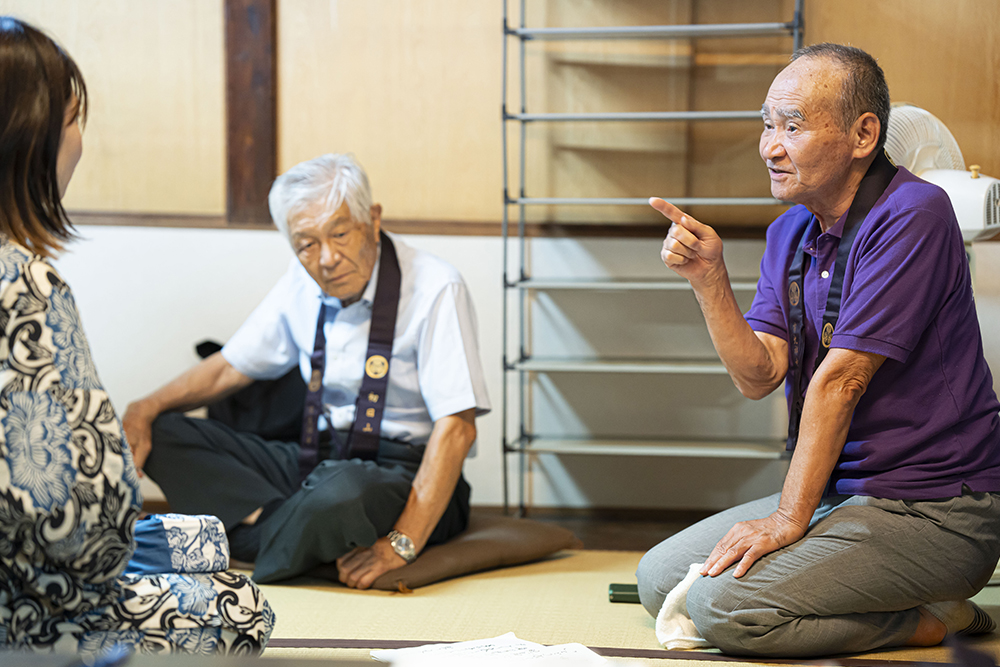
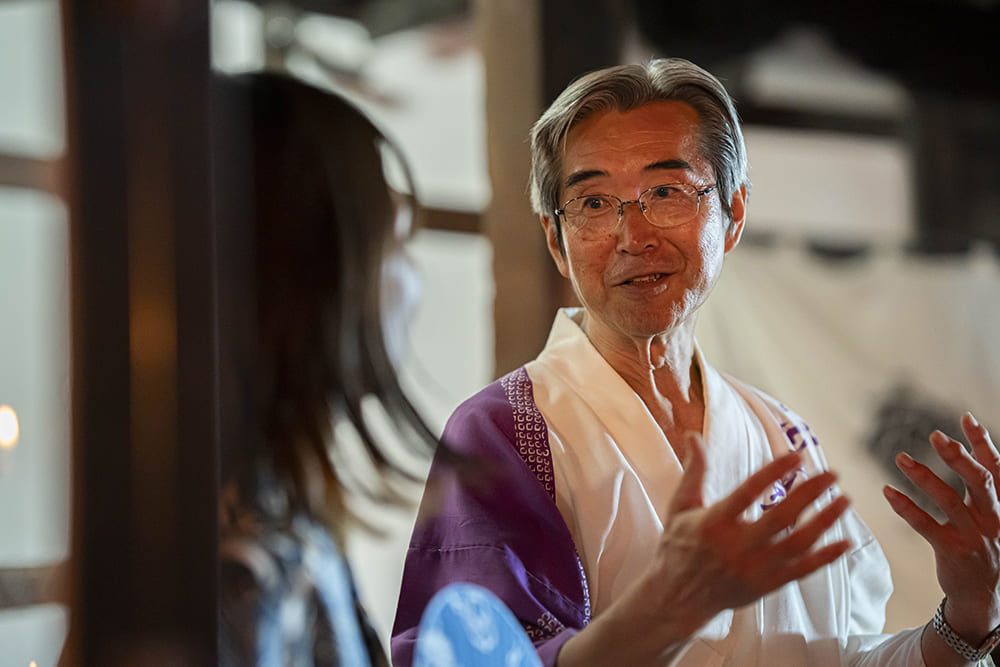
Mr. Takahashi, the former chairman of the preservation society, watched the dance and explained the stories sung in the ondo. Jokoji Temple currently preserves six such songs. One of them, Amijima Shinju (“The Love Suicide at Amijima”), tells a tale of tragic romance. Its subject matter reflects how Kawachi Ondo began as a Buddhist memorial service, but later evolved into entertainment for ordinary people.
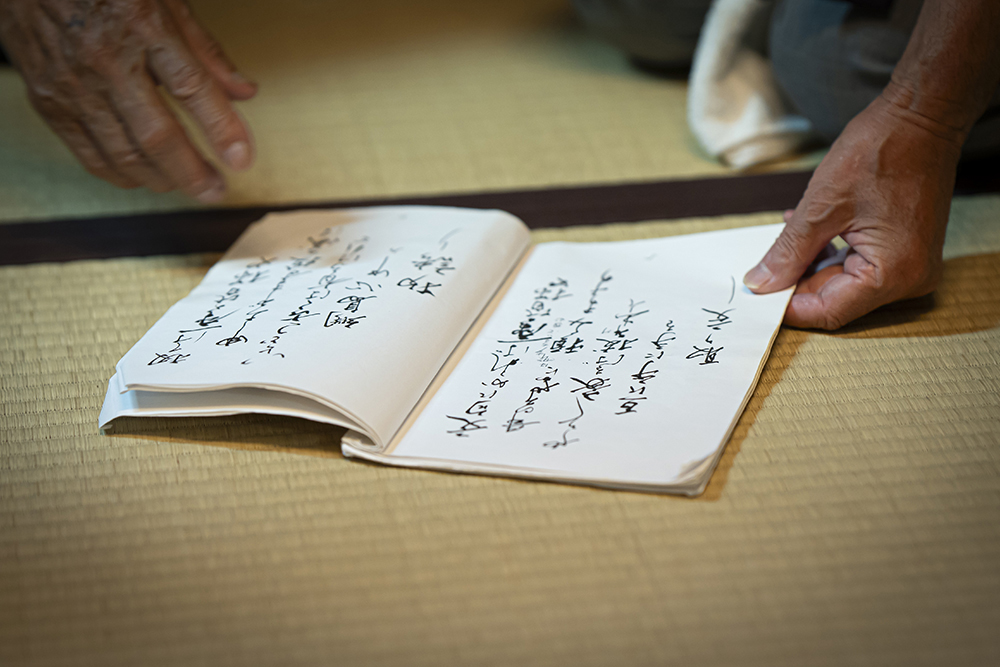
The members of the preservation society gather every month for more than six months before the Jizo Bon Odori festival to practice. “Since drums are our only instrument, there’s no room to hide,” Takahashi joked. Pointing to a booklet with the lyrics written on it, they performed the song in front of us. Even so, everyone's voices are beautiful, perhaps the result of their daily training.
Festival Flavours: Otono Butcher Shop’s Famous Croquettes
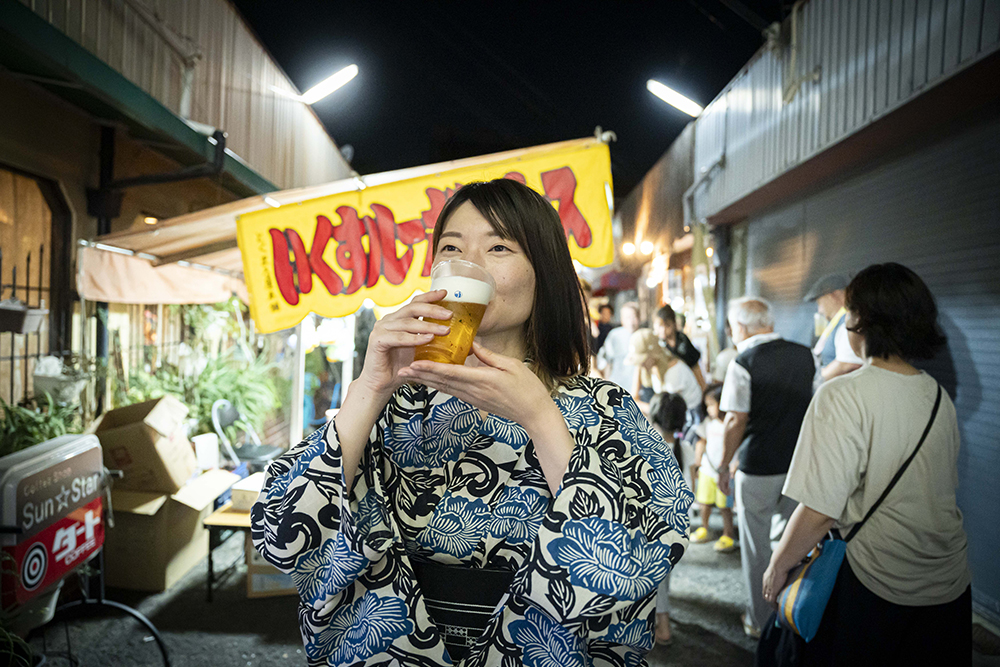
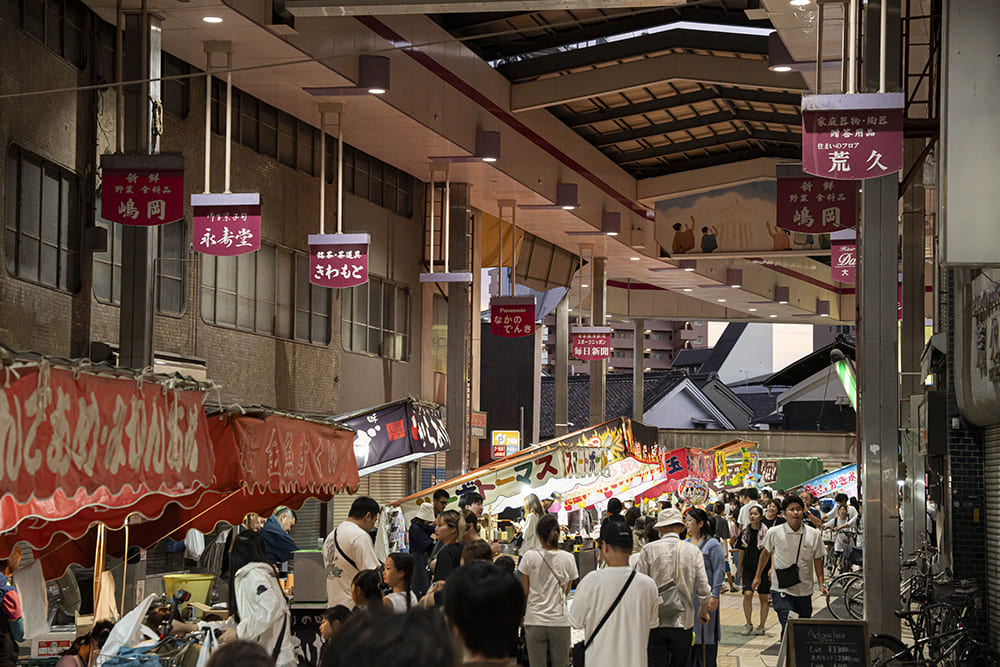
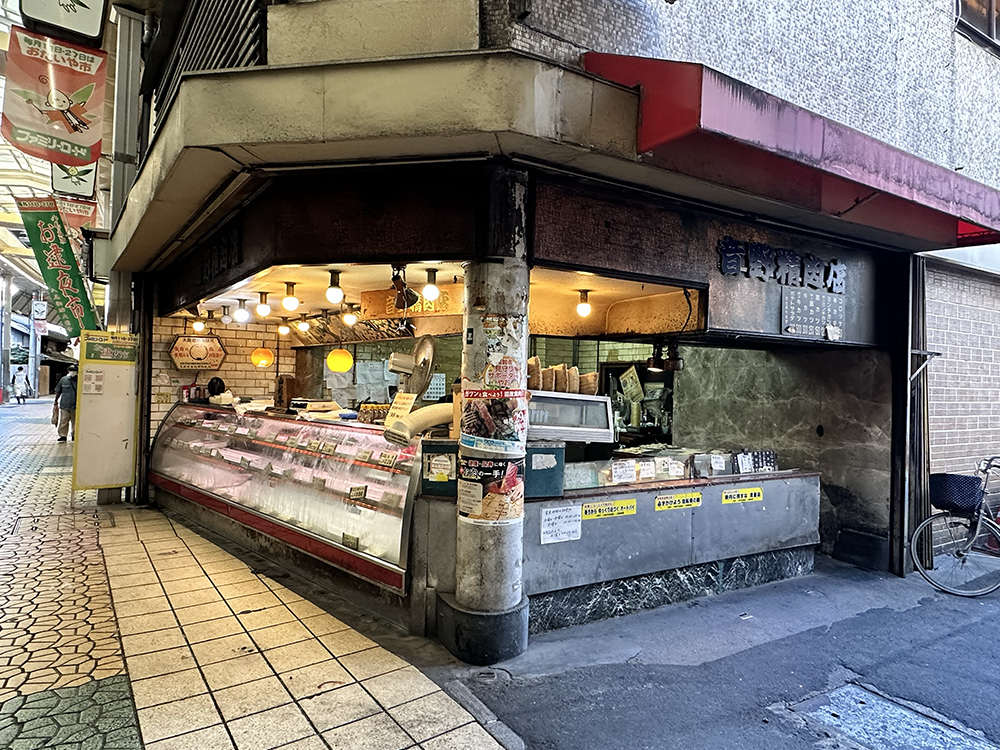
Part of the joy of any festival is grazing from the food stalls — eating on the go as the night buzzes around you. The Yao Family Road Shopping District, right in front of Jokoji Temple, was packed with people from early evening until late into the night.
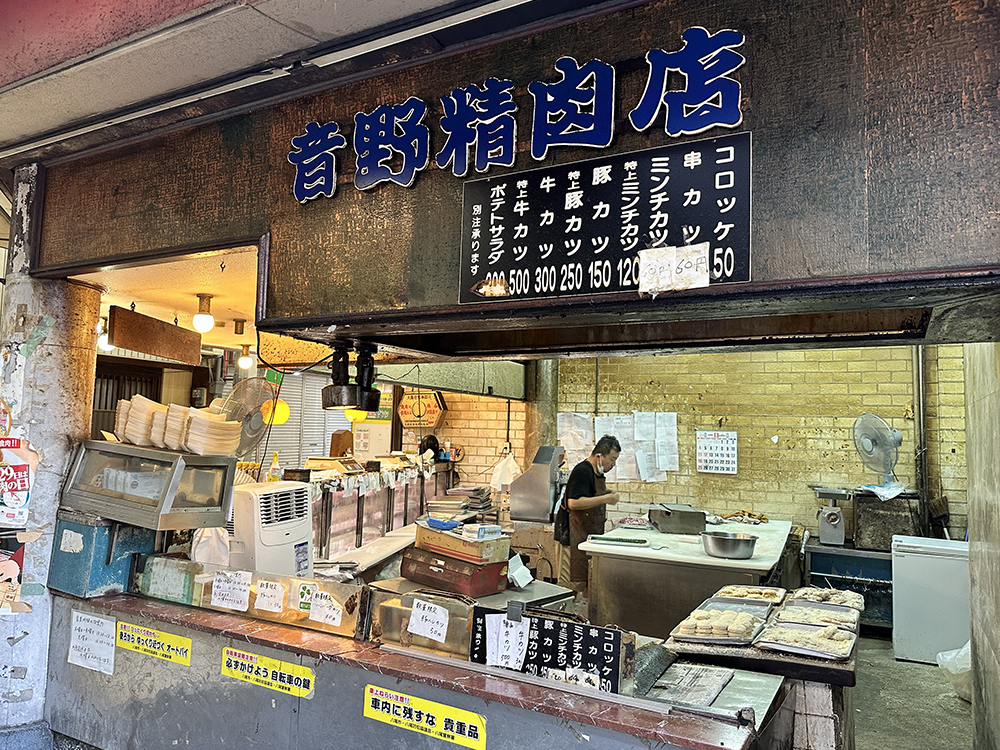
The lively food stalls are also intriguing, but here we'll take a loot at a famous local restaurant! Otono Butcher Shop, located along Family Road, is a long-established store that was founded over 60 years ago. It has supported the local dining tables so much that locals say, "I grew up on Otono's meat and fried food."
The shop prides itself not only on the quality and flavor of its meat, but also on the skill of its staff — from the speed of frying to the precision of packaging. Regulars often place bulk orders of 10 or even 20 pieces.
If you plan on going out to a night event such as a Bon Odori dance, don't forget to check the opening hours. We recommend that you visit the store with plenty of time to spare.
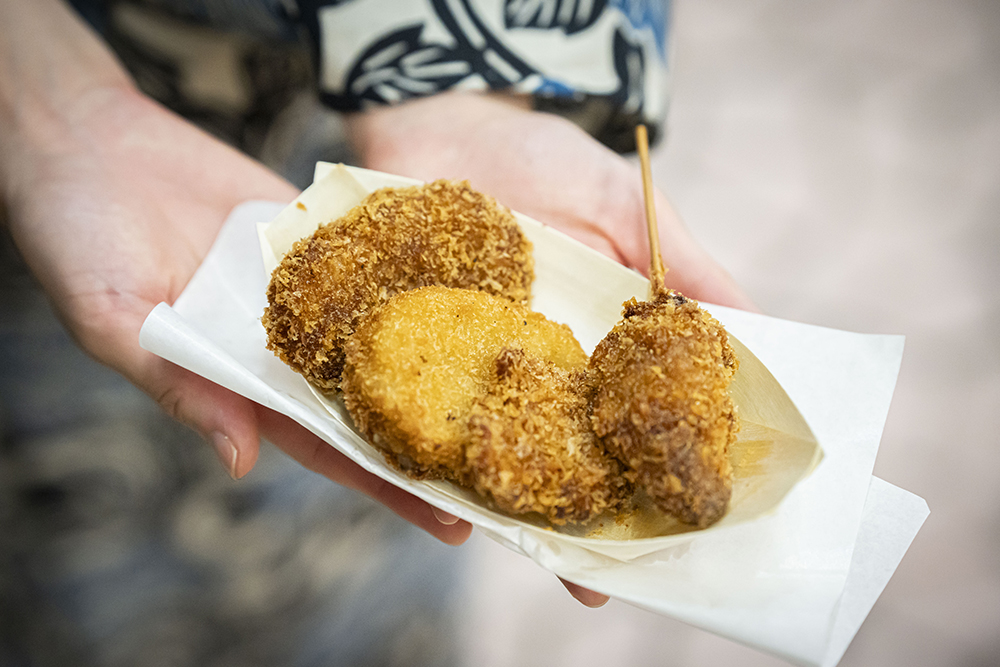
From the left: croquette, hamburger croquette, pork fillet cutlet, and kushikatsu. The food is served on a boat-shaped plate, which adds to the festive atmosphere.
The croquette balances the sweetness of meat and potatoes beautifully. The hamburger croquette is a rarity — coated in batter and deep-fried to a crisp, while the inside stays juicy. It’s the kind of flavor you’d only expect from a butcher’s shop.
Business hours: 10:00-18:00 (10:00-14:00 on Tuesdays) *Business may close once sold out. Closed: Wednesdays Phone number: 072-991-1129
Soft textures and stylish patterns: Reviving Kawachi Cotton through local pride and passion
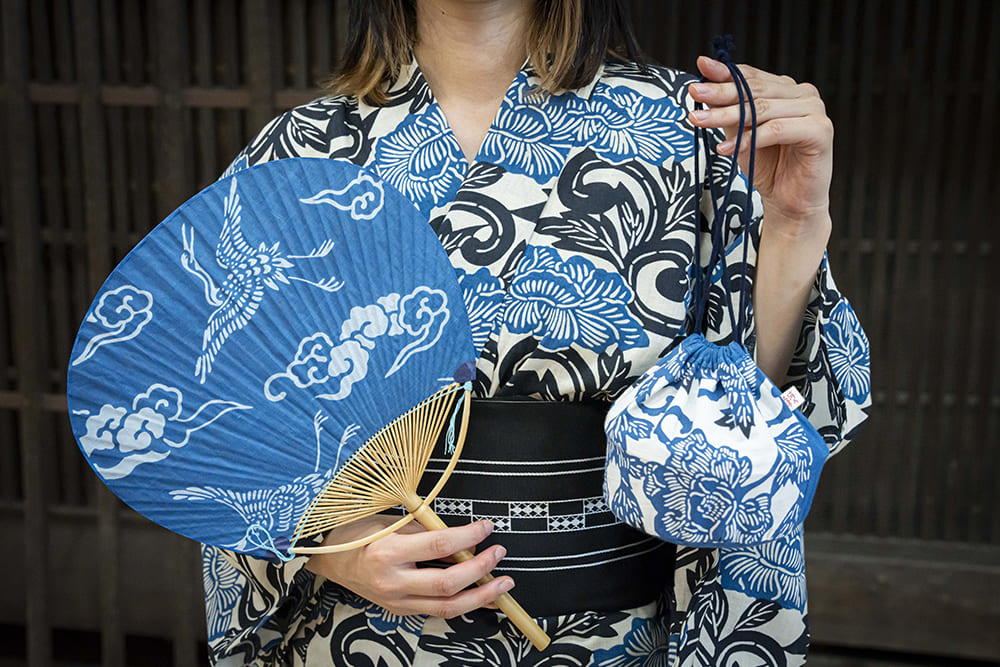
Among the dancers, the Kawachi cotton yukata stood out. Nakanishi was struck by how it felt: “It’s thick and sturdy, yet smooth and comfortable to wear,” she said with surprise. The pattern, dyed in different shades of blue, feels modern, but it is one of the "Seventeen Classics" that are unique to Kawachi cotton. It is the culmination of research activities by Tokiko Muranishi, the first chairperson of the NPO "Kawachi Cotton Indigo Dyeing Preservation Society," who reproduced it from materials such as old cloth and patterns.
Along with the yukata, Nakanishi carried a fan and drawstring bag, both dyed in traditional patterns. The preservation society not only exhibits indigo works but also hosts hands-on events, where visitors can try spinning thread and indigo dyeing themselves (advance reservations required). Kawachi Cotton Indigo Dyeing Preservation Society
This yukata was made using Kawachi cotton collected from the stockpile of a related organization. Currently, Yao City is working with local residents to promote the cultivation of Kawachi cotton, which once thrived as a local industry, and is also working to promote agricultural practices that do not use pesticides. To promote Kawachi cotton, Yao City exhibited at Osaka Week, which was held during the Osaka-Kansai Expo*.
*From May 9th to 10th, 2025, an exhibition on the theme of Kawachi cotton and Satoyama conservation was held at the "Yari Nahare Booth" during "Osaka Week" at the Osaka-Kansai Expo (added August 19th, 2025).
The temple atmosphere peaks in the second half, when the sound of live guitar electrifies the dance.
By 9 p.m., the Bon Odori shifted into its second half with a modern take on Kawachi Ondo — a fusion of pop and Naniwabushi (a traditional narrative ballad style). When a band led by electric guitars took the stage, the temple grounds lit up with energy, and soon people of every age crowded around to dance.
Around the stage, smiling faces with sweat on their foreheads filled the air, creating a groove that was just like being at a live concert. The sounds of the live music and the perfectly synchronized clapping vibrated the eardrums.
As time passed, the venue became more heated. Participants were absorbed in dancing in their own way, starting with "Mamekachi". Unlike "Te Odori", which focuses on upper body movements, Mamekachi is characterized by choreography that involves vigorous movement of the legs and hips. The speed of the rings of people surrounding the tower also increased, creating more and more excitement.
"Even though they're all called 'Kawachi Ondo,' isn't it interesting that there are so many different styles?" says Mr. Tanioka, the current chairman of the Nagashibushi Seicho Kawachi Ondo Preservation Society. He holds Nagashi-bushi sessions for children and the elderly, helping to create a sense of unity in the community.
Kawachi Ondo has now been given an image of being up-tempo, but when you compare it with its original form, "Nagashi-bushi," you can clearly see the distinct characteristics of each. "We want people to casually enjoy and become familiar with the laid-back Nagashi-bushi. There aren't many places where you can hear both in one night, so we hope you'll enjoy the difference."
To me, Jokoji Temple is like the "home of Bon Odori." Participating in the Jizo Bon Odori made me realize this once again. I encourage everyone to visit Yao and experience the depth of Bon Odori and Kawachi Ondo. The Yao Kawachi Ondo Festival is the perfect opportunity to learn about the breadth of this art form!
In October, the annual Yao Kawachi Ondo Festival will be held at three locations in the city. In addition to showcasing a variety of different dance styles, there will also be a Kawachi Ondo Bon Odori Festival that anyone can participate in.
"48th Yao Kawachi Ondo Festival" Date: Saturday, October 25th and Sunday, October 26th, 2025 Venue: Yao Elementary School, LINOAS Learn more
\Other festivals in Yao/ At the Osaka-Kansai Expo 2025, "Osaka Festival! - EXPO2025 Spring Battle" was held, featuring a large gathering of "Danjiri," "Yagura," and "Taikodai," symbols of Osaka festivals, and festival music from each region livened up the venue. Many festivals are held in Yao City every year from summer to autumn, including the "Yahagi Shrine Futon Taiko," which was exhibited and demonstrated within the Expo site. Learn more
*Added on August 19, 2025
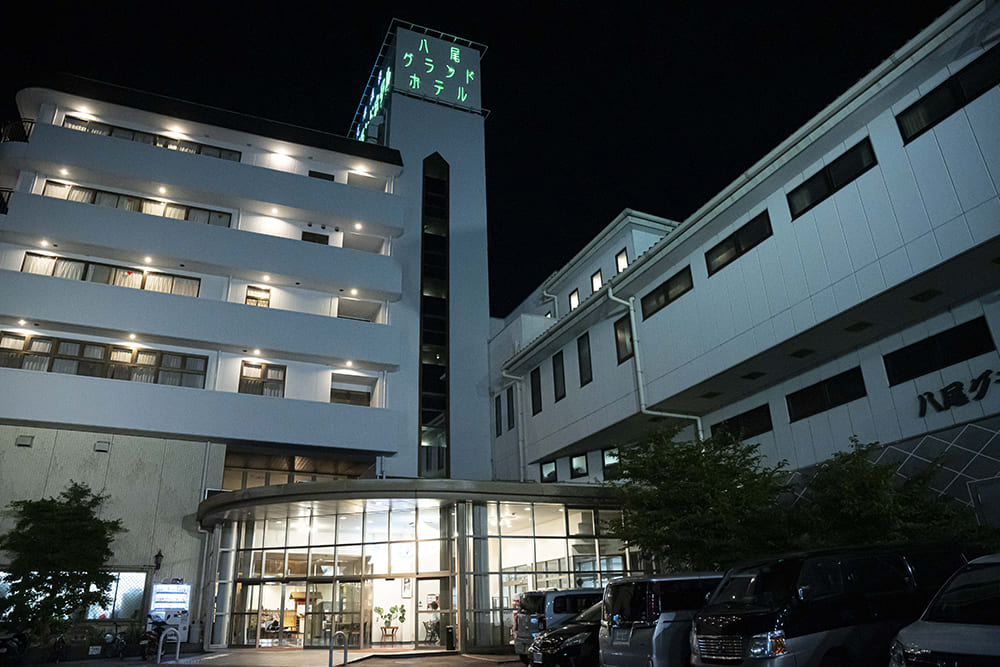
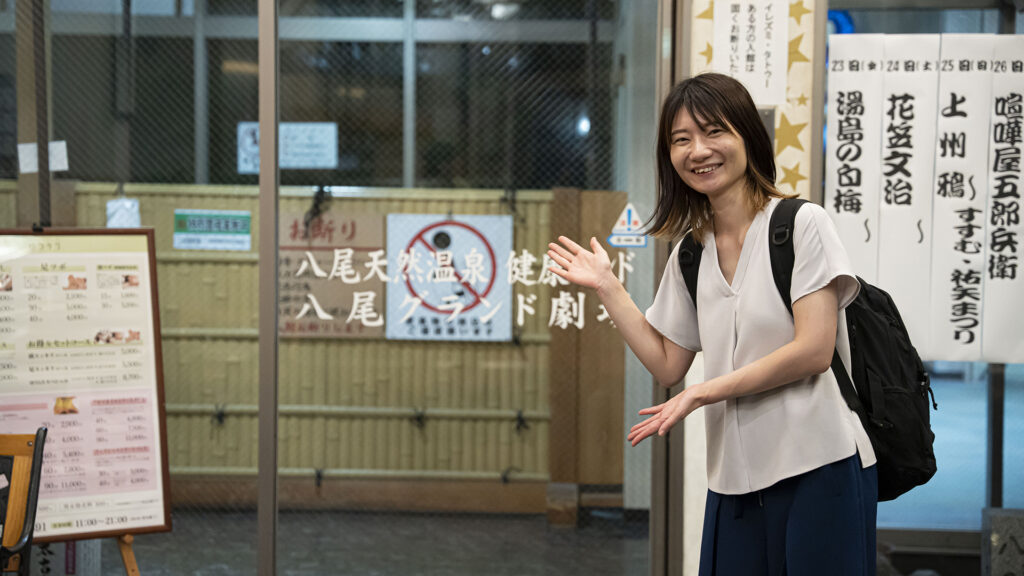
After the dance, refresh yourself at the Yao Grand Hotel. Wash away your fatigue in the famous hot springs - a favourite spot for bath lovers.
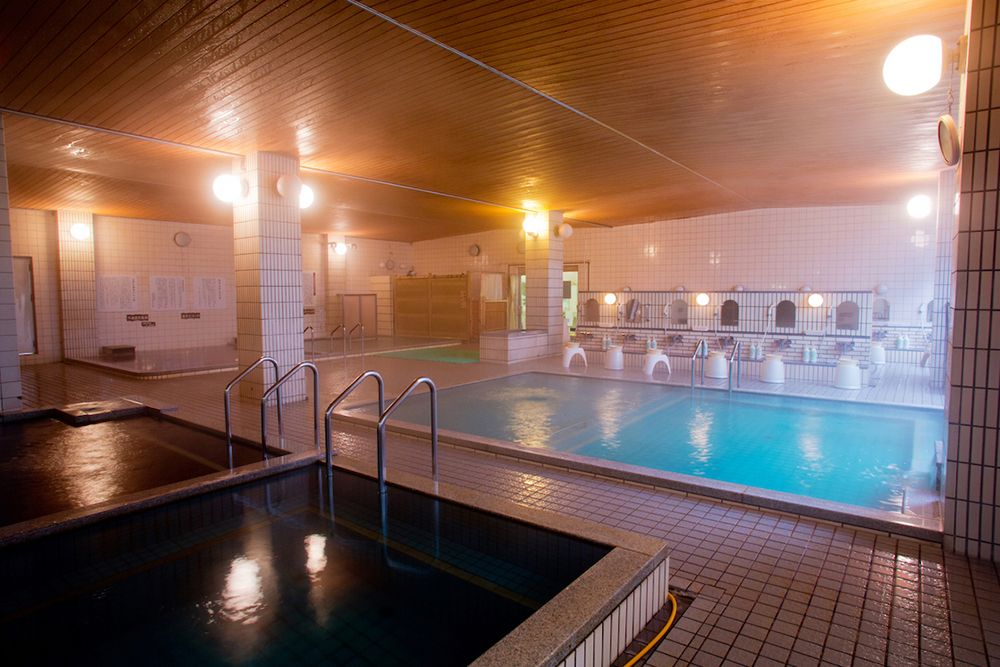
After a long day of dancing, nothing beats a hot spring. At the Yao Grand Hotel, the baths draw water directly from the source, so you get the full benefit. The facility stays open 22 hours a day, and day-use visitors are provided with towels and indoor wear — perfect if you’re dropping by after the festival without bringing anything along.
The hotel features a 46°C hot spring bath alongside an 18°C cold bath, a pairing famed for its refreshing contrast and believed to help balance the body’s nervous system.
After a night of dancing, soaking in the hotel’s spacious baths is the perfect way to unwind — no surprise it’s a favorite among sauna lovers. If you come in the afternoon, there is also a plan that includes a theater performance and gourmet food, so it truly is a "destination hotel!"
Business hours: 10:00 to 8:00 the next day Closed: Open daily Phone number: 072-994-3591 Official website X
From dancing to eating and ending the night in the bath, the day in Yao was full of experiences, but what stood out most was the warmth of the people. “Everyone was kind, and I could feel their desire to make visitors enjoy themselves,” recalls Nakanishi. Around the dancing tower (yagura), dancers moved together in a circle — a scene that showed how Kawachi Ondo continues to honour tradition while welcoming new influences. That balance is part of what makes it so special to Yao.
I live in Osaka, but I was able to experience the passion of the people of Kawachi once again. What's more, the groove is created by the live singing and band! I hope you'll dance and soak up the atmosphere!
Add a touch of historical romance to your souvenirs: Tohri Monaka, made with carefully selected ingredients and methods
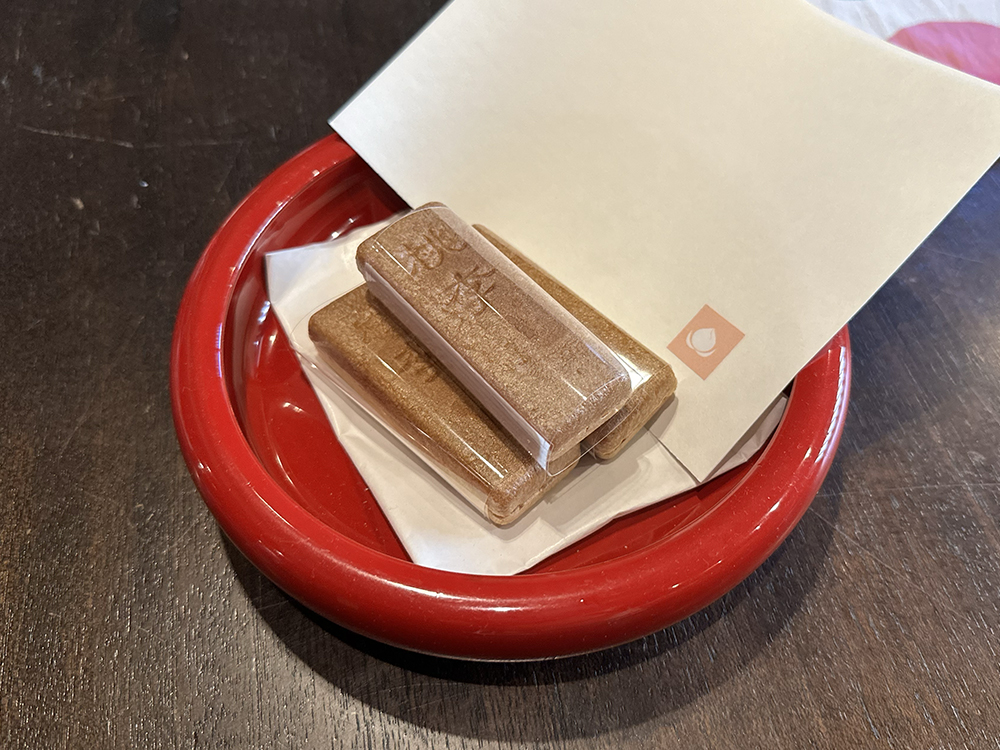
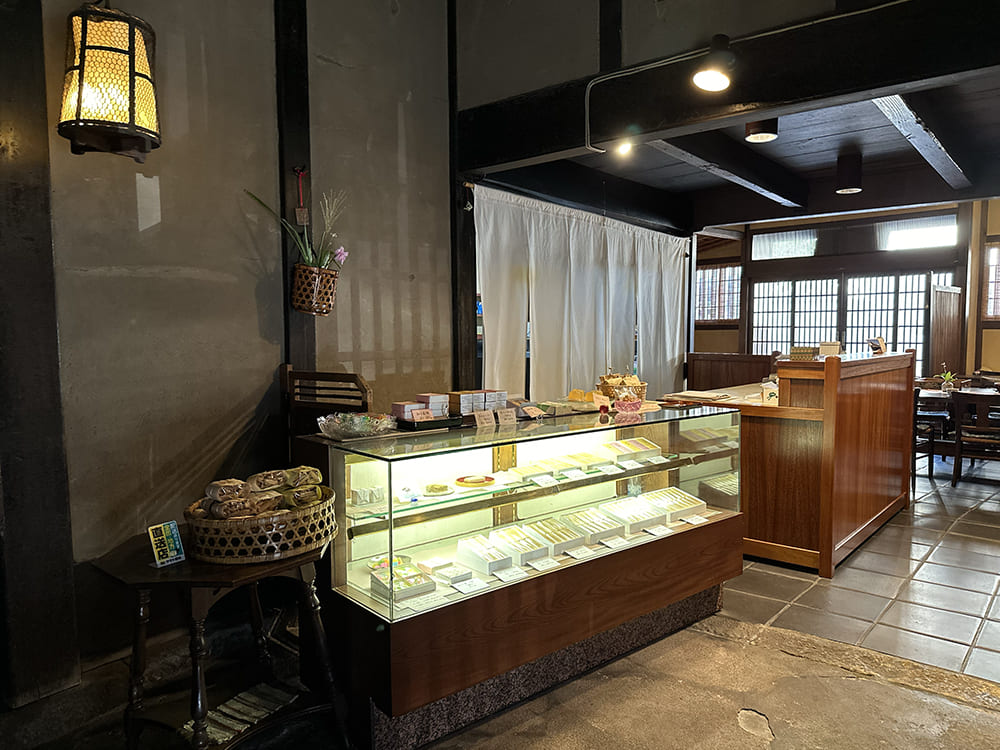
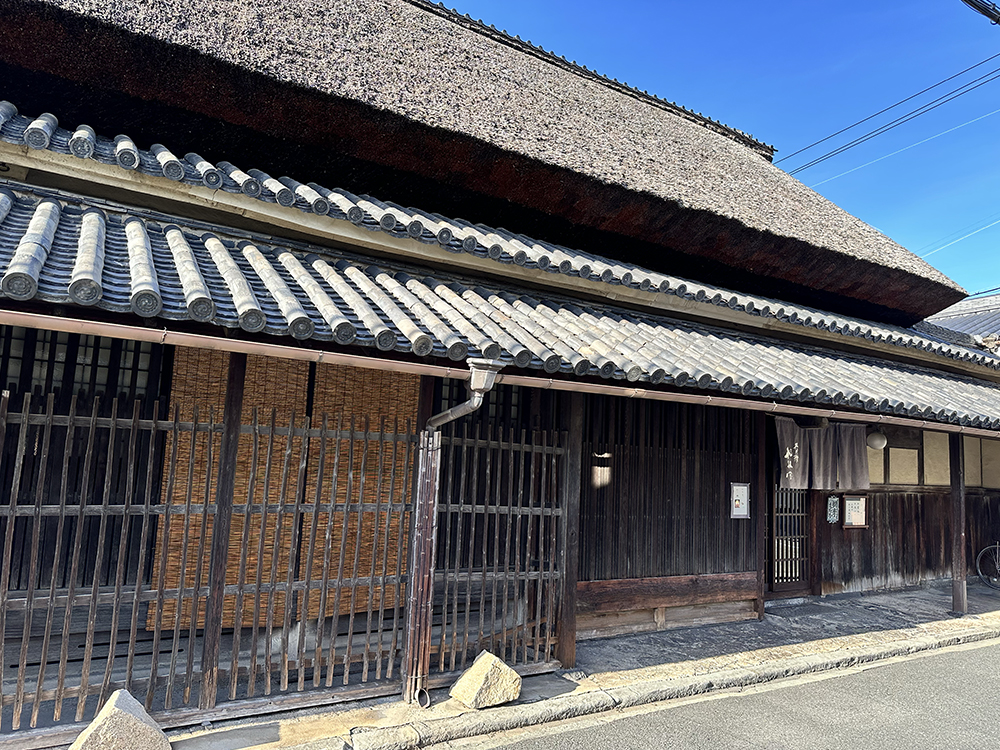
Finally, we'd like to introduce a souvenir that has been with the town of Yao for many years. Yohei Torindo, a Japanese confectionery shop located close to Kintetsu Yao Station, is a long-established store that was founded over 90 years ago. Its famous monaka (bean paste) has been a favorite since the store first opened, and is handmade from bean paste using azuki beans from Okayama Prefecture. The charming thatched-roof building is registered as a national tangible cultural property as the Torindo Itakura Family Residence.
The combination of the fragrant monaka and the rich red bean paste is irresistible. The long, slender shape is also cute! Every year, Kawachiya Kikusuimaru's solo performance is held in a lovely store with a sense of history, and it has become an annual summer event!
*The information listed is current as of October 2024. Please check the website of each store or facility for the latest opening hours.
Latest articles from OSAKA Mania Exploration
LATEST TOPICS
From Umekita Park to the Midosuji Hokomichi, we spoke to a key figure in urban regeneration about how to appreciate Osaka's changing public spaces.
The roots of popular chain stores lie in Osaka. Mister Donut, Kura Sushi, KAMUKURA, etc. ... Maniacs of the original stores make a pilgrimage to the holy land
Cyberpunk meets Showa retro! A tour of Nipponbashi 's cool Japan photo spots, including game centers and neo-cafés


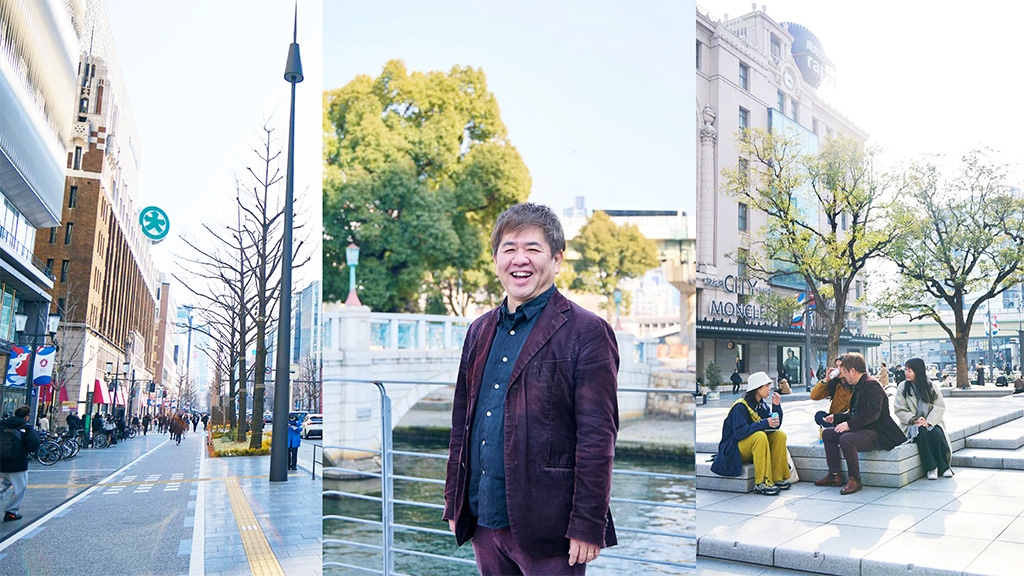 From Umekita Park to the Midosuji Hokomichi, we spoke to a key figure in urban regeneration about how to appreciate Osaka's changing public spaces.
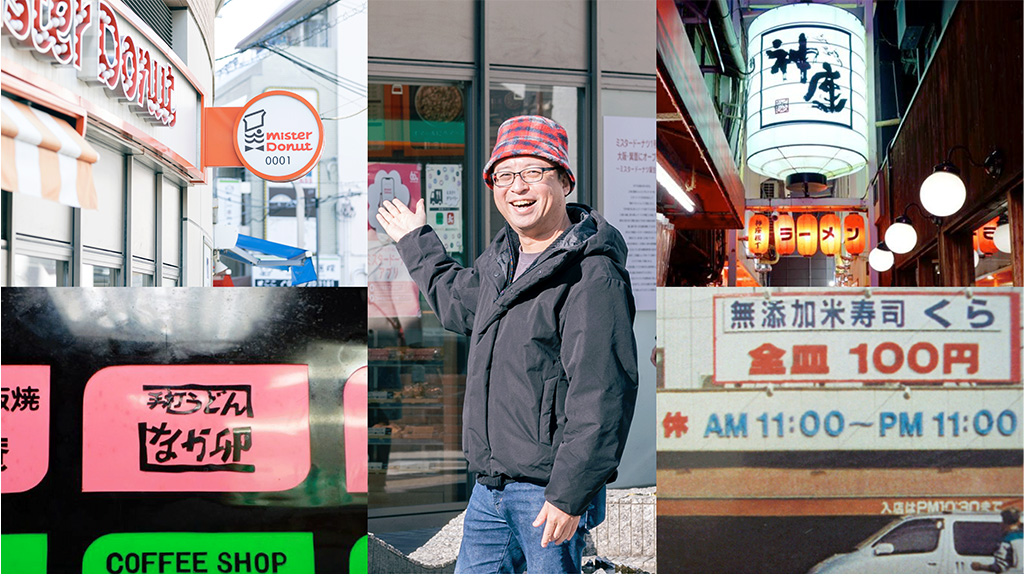 The roots of popular chain stores lie in Osaka. Mister Donut, Kura Sushi, KAMUKURA, etc. ... Maniacs of the original stores make a pilgrimage to the holy land
 Cyberpunk meets Showa retro! A tour of Nipponbashi 's cool Japan photo spots, including game centers and neo-cafés