One of Japan's three major cutlery producing regions boasting a 600-year history. The charm of Sakai knives captivates chefs from around the world.
2023.12.26
SHARE
Sakai City is one of Japan's three major cutlery production areas. It is particularly famous for its "Sakai forged cutlery," which is made using traditional methods with a division of labor between blacksmiths (fire forging) and sharpeners (sharpening). It is said that the city boasts a domestic market share of approximately 90% for professional chef knives used in Japanese cuisine. Their exquisite sharpness has attracted the attention of chefs around the world. We will visit the 600-year-old Sakai cutlery production site and a restaurant that uses Sakai forged cutlery, and convey the appeal of Sakai's culture and knives.
\This time's guest/
Yasuko Hirayama
Writer, editor, and chef. He splits his time between Zushi and Kyoto. He often writes articles on local content, restaurants, and alcohol, mainly for the web and magazines, and every weekend he works as the owner of the bar "Yamayama Fumoto" in Kamakura.
Take a trip to learn about Sakai knives by visiting museums, specialty shops, and restaurants!
The slender, shining blade and the delicacy of the blade allow it to cut solidly without damaging the fibers of ingredients. The more you use it, the more the blade becomes familiar to the user's hand, resulting in an enchanting sharpness.
Sakai knives become more comfortable in your hand with continued use, and will serve as your partner in cooking for a long time, making them the envy of cooking enthusiasts.
Since ancient times, Sakai has had many people with blacksmithing skills for the construction of ancient tombs, which led to the development of the production of agricultural tools such as hoes and shovels, as well as swords and guns, and the city has grown into one of Japan's leading knife production areas.
So, hello, I'm writer Hirayama Yasuko!
My passion is traveling around the country to find delicious local food, and I also work as a chef, working in a bar in Kamakura on weekends. Because of my job, a Sakai knife is one of the cooking tools I would like to own someday!
If you're going to buy a Sakai knife, you might as well go to the place where it's made and see and learn all about it!
So, from Tennoji Station, I took the Hankai Electric Railway, commonly known as "Chinden," which runs on the street, and headed south for about 20 minutes.
We went on an educational journey to Sakai, visiting knife museums and specialty knife shops, as well as traditional Japanese restaurants where the knives are actually used, to learn how Sakai knives have been loved by chefs and to purchase a knife of our own.
Learn all about knives! Learn about the history of knives at Sakai Densho Museum
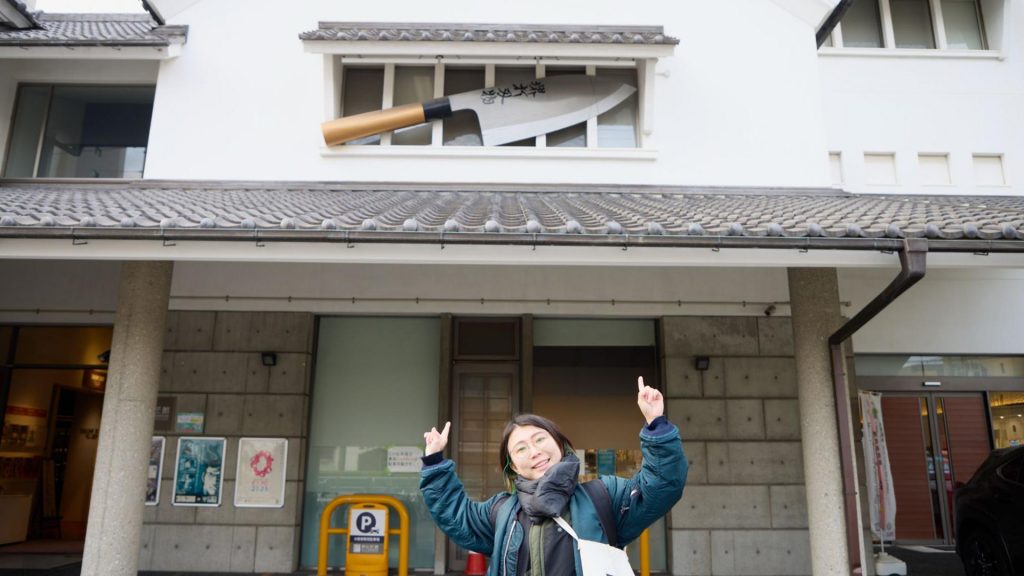
The first place we visited was Sakai Densho Museum.
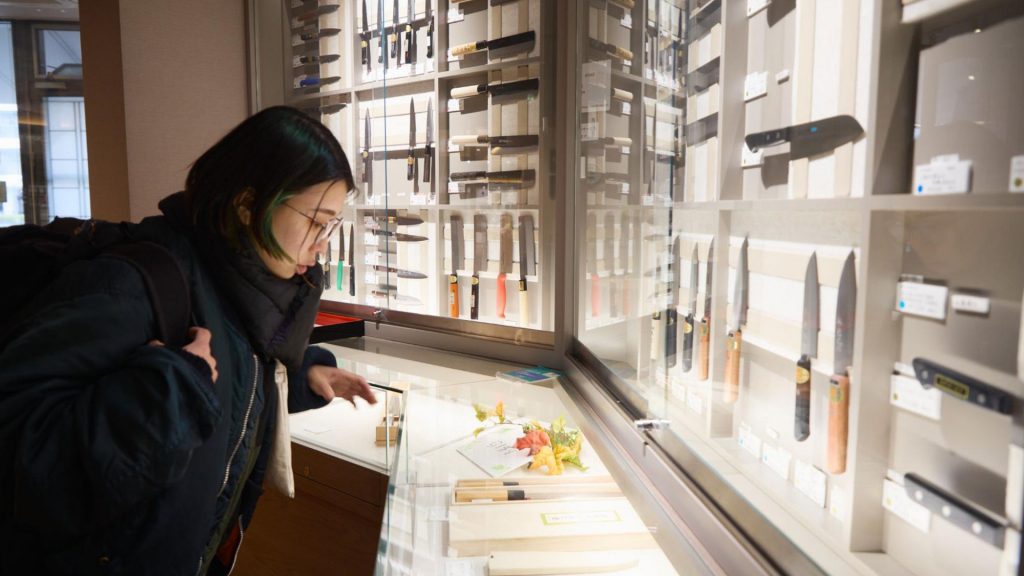
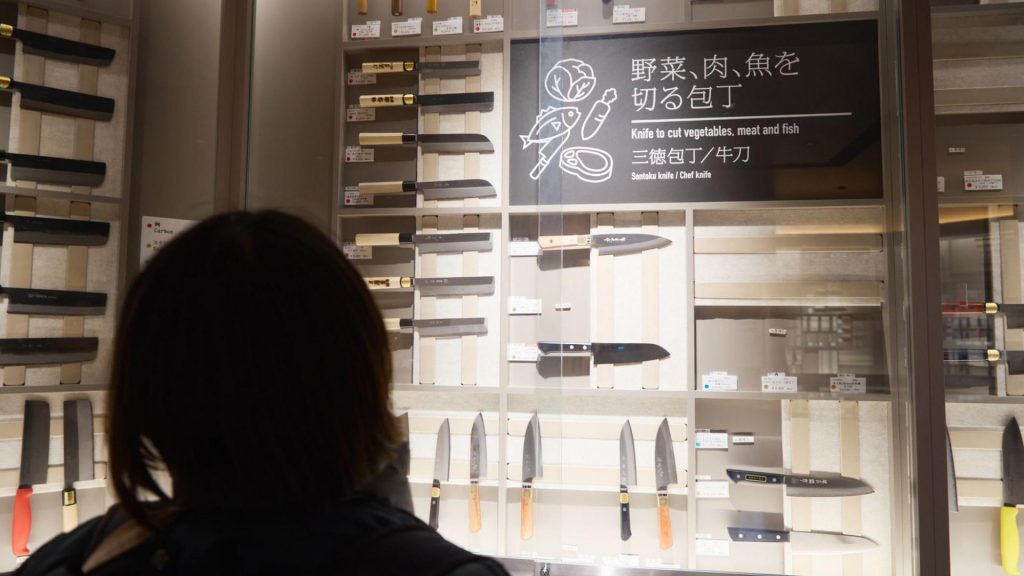
This complex not only exhibits and sells a variety of Sakai knives, but also houses a museum where you can learn about the history of Japanese knife manufacturing, and a shop where you can purchase Sakai specialties such as incense and cotton "Wazarashi."
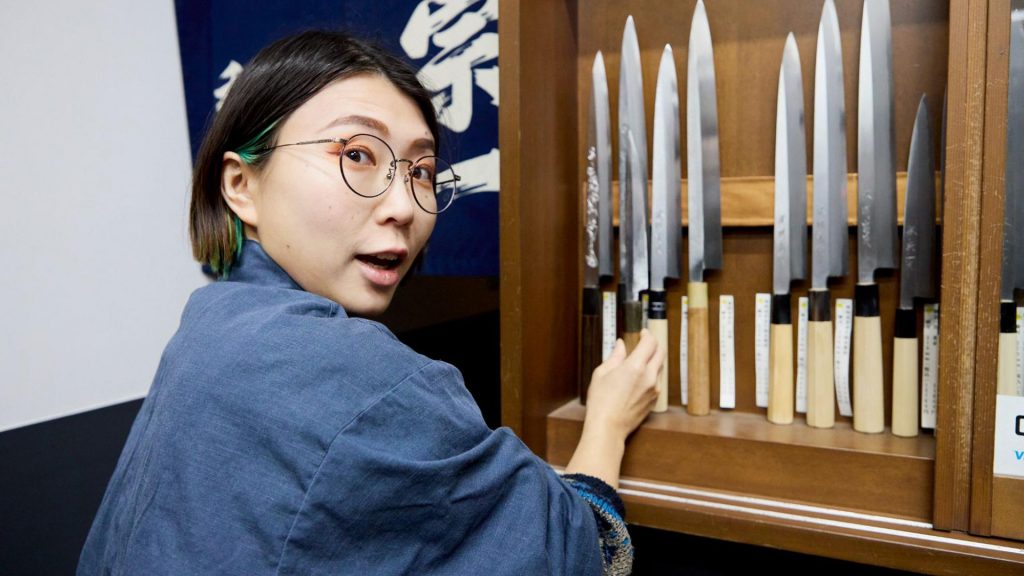
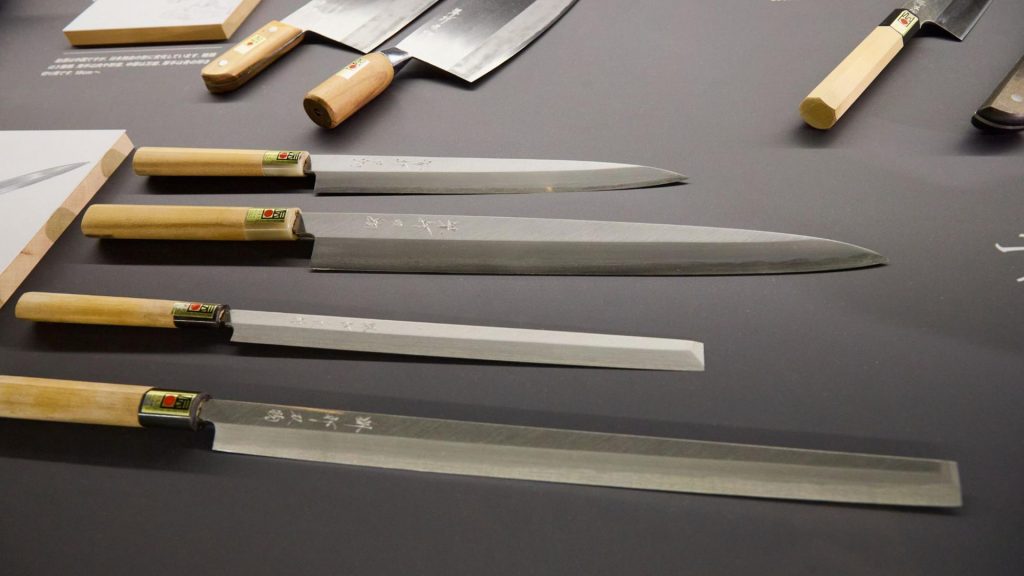
On the first floor, knives made in various workshops in Sakai are on display and for sale. The most expensive ones cost over 100,000 yen, but there are also some bargains available for around 10,000 yen.
No, but if I'm going to buy one, I'd rather get one that's reasonably priced...
The sashimi knife we saw earlier costs 60,000 yen, and assuming you fillet fish twice a week, that's 96 times a year. If you use it for 20 years, that's about 31 yen per use, so in terms of depreciation rate...
Sakai knife making was born as the city developed as a trading city
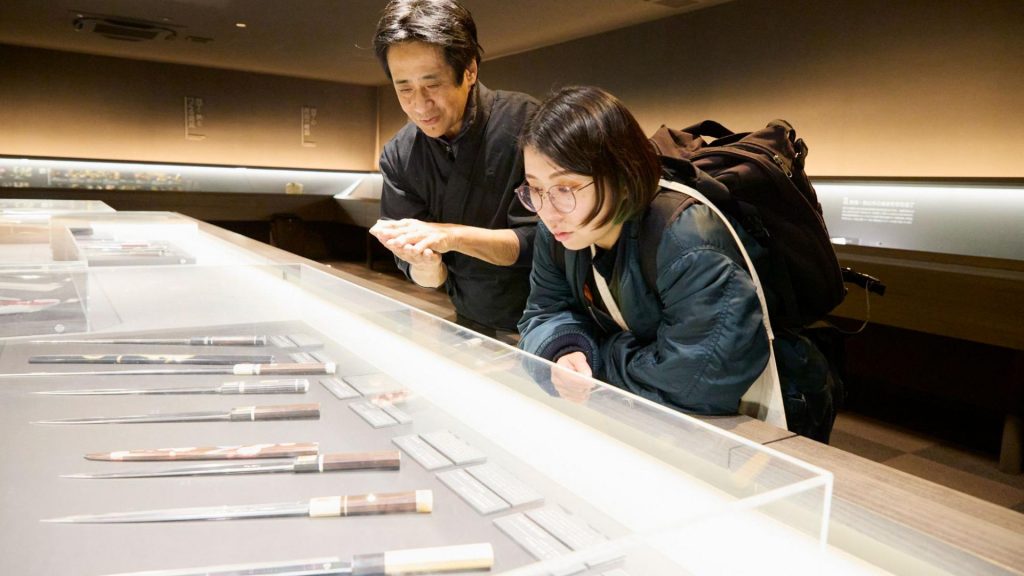
On the second floor, there is the Sakai Cutlery Museum CUT, an exhibition room where you can learn about a wide range of things, including the history of Sakai knives and the types of knives used in Japan.
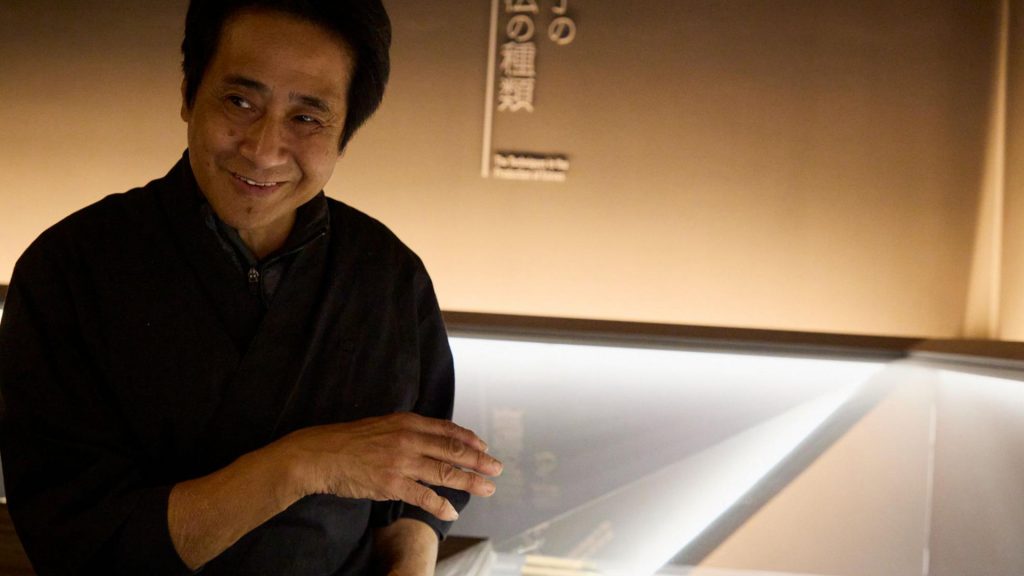
In the exhibition room, we were guided by Mr. Wada, the owner of Wada store, a specialty knife shop we were heading to later.
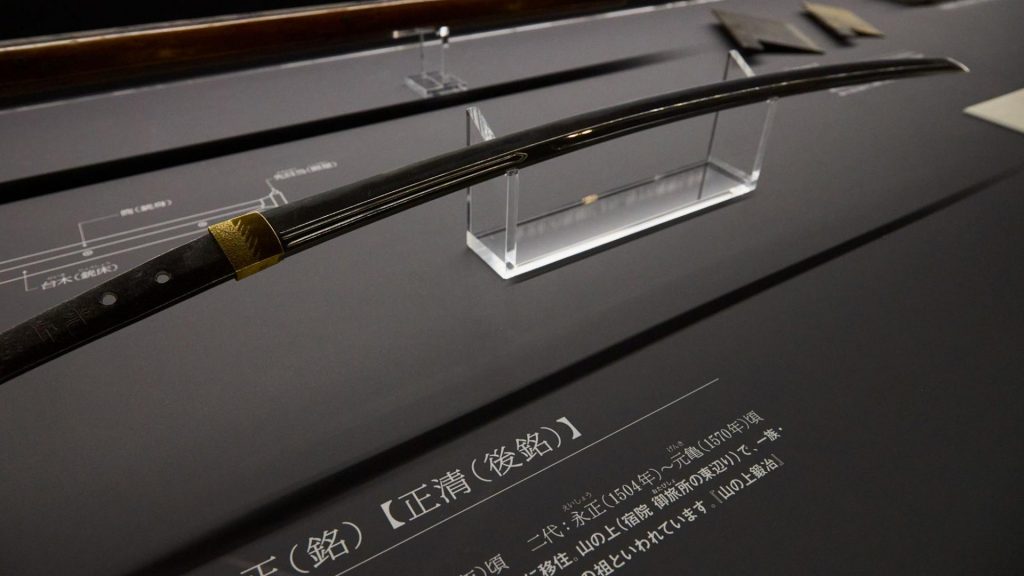
Sakai is a place where various blades are manufactured, and Japanese sword workshops are still in operation.
We touched briefly on the development of Sakai cutlery in the previous section, but it really began to develop around the 16th century. At the time, Sakai was developing as a port for international trade, and tobacco leaves were brought in from Portugal. After that, tobacco cultivation became popular within the country as a luxury item. Sakai became a major producer of "tobacco knives" for carving tobacco blades, and during the Edo period, Sakai tobacco knives were distributed nationwide with the approval of the shogunate. This technology was also used in the culinary world, and today Sakai is supported by chefs all over the country as a producer of high-quality knives.
Sakai knives today are the result of blacksmithing techniques that have been passed down since the Kofun period and a history as a trading city that has continued to flexibly accept new cultures and needs.
Sakai knives are characterized by their sharp forged blades
The distinctive feature of Sakai knives is that they are "forged blades."
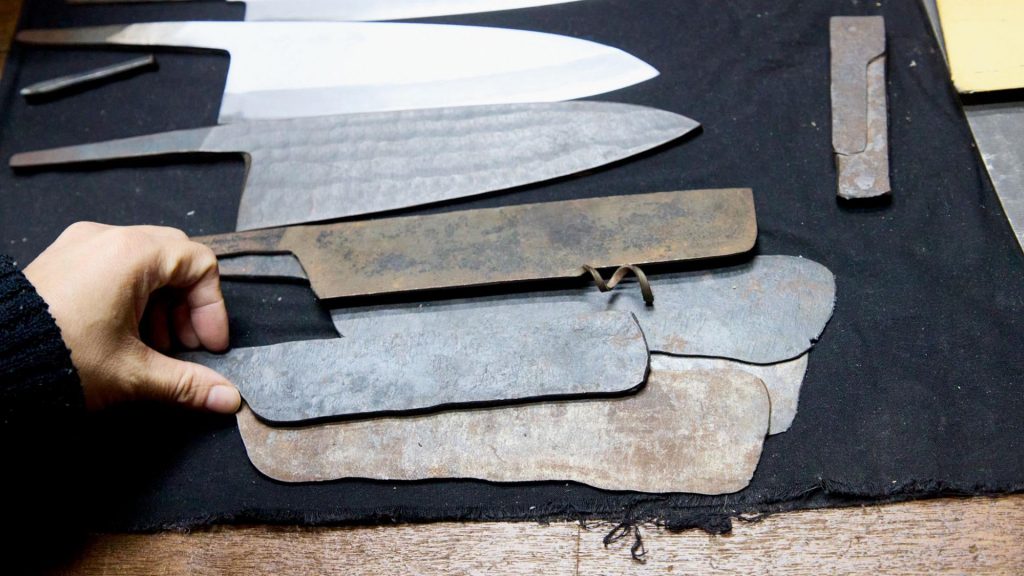
Forged blades are made by a method called "forging," in which iron or steel is heated until it is red hot and then hammered with a hammer. Metal refined through repeated forging has a tough property, which is said to be what gives the knife its sharpness.
"The mainstream of forged knives is the so-called Japanese kitchen knife, which has a cutting surface on only one side, or 'single-edged'. The same goes for Japanese swords. Compared to double-edged knives, single-edged knives have the advantage of cutting at a sharper angle. They are an essential knife for Japanese cuisine."
According to Wada, there are a variety of specialized knives to suit Japan's diverse food culture.
"Tuna knives" are similar to Japanese swords and are used to fillet large tuna, "pufferfish sashimi knives" have thinner blades for slicing pufferfish sashimi, and in modern times, heavy, thick Chinese knives and Western-style chef's knives have also begun to be produced.
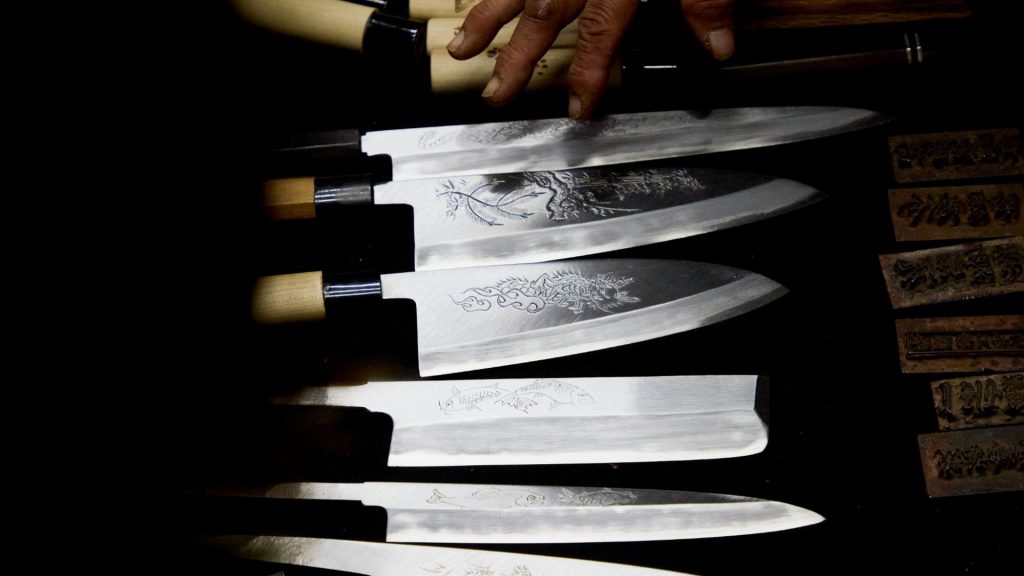
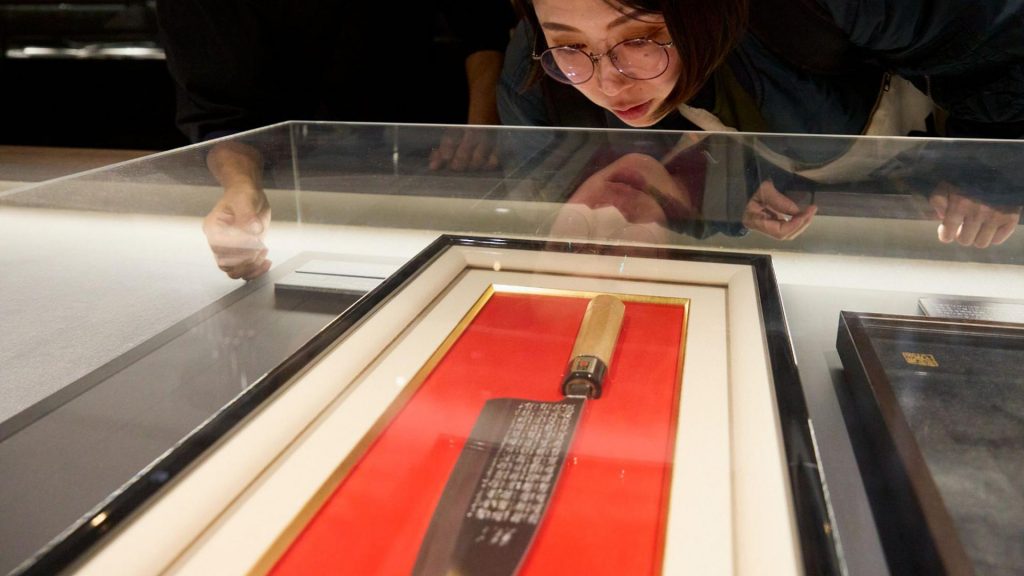
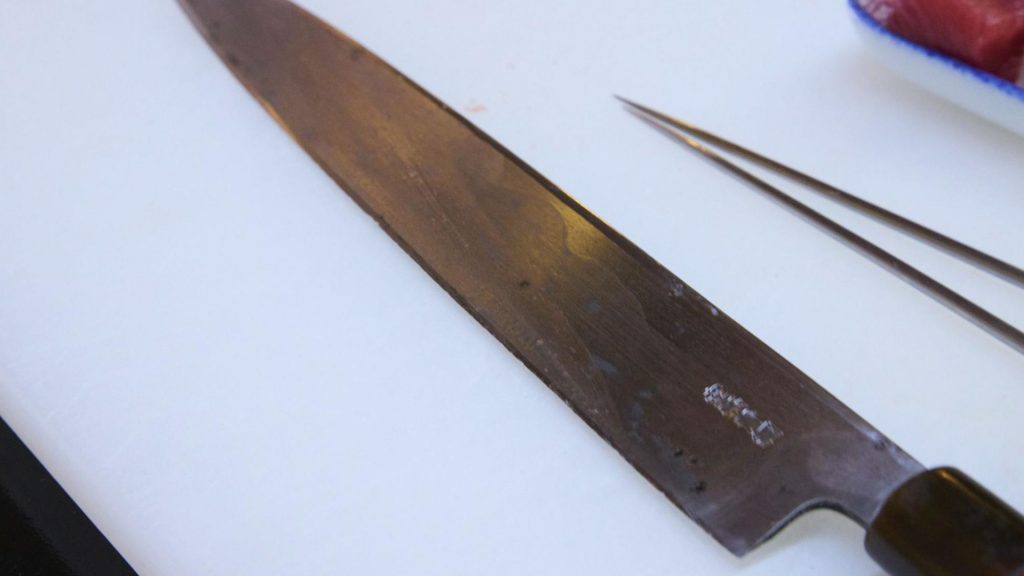
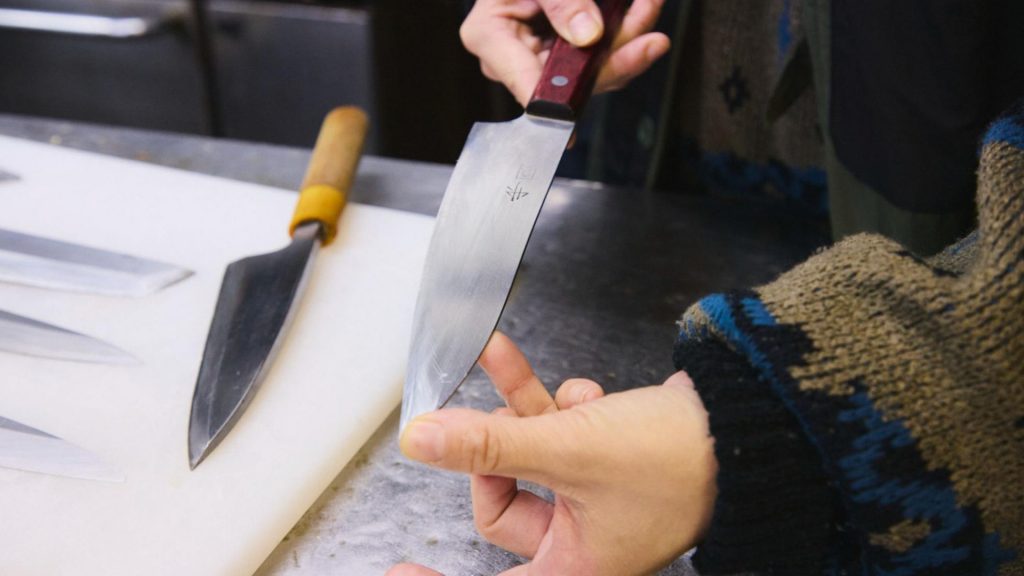
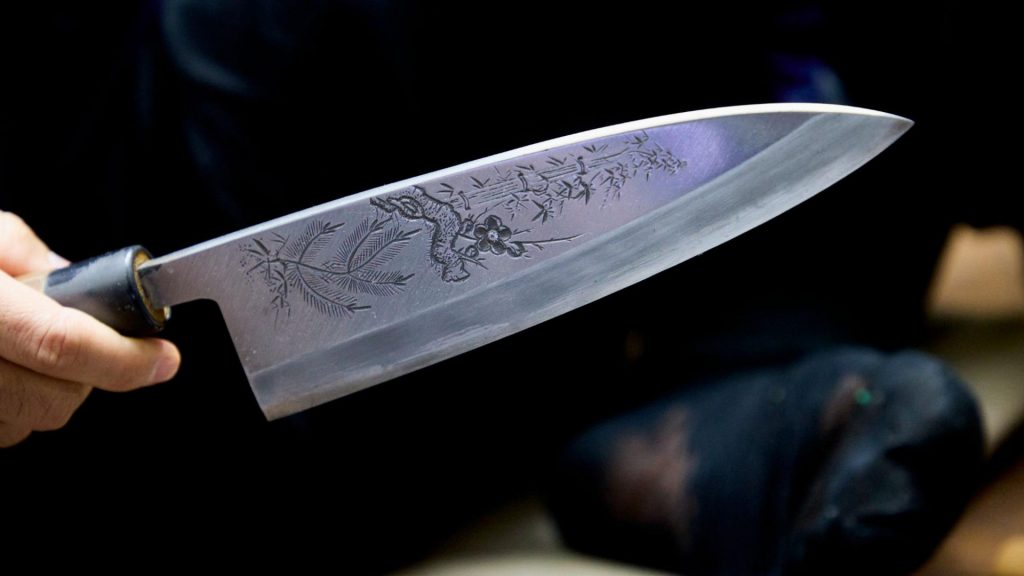
This is a deba knife with the kanji character for fish carved on the blade. Wow, it's so detailed!
Thanks to the refined techniques achieved through division of labor, Sakai knives today are also beloved as works of art. It is easy to see why there are knife collectors.
Sakai Densho Museum (Sakai Traditional Industry Hall) Address: 1-1-30 Zaimokucho Nishi, Sakai Ward, Sakai City, Osaka Prefecture Business hours: 10:00-17:00 Closed: 3rd Tuesday (or the following day if it is a public holiday), New Year's holiday (December 29th to January 3rd) *Other temporary closures may occur. Phone number: 072-227-1001
Learn about the professional work brought about by the division of labor at Wada store
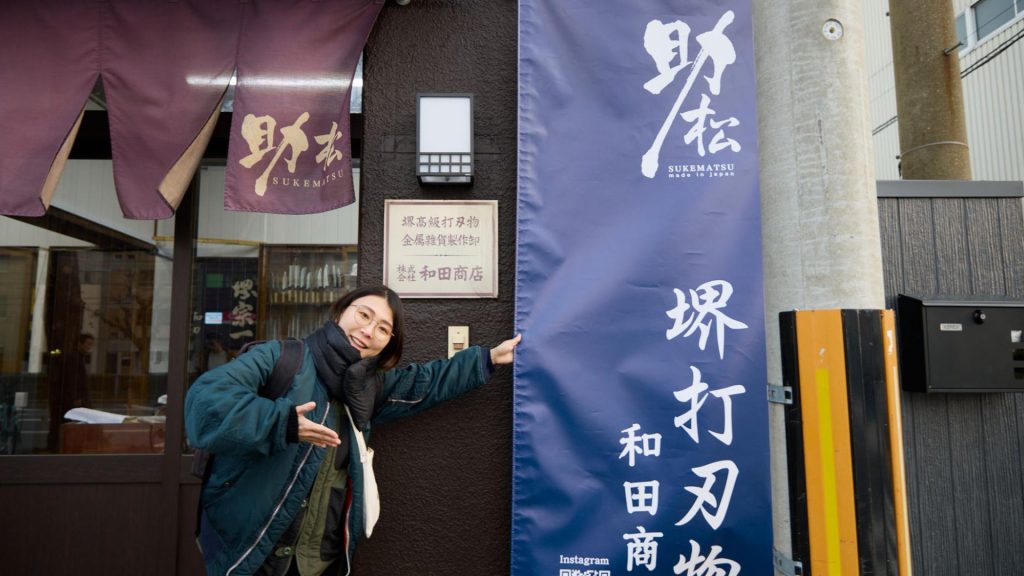
After learning all about knives at the Sakai Traditional Museum, we went to Wada store a knife wholesaler.
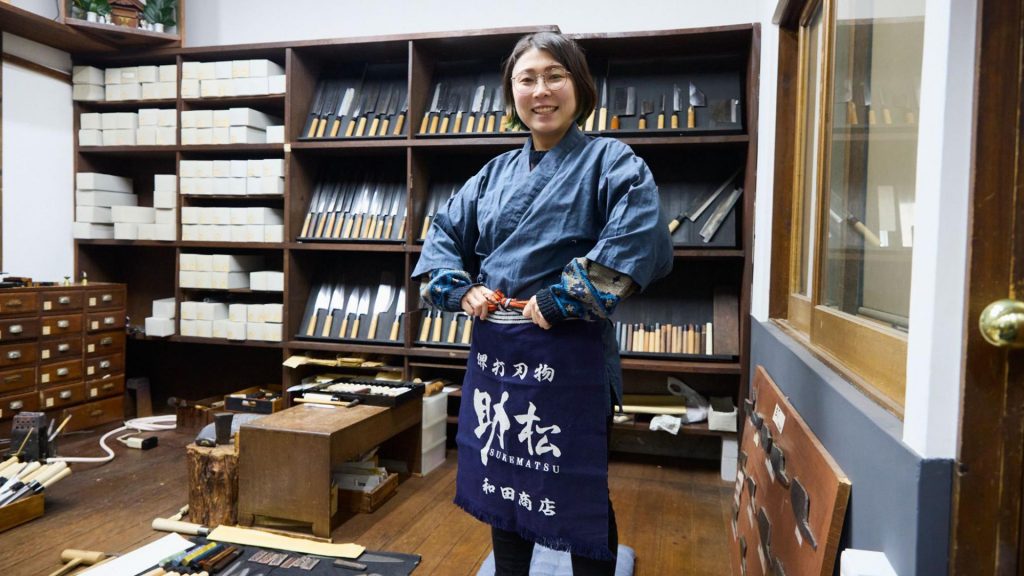
Wada store is a long-established store that was founded over 150 years ago, and currently sells knives and provides knife sharpening and maintenance services, but originally started out as a specialist in handle attachment.
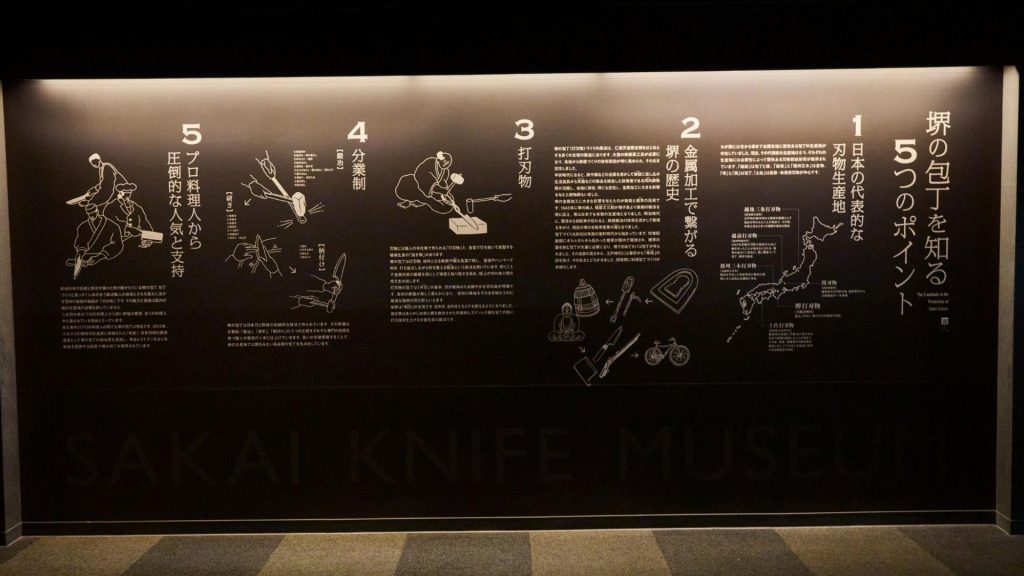
Wada-san told us that the secret to the excellence of Sakai knives is the "division of labor system."
"In Sakai, there has been a detailed division of labor between craftsmen who forge the blades, craftsmen who make the handles, craftsmen who engrave the names, craftsmen who sharpen the knives, and craftsmen who sell the knives. This division of labor has allowed craftsmen to hone the skills they excel in."
To let as many people as possible know about these artisan techniques, Wada store holds daily experiences where people can try out handle attachment and knife sharpening.
Experience knife sharpening and handle attachment!
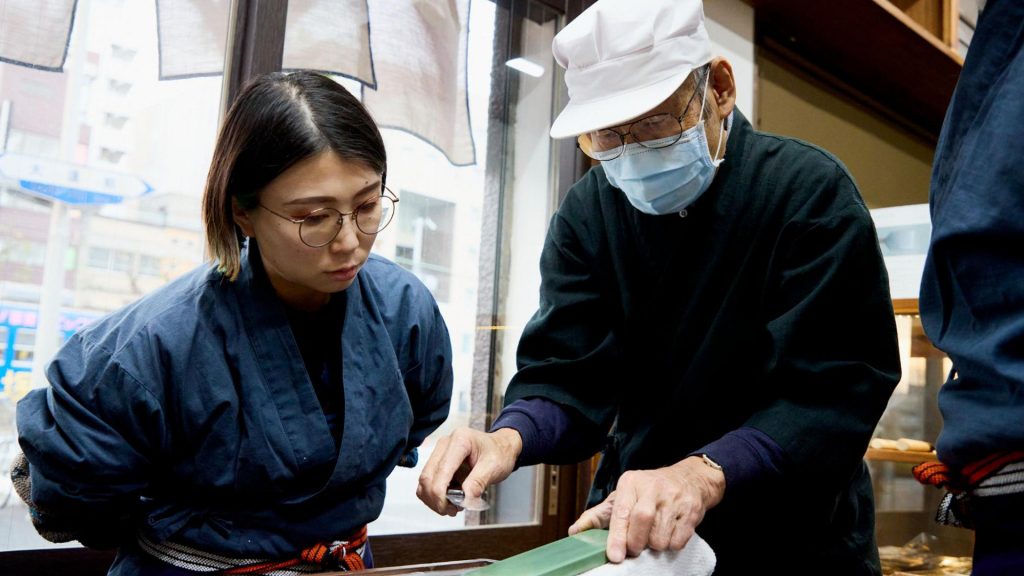
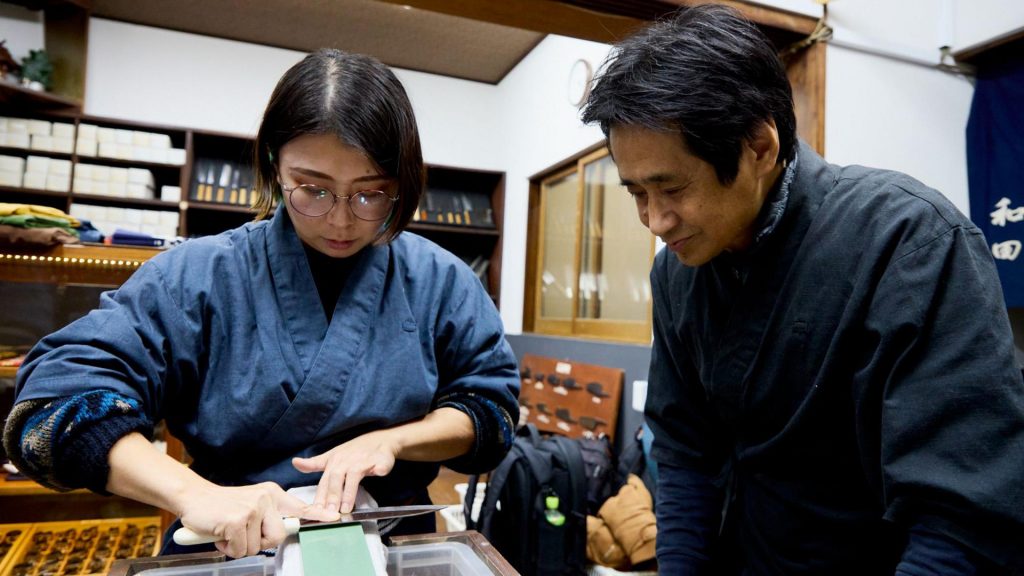
So I decided to try it myself! First, I tried sharpening a knife.
We borrow work clothes and aprons and get to work.
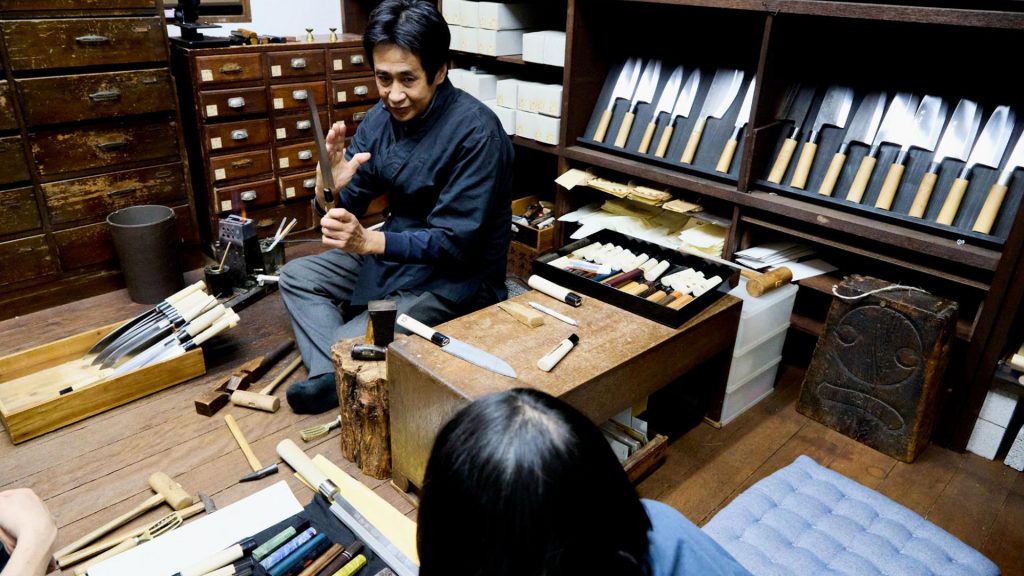
The person who will teach you how to sharpen knives is a veteran craftsman with 62 years of experience.
"If a knife has become dull, you can restore its sharpness by sharpening it with a whetstone. If you sharpen it every time you use it, you can use the same knife for a long time. Also, using a knife that is dull can be dangerous because you may use too much force and get injured."
"When you think of a sharp knife, you imagine a blade with a smooth edge, but that's not actually the case. When you look at a blade that has been sharpened by a whetstone under a microscope, you can see that it actually has many small serrations. It is these small serrations that cut things cleanly," says Wada.
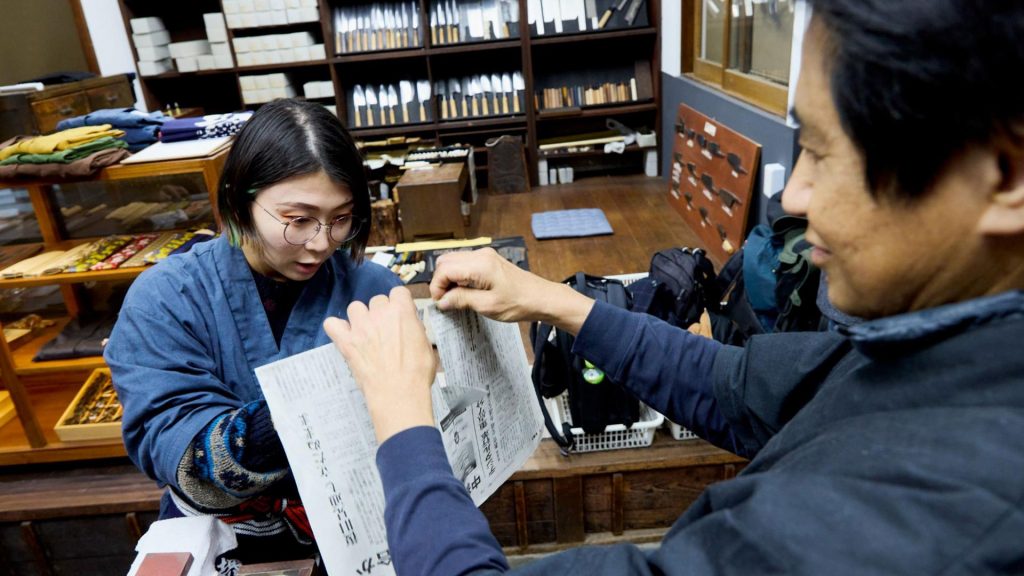
To check how sharp a knife is, slide it across the board. A dull knife will slide along the board, but a properly sharpened knife will bite into the board and not move.
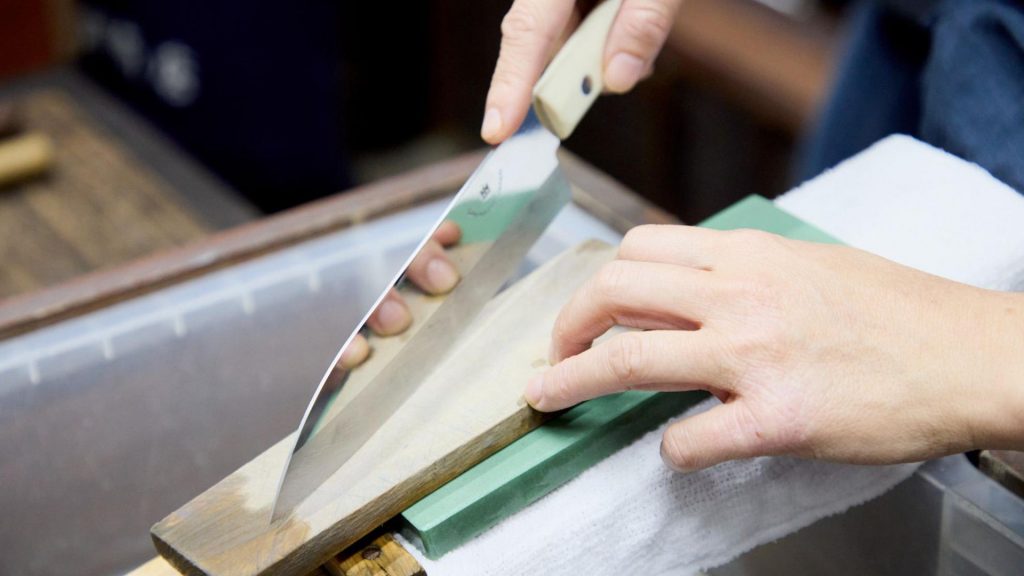
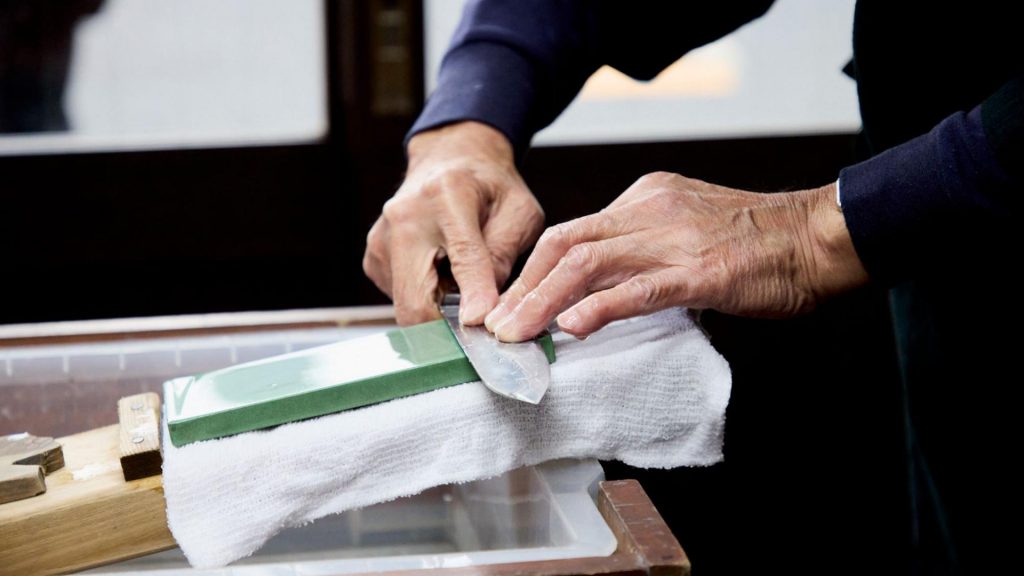
While being mindful that the blade hits the whetstone at a 15-degree angle, the blade is carefully sharpened back and forth five times per location, changing the angle depending on the area.
The trick is to sharpen carefully without applying too much pressure, while keeping in mind the area you want to sharpen.
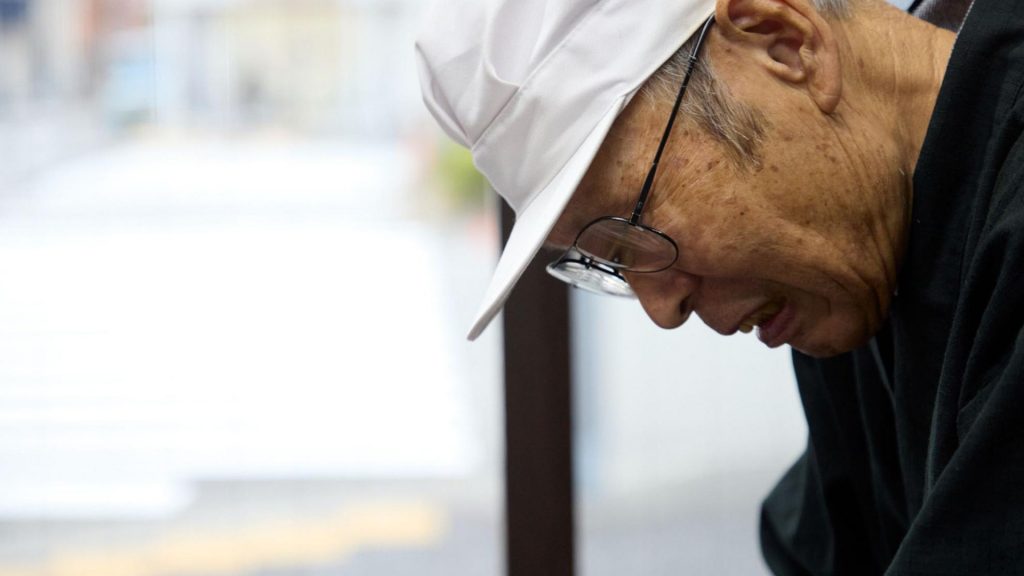
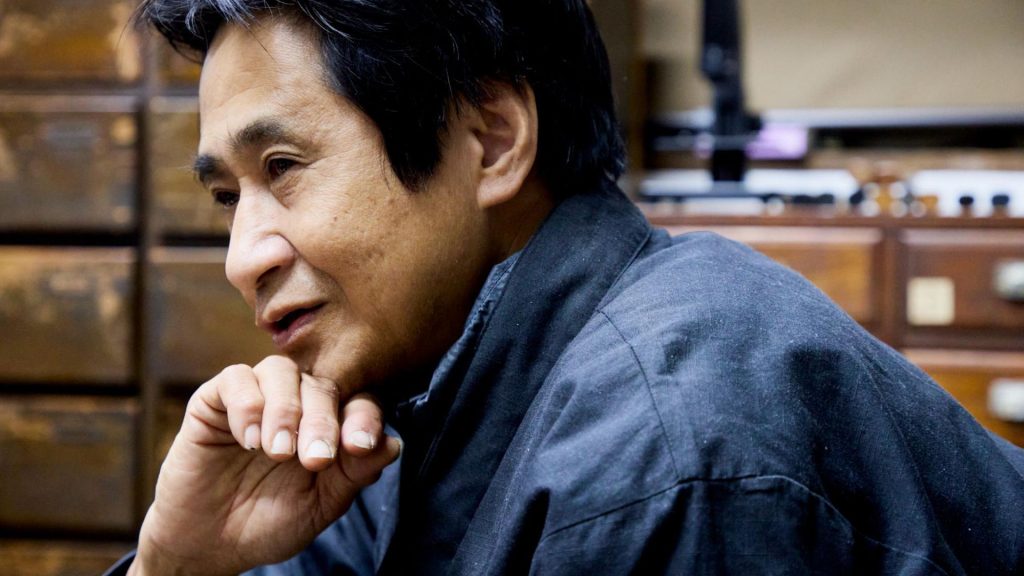
The face of a craftsman that gives off a sense of history!
Once sharpened, the knife cuts the newspaper in half!
It feels so good!!
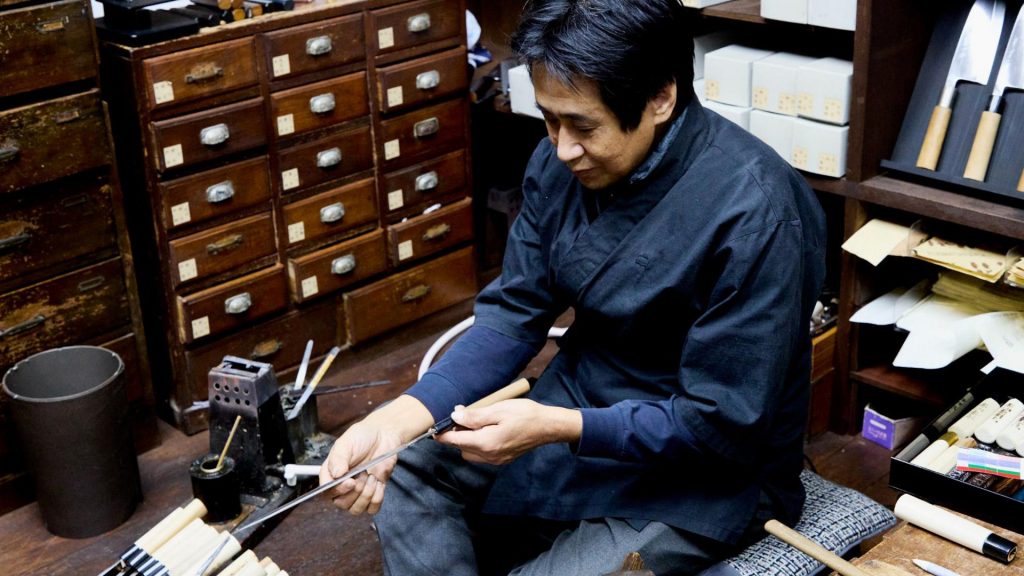
After the sharpening experience, you will attach a handle to the knife.
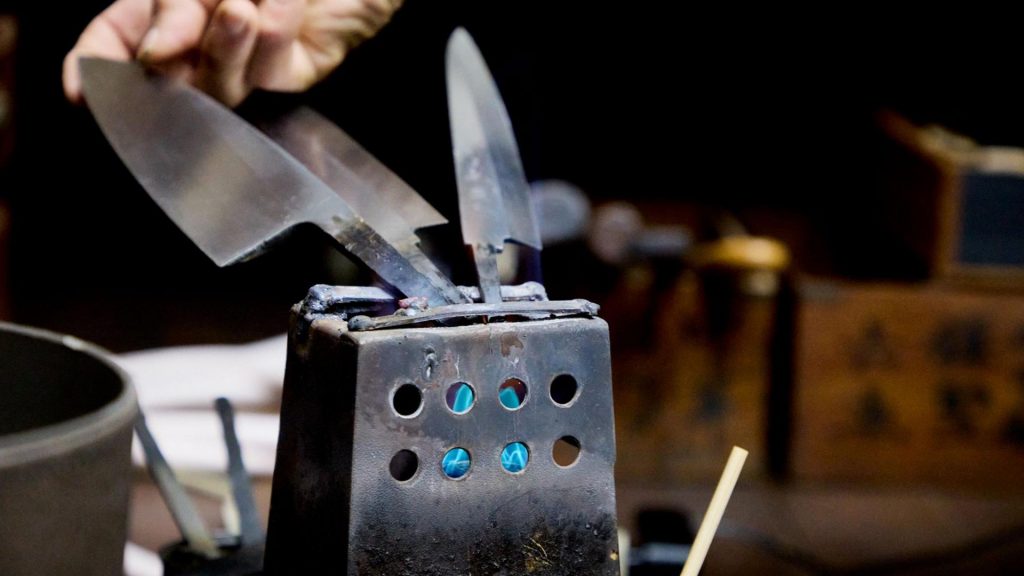
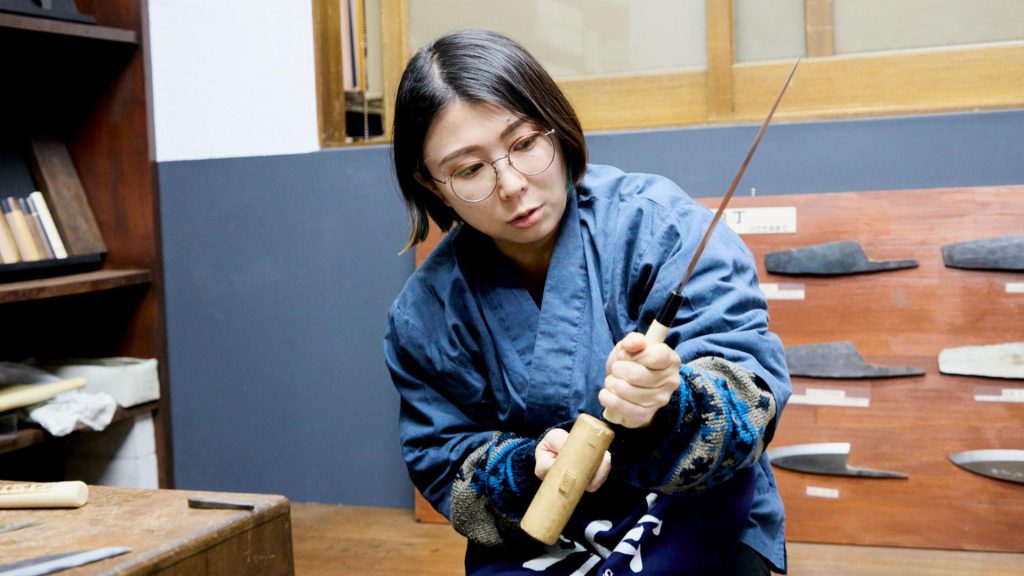
The part that will go into the handle is heated with a burner, the wooden handle is pushed in, and then the bottom of the handle is hit with a wooden mallet to make the blade fit tightly.
With each hammering, the blade is sucked into the handle, gradually taking on the shape of a knife. I was amazed to see how a knife is made!
Buying and using Sakai knives helps preserve the culture
After completing the experience, we spoke to Wada again.
Japanese manufacturing has developed specialized fields through a division of labor system, but due to changes in lifestyles and an aging population with a declining birthrate, the number of professionals in each field is decreasing, and the division of labor is becoming ``gaps.''
This is also a serious problem in Sakai's knife-making industry.
"The barriers between Western and Eastern cuisine are disappearing, and now Western chefs and chefs from overseas are asking to buy Sakai knives. However, even though demand is increasing, the number of craftsmen is decreasing, and the reality is that ordered knives cannot be obtained immediately," says Wada.
"At Wada store, we have not only been doing handle attachments since the company was founded, but we have also been involved in multiple processes such as selling knives, sharpening blades, and engraving names, all in order to protect the excellent knives and techniques of Sakai."
When we buy something, we weigh various factors such as price and convenience, but perhaps we also need to consider whether the purchase will help preserve Japanese craftsmanship.
Wada store Address: 1-1-1 Shinmeicho Higashi, Sakai Ward, Sakai City, Osaka Prefecture Business hours: 9:00-18:00 Closed: Saturdays and Sundays Phone number: 072-232-1886
Enjoy elegant knife skills and a kaiseki bento at a beloved local restaurant
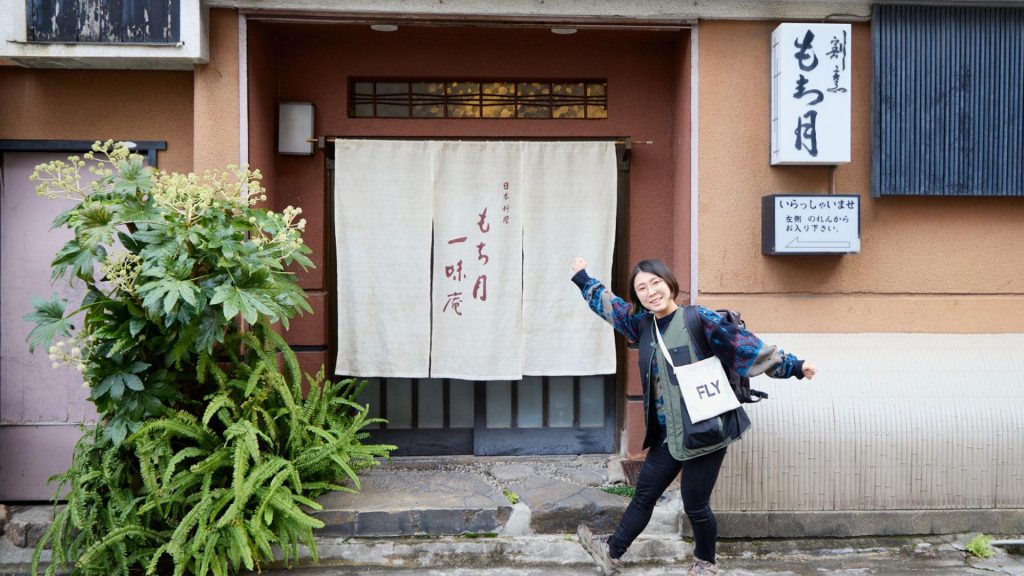
The final destination on our journey to learn about Sakai knives is the Japanese restaurant Mochizuki Ichimian. This is a long-established restaurant that has been loved by locals for over 70 years since its establishment.
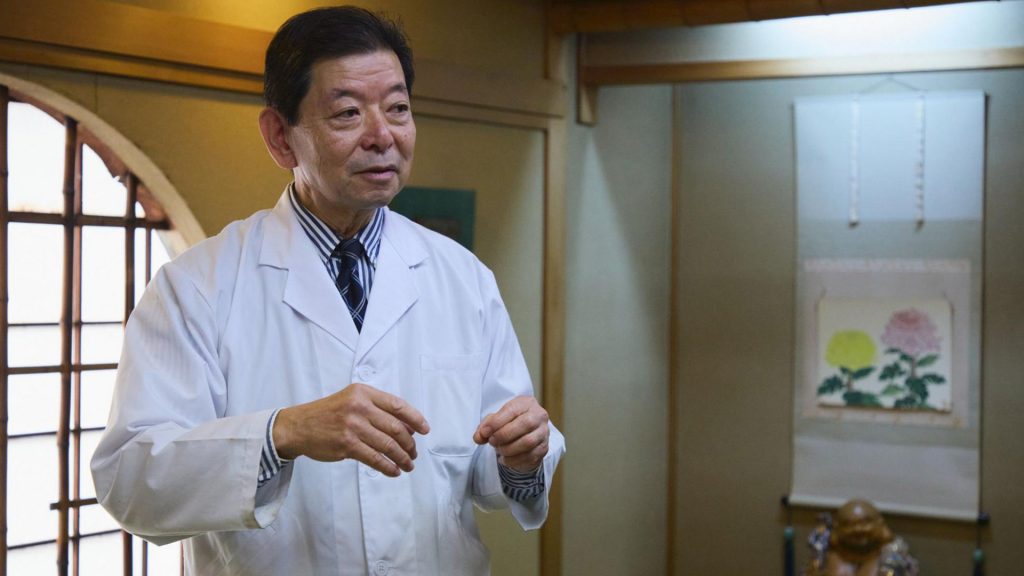
Here, we were shown the sashimi knife that the owner, Mochizuki-san, uses.
Restaurant knives that convey the professional experience and pride
This sashimi (yanagiba) knife was given to him by a knife maker he is friendly with when he took over the family business. Over the years of use, it has been sharpened repeatedly, and the blade has become shorter. Mochizuki's experience is clearly reflected in the knife...!
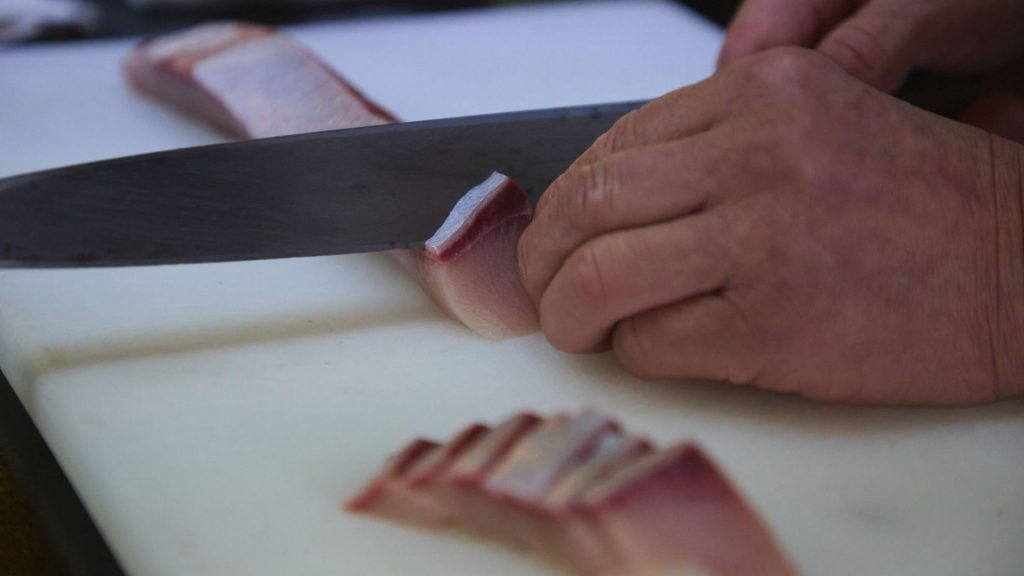
To test the sharpness of this knife, I had him cut a piece of sashimi right in front of me.
"The knife used to cut sashimi has a long blade. If the blade is short, the cross section won't be clean. So when cutting sashimi, you cut by pulling the blade from the base towards the tip," says Mochizuki. You can't help but be mesmerized by his skillful knife skills.
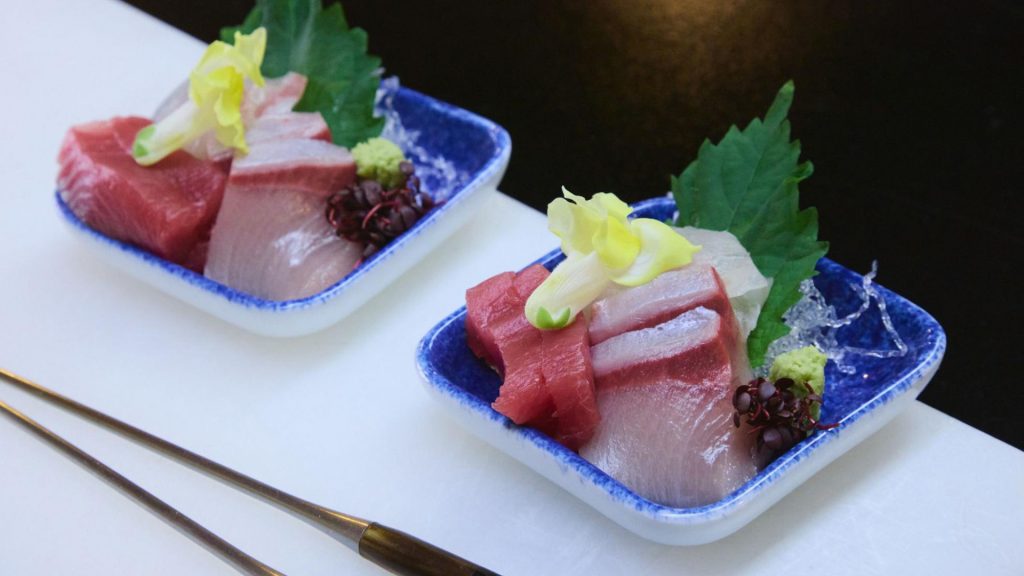
The soft flesh of the fish also has sharp edges. It's beautiful to look at!
"Some chefs have their knives sharpened at a specialist store, but many chefs sharpen and maintain their own knives. This way, even with the same knife, the sharpness will change to suit the amount of force used by the chef."
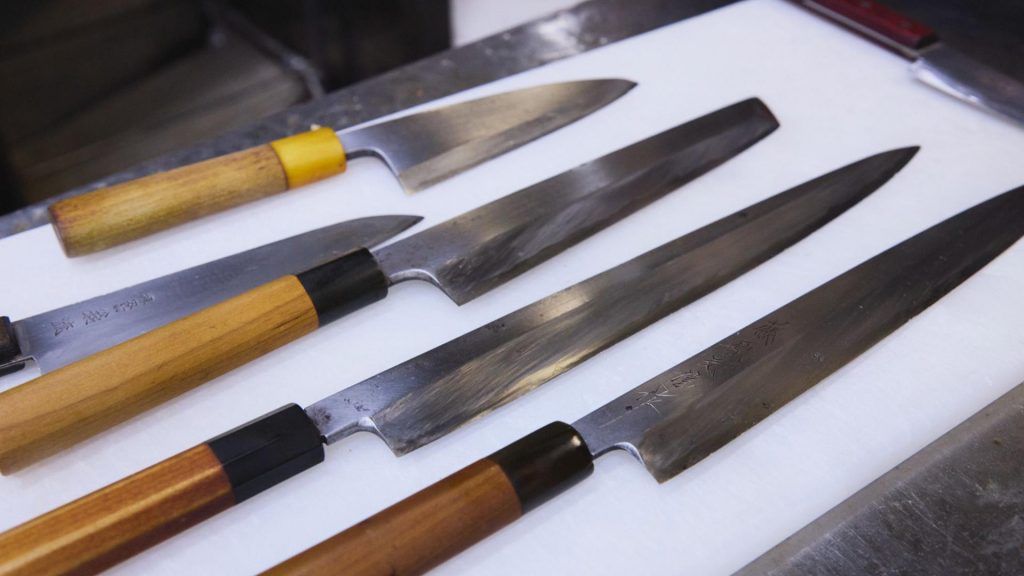
From the back, small deba knife, paring knife, conger eel knife, and two sashimi knives
The blades of the deba knife at the back of the image and the conger eel knife, third from the back, are much shorter than the handle. According to Mochizuki, they have been in use for over 30 years.
The tip of the Santoku knife is also slightly curved in an S shape. The Santoku knife I own is not shaped like this, so it's probably optimized for Mochizuki's use.
It feels so good to have it fit your hand perfectly and cut cleanly just the way you want!
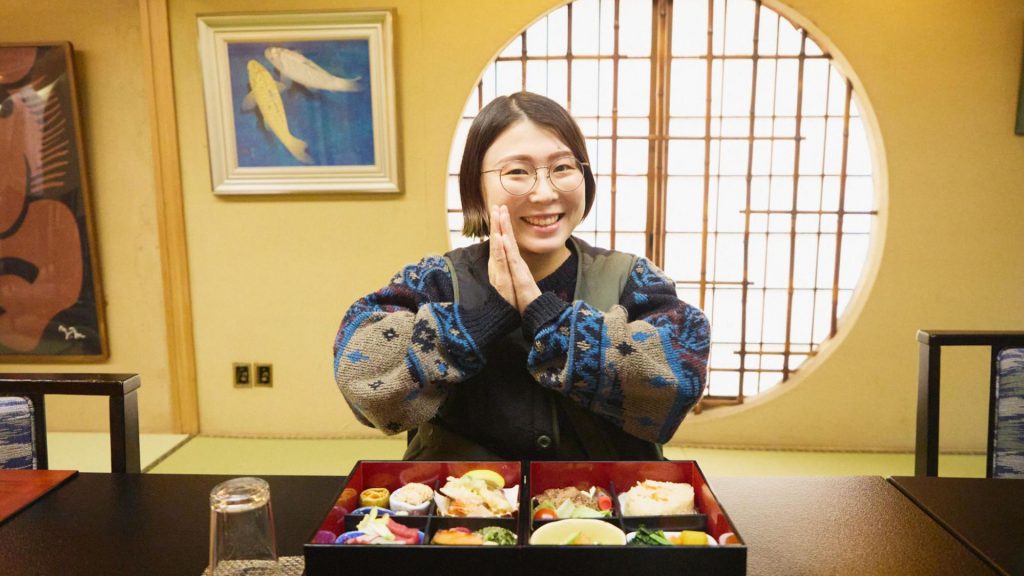
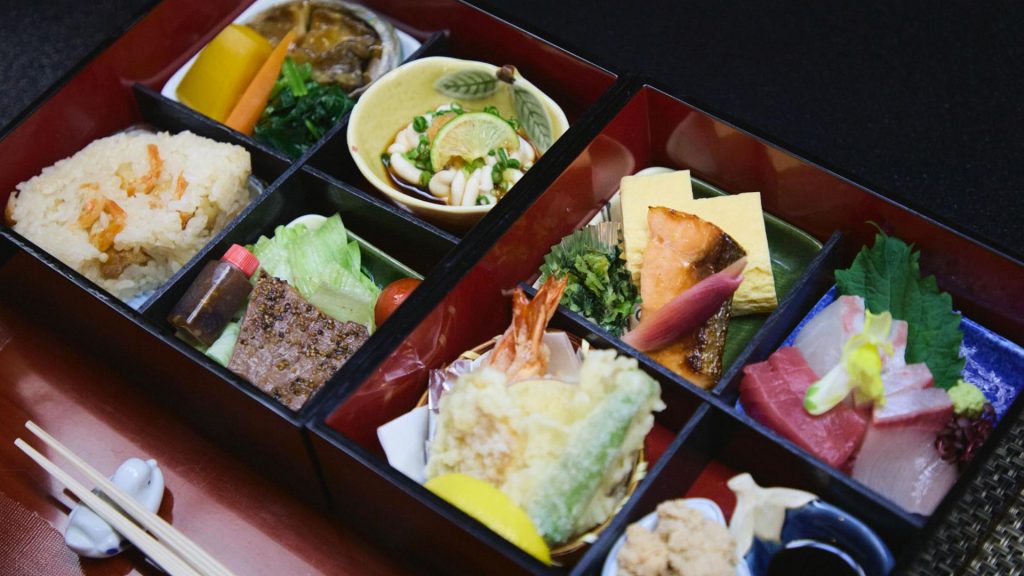
Finally, we enjoyed Mochizuki's proud bento lunch box.
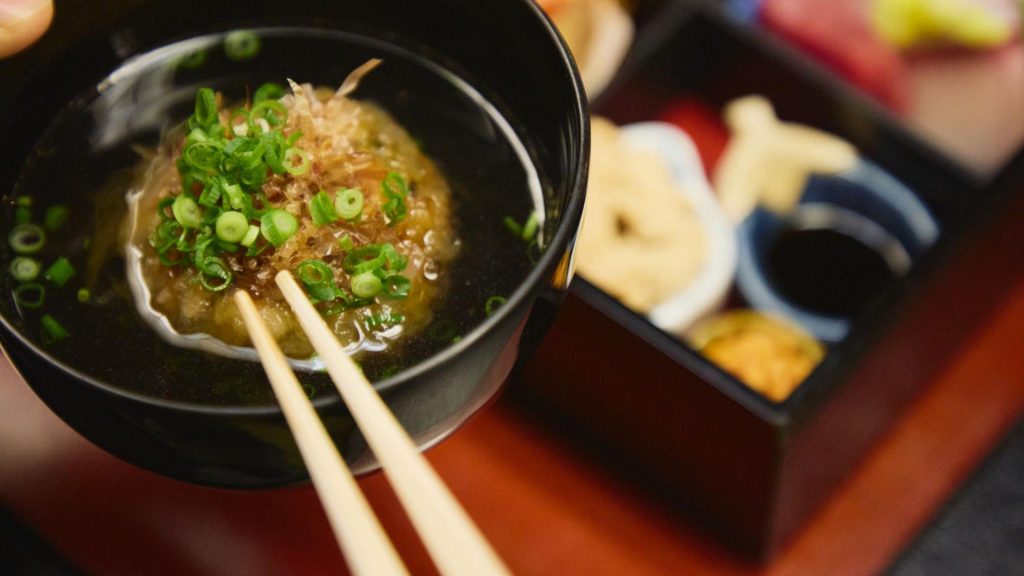
Mochizuki's cuisine is full of attention to detail, using soy sauce made by a local manufacturer and ponzu sauce made from a recipe passed down through generations.Mochizuki's specialty, the steamed buns served in a bowl, are made from kudzu that has been carefully kneaded for 40 minutes and are filled with a variety of ingredients such as octopus and arrowhead, and are perfectly soaked in the broth!
What kind of craftsman makes it and what kind of chef uses it? The food you eat will taste even better if you know that!
Japanese Cuisine Mochizuki Ichimi-an Address: 1-2-3 Omachi Higashi, Sakai Ward, Sakai City, Osaka Prefecture Opening hours: 17:00-22:00 (kaiseki lunch by reservation only) Closed: Sundays and public holidays Phone number: 072-232-0362
<Japanese knife making and Japanese cooking experience>
This is an experience where you can experience the food culture that has been nurtured in Sakai through Japanese cuisine from the long-established Japanese knife Wada store Shoten" and the long-established Japanese restaurant "Mochizuki." Click here for experience reservations and details
At the end of the journey
A journey to learn about Sakai knives.
The reason why these knives are loved by so many chefs is not only because of the solid sharpness that comes from being forged knives, but also because of the skills of the artisans who create such fine tools, which have been cultivated over a long history. I was able to see firsthand the appeal of these exceptional products that can be used for decades with proper maintenance.
However, with the changing times, the division of labor system is in danger, and the survival of professional techniques is in jeopardy. Using Sakai knives not only improves the quality of your daily cooking, but may also help connect the techniques and culture that have been passed down to the future.
But, even without going into the complicated details, Sakai knives are very good products!
Of course, they are more expensive than those sold at mass retailers, but the more you use them, the more they will become familiar to your hands, and they can be used for decades. Even if the parts get damaged, there are craftsmen in Sakai who can provide maintenance, so you can rest assured.
Ahhh! I really want a knife!!
Next time, I'll go on a "Sakai knife buying trip" to find the perfect knife for me!
A person involved in this article
Text
Yasuko Hirayama
Photo
Mei Hirano
Edit
Rie Tomimoto
Direction
NINGEN Editorial Department(NINGEN Inc.)
New articles about the unknown Osaka
LATEST TOPICS
Izumisano City
What do people from abroad eat at Kansai International Airport?
within Osaka city
Enjoy the entertainment-filled nightlife of Osaka! From bars and clubs to authentic sushi... A nightlife tour in Shinsaibashi starting at 10 PM
within Osaka city
Osaka's unique sushi has evolved into something truly unique! From long-established box sushi restaurants to high-end restaurants that are difficult to book, hidden gems with the best value for money, and even vegan options!





 What do people from abroad eat at Kansai International Airport?
 Enjoy the entertainment-filled nightlife of Osaka! From bars and clubs to authentic sushi... A nightlife tour in Shinsaibashi starting at 10 PM
 Osaka's unique sushi has evolved into something truly unique! From long-established box sushi restaurants to high-end restaurants that are difficult to book, hidden gems with the best value for money, and even vegan options!