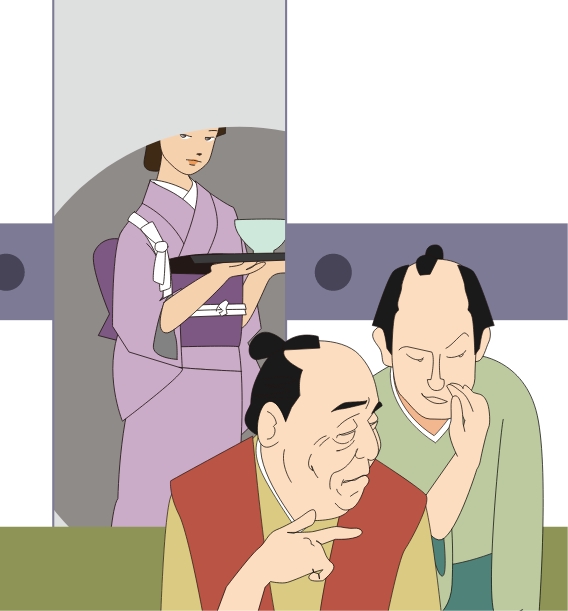
What are ninjas?
What are ninja ?
What are ninjas?
Without sound,
Without scent,
Without fame,
Without valor,
Merit,
like the creation
of heaven and earth
From "Mansenshukai"
Ninjas had their prime during the Sengoku period (sometime around 15th century).
At the time, they were not called Ninjas. They were called the Shinobi-no-mono or,
depending on the region, Kusa, Rappa, and other names.
Ninjas were not only careful not to make sound or emit scent,
but were also careful to avoid becoming well known or conspicuous.
-
Righteousness
Ninjutsu used for selfish ends or for tyrants who have strayed from the principles of righteousness is the same as thievery.
One must always hold benevolence, righteousness, loyalty and faith in their hearts.
-
Live and let live
If they are loyal to their lord, it is not a disgrace to deceive the enemy.
Fulfilling one's loyalty is to return, even swallowing one's pride, and convey information about the enemy.
One cannot perform one's duty, if dead. It was necessary to obtain information, avoid fights as much as possible, and return alive.
The Ten Qualities of a Ninja
The Ten Qualities of a Ninja


-
one
Those who have the five virtues of loyalty, bravery, courage, courage, and faith, and who are in good physical and mental health.
-
Two
A person who is plain, gentle, righteous, less greedy, fond of science, righteous in conduct, and ungrateful.
-
three
A person who has good eloquence and wisdom, who understands conversation, and who hates to be deceived by the rasonings of others.
-
Four
A person who knows his natural destiny and combines the truth of Confucianism and Buddhism, who is free from desire, and who understands well the words of his predecessors.
-
Five
A person who knows the code of the samurai, has the loyalty and bravery of the ancient samurai, and is able to offer his life on behalf of his lord in the spirit of righteousness.
-
Six
A person who does not like to argue with others, but is gentle, dignified, righteous, and a good person without two sides of the same coin.
-
Seven
Whose wives and children and relatives are all of right mind, and no harm will come to them from rebellion and perseverance.
-
Eight
Those who have traveled around the countries and know well how each place is like.
-
Nine
A person who is well learned in the art of ninjutsu, sensitive to intrigue, well written, and well versed in calligraphy, well versed in the art of ninjutsu, and highly motivated in military affairs.
-
Ten
A person who is well versed in various arts and can use them in a timely manner, from poetry and literature to entertainment arts such as chants, dances, short songs, clapping, and mimicry.
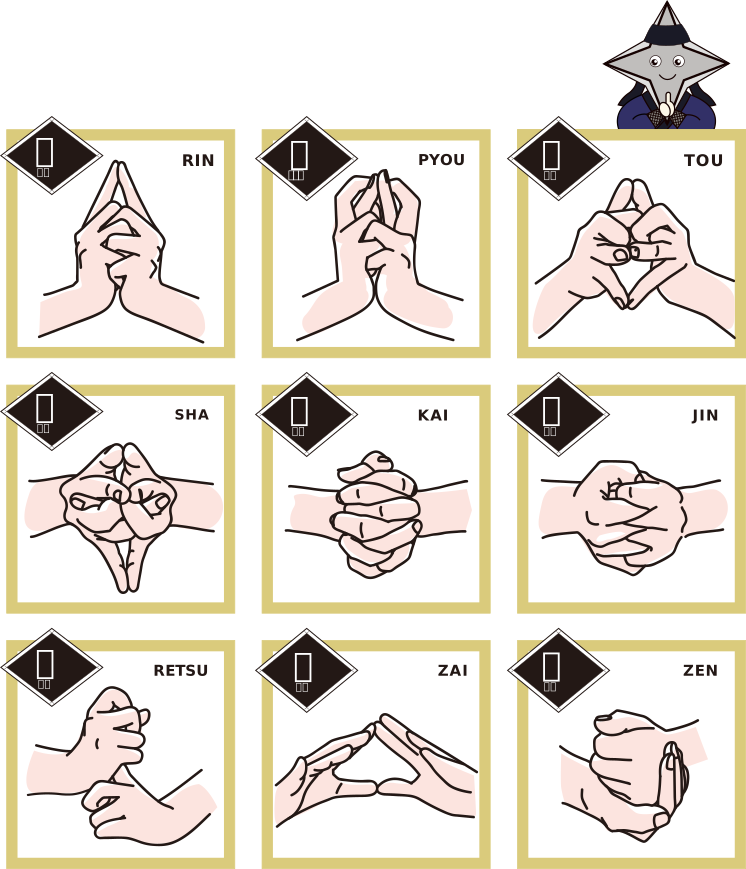
Kuji Self-Defense Techniques
Kuji Self-Defense Techniques
There is a popular image of Ninja making symbolic signs, or hand seals/mudra, with their fingers
when using Ninjutsu; however, those were originally used to ward off evil spirits.
It is thought that Ninjas chanted Kuji (nine kanji) "RIN, PYOU, TOU, SHA, KAI, CHIN, RETSU, ZAI,
ZEN" while making symbolic signs with their hands to focus and form the image of success before
beginning an important mission.
Ninja Duty
Ninja Duty
-
Espionage
Information brought back from enemy lands extended widely from military strength and strategies, to the financial state, and the conditions of common people.
-
Participation in combat
Tasks performed included penetration into enemy areas, arson, destruction, night raids, and ambushes.
-
Creating information networks
Ninjas not only snuck into enemy areas to become familiar with the land to collect information, but also built relationships with local people and created their unique information networks to be used in case of emergency.
-
Tactics
Ninjas used tactics to gain trust and obtain information from people in the areas they snuck into.
- ・Never talk bad about others
- ・Listen to everything
- ・Bring gifts to the opponent's family
- ・Pretend to like things that they did not like to fit in with others

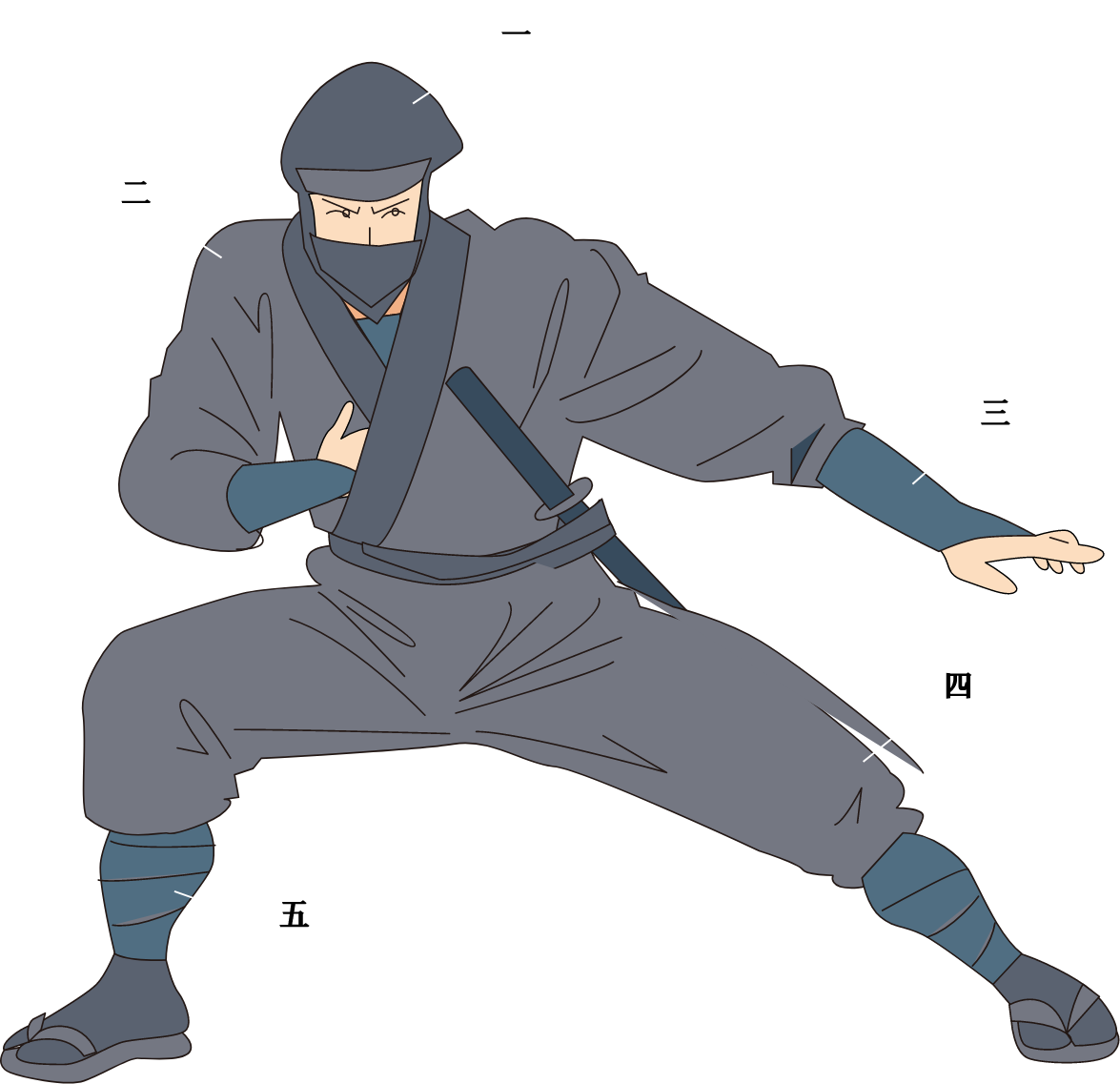
Shinobi clothing
-
Zukin
They wrapped cloth around their heads to hide their faces. The cloth could also be used as rope and a bandage.
-
Uwagi
It was used to hide weapons. Removing the hood allowed them to pass as ordinary farmers.
-
Tekko
Something like gloves to protect hands. Sometime bo-shurikens (stick-type weapons) were hidden in them.
-
Hakama
Easy to move in with room in the thigh area and narrowed hems.
-
Kyahan
Protects the shins. Sometimes bo-shurikens (stick-type weapons) were hidden here.
Shinobi's six tools
Shinobi's six tools
Basic articles carried when traveling to faraway places
-
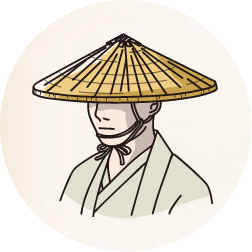
Amigasa
Used for hiding the face. Sometimes darts were hidden inside the hat.
-

Amigasa
A writing utensil made with wax or clay that can be used to write on stones.
-
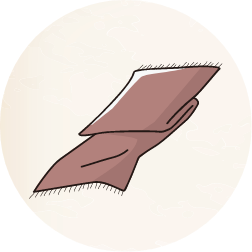
Sanjaku tenugui
approximately 1 meter long. These towels had many uses, including as masks or as bandages.
-
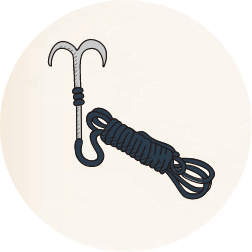
Kaginawa
A hook-shaped metal fitting attached to a hemp rope. It was used to climb up stone walls or for tying up enemies.
-
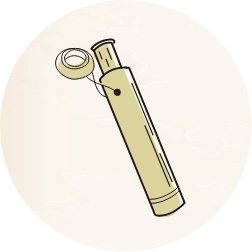
Uchitake
It was used to carry kindling inside. Kindling was used to light candles and start fires in enemy land.
-

Kusuri
Poison, antidotes, ointments, etc.
Ninja Weapons
Ninja Weapons
-

Shuriken
They have short blades that were not lethal, the blades were sometimes coated with poison.
-

Bo-shuriken
Although highly lethal because they jab deeply into the body, they were difficult to use.
-

Ninjato
It was shorter than swords carried by samurai. Its hanging cord is long for use in climbing over walls or tying up enemies.
-
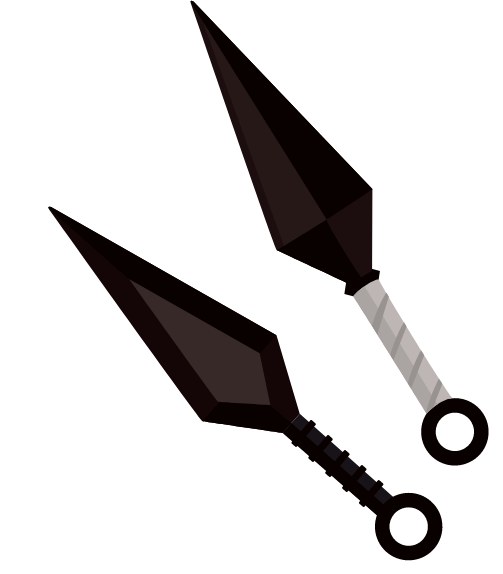
Kunai
An all-purpose double-edged knife that was used not only for fighting but to dig holes, cut rope, and pry open doors.
Shichihode
Shichihode(Ninja's seven disguises)
They were disguised to be taken for a tradesman or other professions not arousing suspicion when traveling to collect information.
-
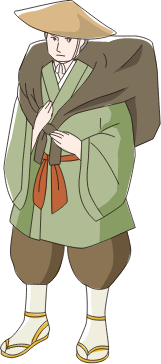
Akindo
Peddlers selling goods while traveling.
-
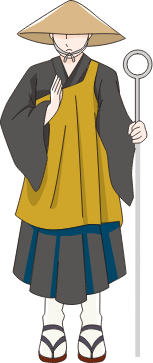
Shukke
Monks traveled as they chanted sutra and begged for alms.
-
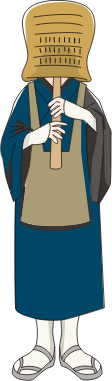
Komuso
Zen monkts. They were able to hide their faces with Fukaamigasa (deep braded hat).
-
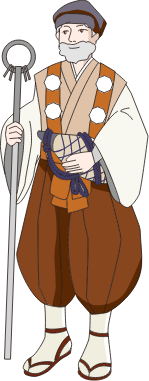
Yamabushi
They travelled around the countries while training.
-
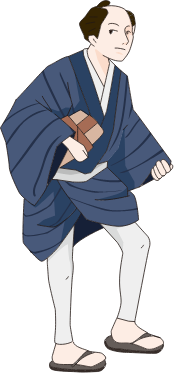
Tsune no kata
They were disguised as a farmer or townsperson to blend into the community.
-
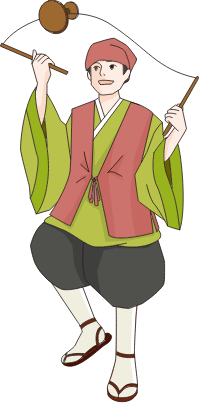
Hokashi
People who perform magic, acrobatics and monkey shows. This put enemies off guard.
-
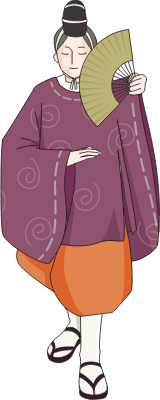
Sarugakushi
They traveled performing Noh (traditional Japanese performing art) as well as other music and dances. They were sometimes invited to perform in the homes of Daimyo (feudal lords) which enabled them to obtain information inside the estate.

Ninjutsu
Ninjutsu
What is most required for Ninjas is not fighting. They used their brains to manipulate people, collect information, return to
their domain safely, and deliver information. To do so, many different Ninjutsu were devised.Ninjutsu is not something anyone can use, but an art only demonstrated by those who had gone through long training.
Tonjutsu
-

Mokuton
Timber was knocked down to buy time to escape
-
Kinton
Makibishi (caltrop) or money was scattered to escape.
-

Doton
Dirt or sand was thrown at captors to escape while they flinch.
-

Suiton
Dived into water to escape. Or a stone was thrown into the water to make pursuers think the Ninja had escaped into the water.
-

Katon
Fire was set in order to escape during the chaos.
-

Communication technique
-
Noroshi
It literally means "wolf smoke" in Japanese. Wolves' feces were mixed with gunpowder and burnt. The smoke going straight up can be seen from afar, informing allies of emergency.
-
Ingo
Ninjas communicated secretly using language that can only be understood by allies.
-
Goshikimai
Rice grains dyed in white, blue, red, yellow, and black were used as codes or marks that can only be understood by allies.

-
Ninjamoji
Characters only understood by allies were used for writing. Shinobi Iroha is particularly famous.
Intrusion technique, Shinnyujutsu, were used to sneak into buildings, and concealment technique, Ongyojutsu, were used to hide themselves.
Ninjutsu training
Ninjutsu training
Both physical and mental toughness were required to carry out the mission. They had to train daily and sharpen their five senses.
-

Sense of smell
To be able to recognize the smell of matchlock and sense enemy closing in at night.
-

Sense of hearing
To keep their hearing sharp, they sit quietly and drop the needle behind them to develop their concentration.
-

Sense of taste
When you lick the soil on a street where people pass, it tastes salty. Develop the ability to sense the slightest difference in taste.
-

Sense of sight
They are trained to see things by staying in the dark. In addition, they obtain a variety of information from footprints, soil conditions, the color of grass and trees, and the way birds leap.
-

Breathing technique
The main breathing methods used by Ninjas were Futaeibuki (double breathing), Sakafukusikikokyu (reverse abdominal breathing), and Okinaga (long breathing). Futaeibuki heightens sustainability, and Okinaga leads to concentration and relaxation. Exhalation continuing for 1 minute.
Kunoichi
The kanji character for female was separated
into three brush strokes and read Ku-No-Ichi,
the name given to female Ninjas.
They conducted espionage while working in homes as maids,
where male Ninjas would not have been able to enter.