Font size
Page Color

*Please note that this is a machine translation and may differ from the original Japanese page content before translation.
*Because this is a machine translation, it may differ from the original content of the Japanese page before translation.
2024.11.13
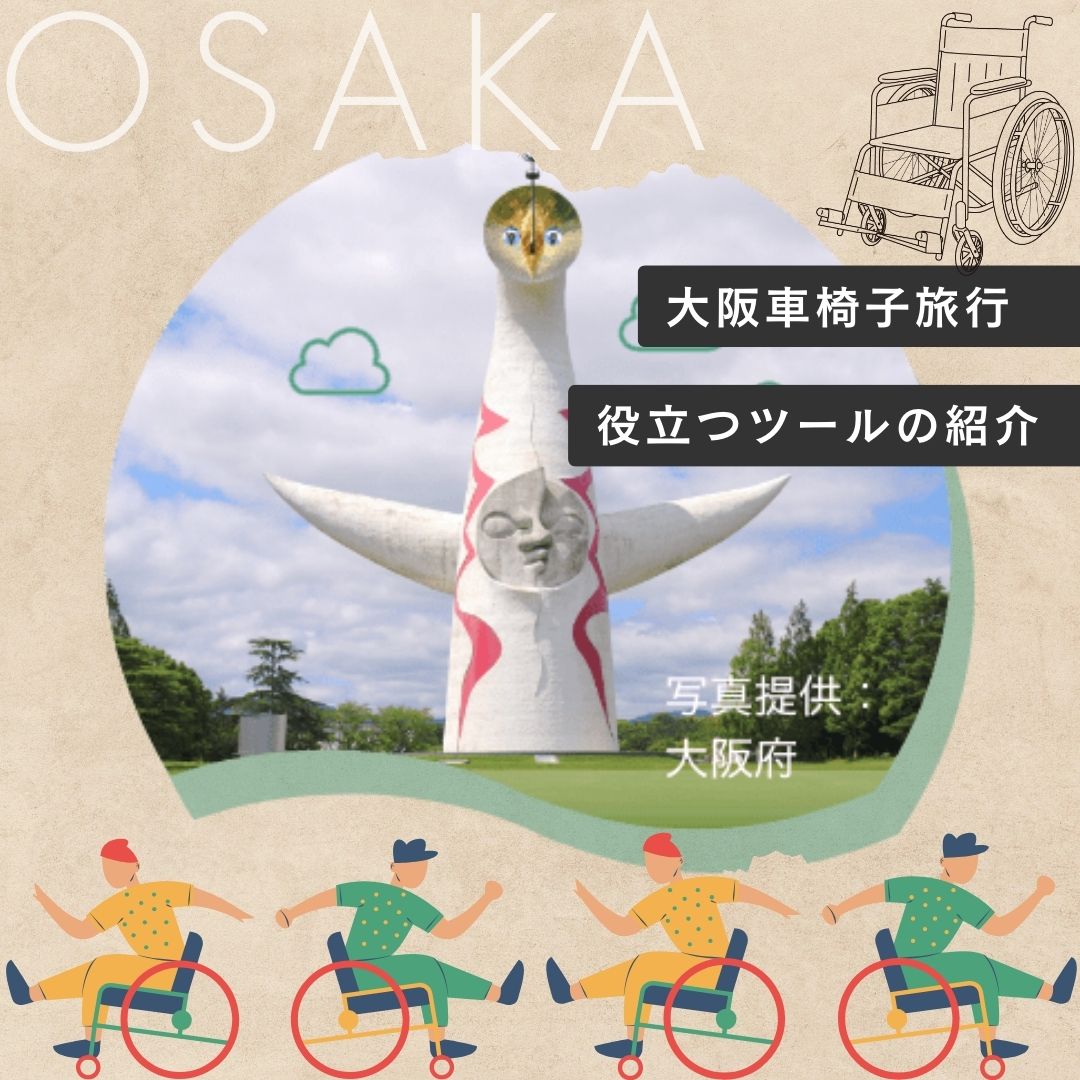
Osaka Prefecture is steadily improving its welcoming environment, including making facilities barrier-free, to make the city more accessible to everyone. Here we will introduce various tools that can be used to comfortably tour Osaka's tourist spots in a wheelchair.
Why not use these as a reference to create your own special sightseeing plan?
1. How to find the tourist spots you want to visit and how to check for accessible toilets in the area
①How to decide which tourist spots you want to visit in Osaka!
Check Osaka Convention & Tourism Bureau 's Universal Tourism website for information on tourist spots you'd like to visit.
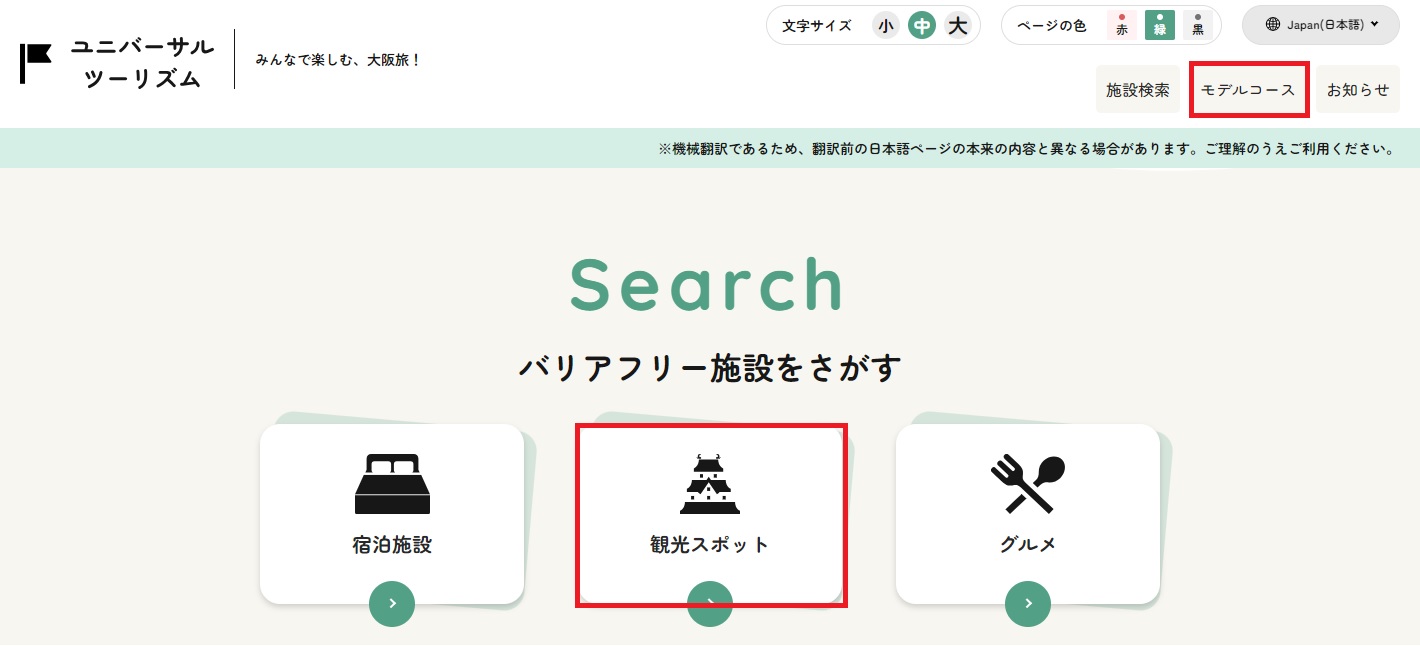
For example, if you want to see the Tower of the Sun at Expo'70 Commemorative Park, check Expo'70 Commemorative Park Park page in the model itinerary and check basic barrier-free information.
If you need assistance, such as pushing a wheelchair, at your travel destination, you can consult with the Osaka Universal Tourism Center.
*If you are looking for an event that is accessible to people with disabilities, including wheelchair users, event information is posted on the announcements page.
*For information on fruit picking in a wheelchair, please see the GO GREEN OSAKA fruit picking page.
②How to check if there are barrier-free toilets near tourist spots in Osaka!
Once you've decided on the tourist spots you want to visit in Osaka, the next thing to check is the Osaka Prefecture Barrier-Free Toilet Map. Barrier-free toilets in public and private facilities throughout Osaka Prefecture are mapped on the map, making it easy to see where the toilets are located.
First, open the Osaka Prefecture Barrier-Free Toilet Map and uncheck all the check boxes on the left.
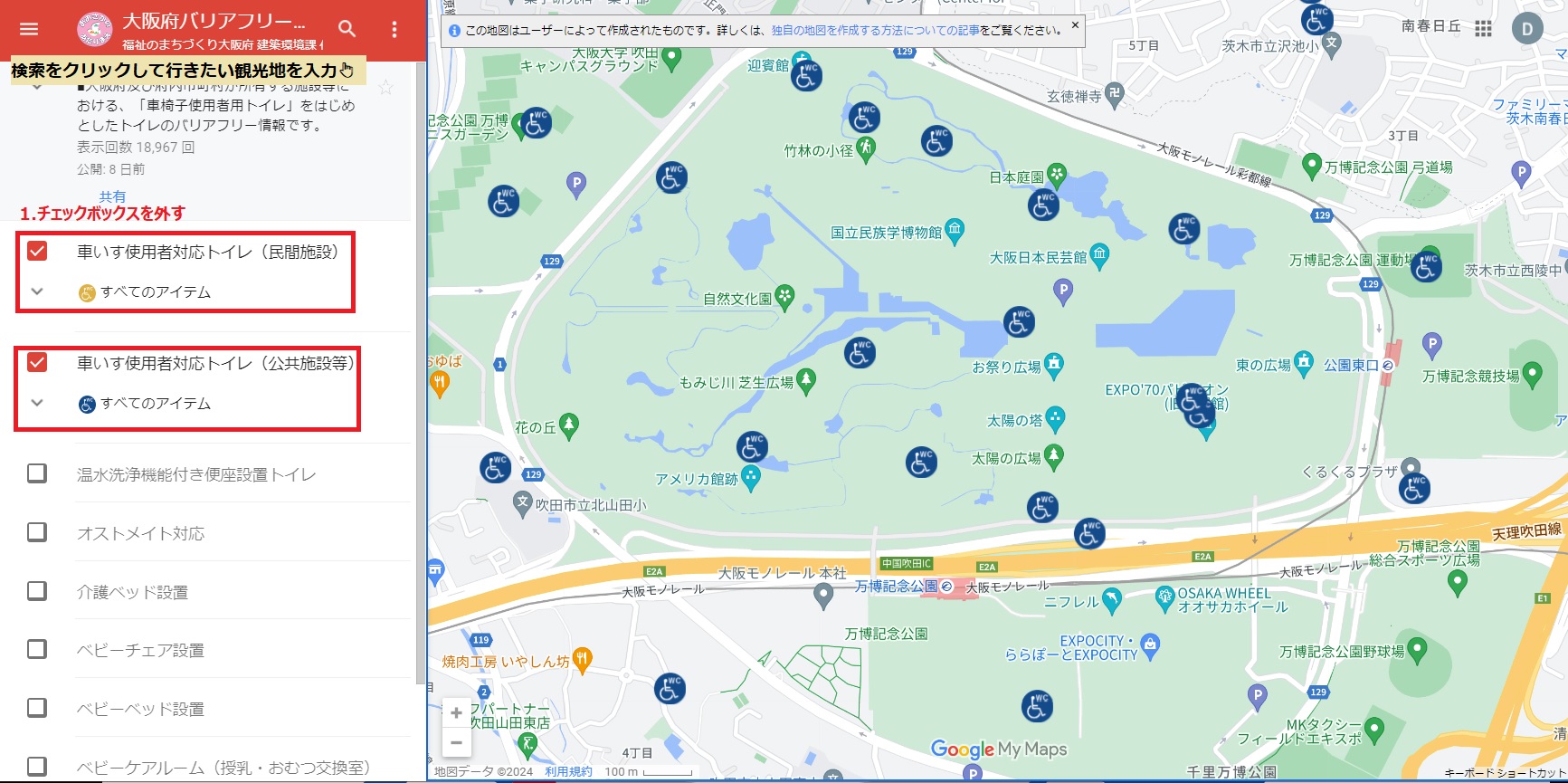
next Click on the search field and enter the tourist spot in Osaka you would like to visit.
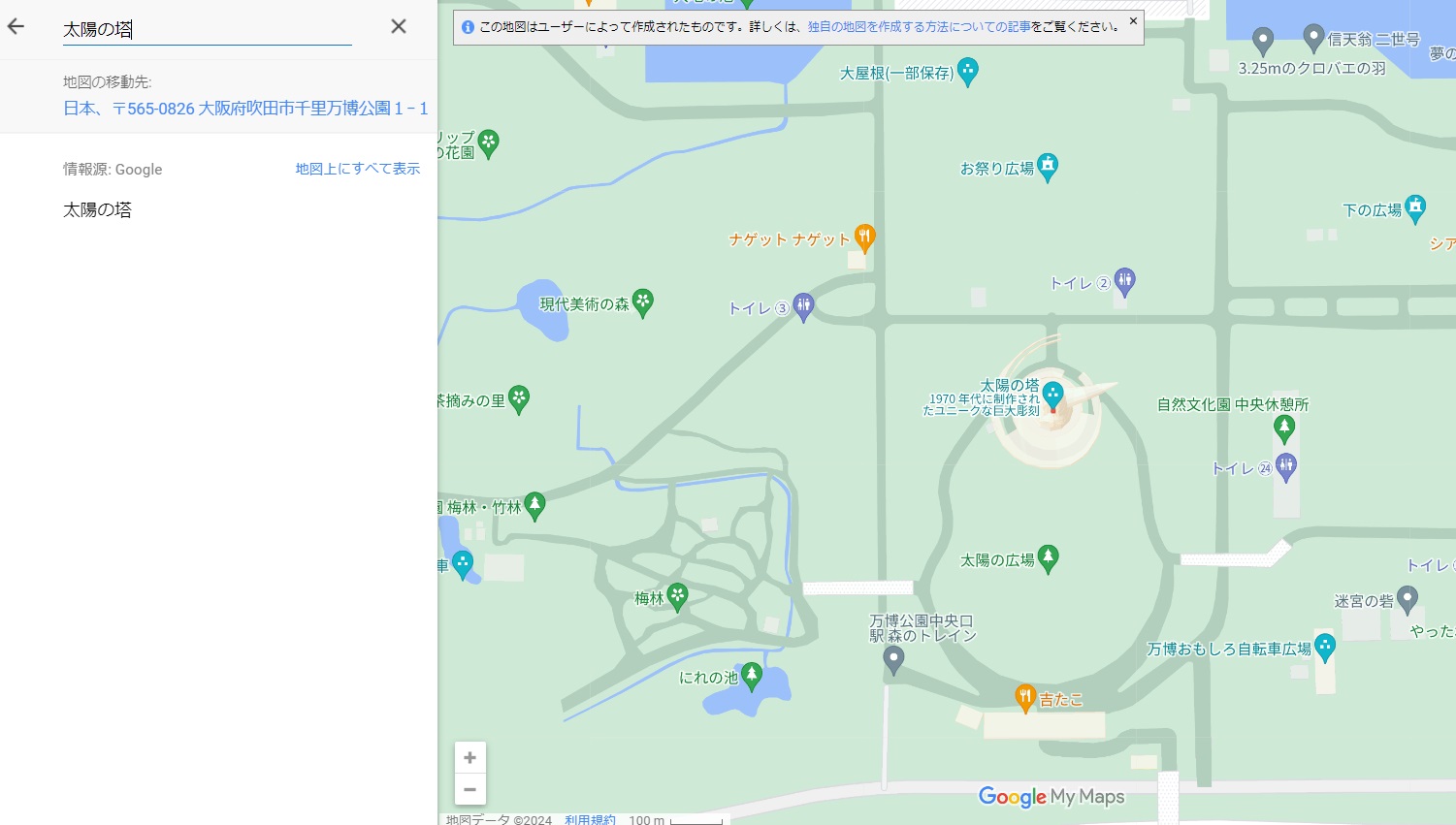
When the location you want to go to appears on the map, press the back button.
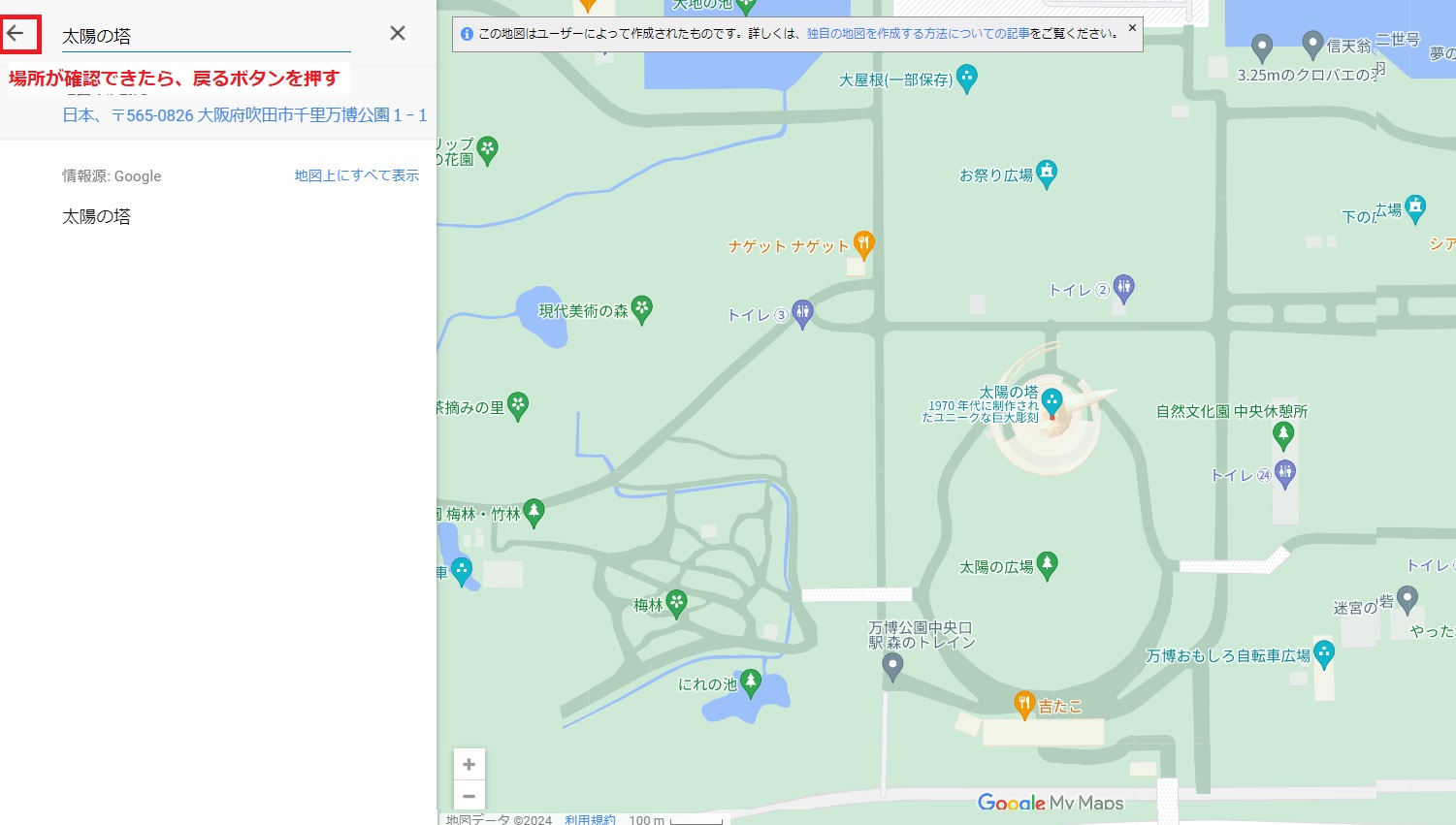
Return to the previous screen and check the toilet information you need.and check if it's nearby.
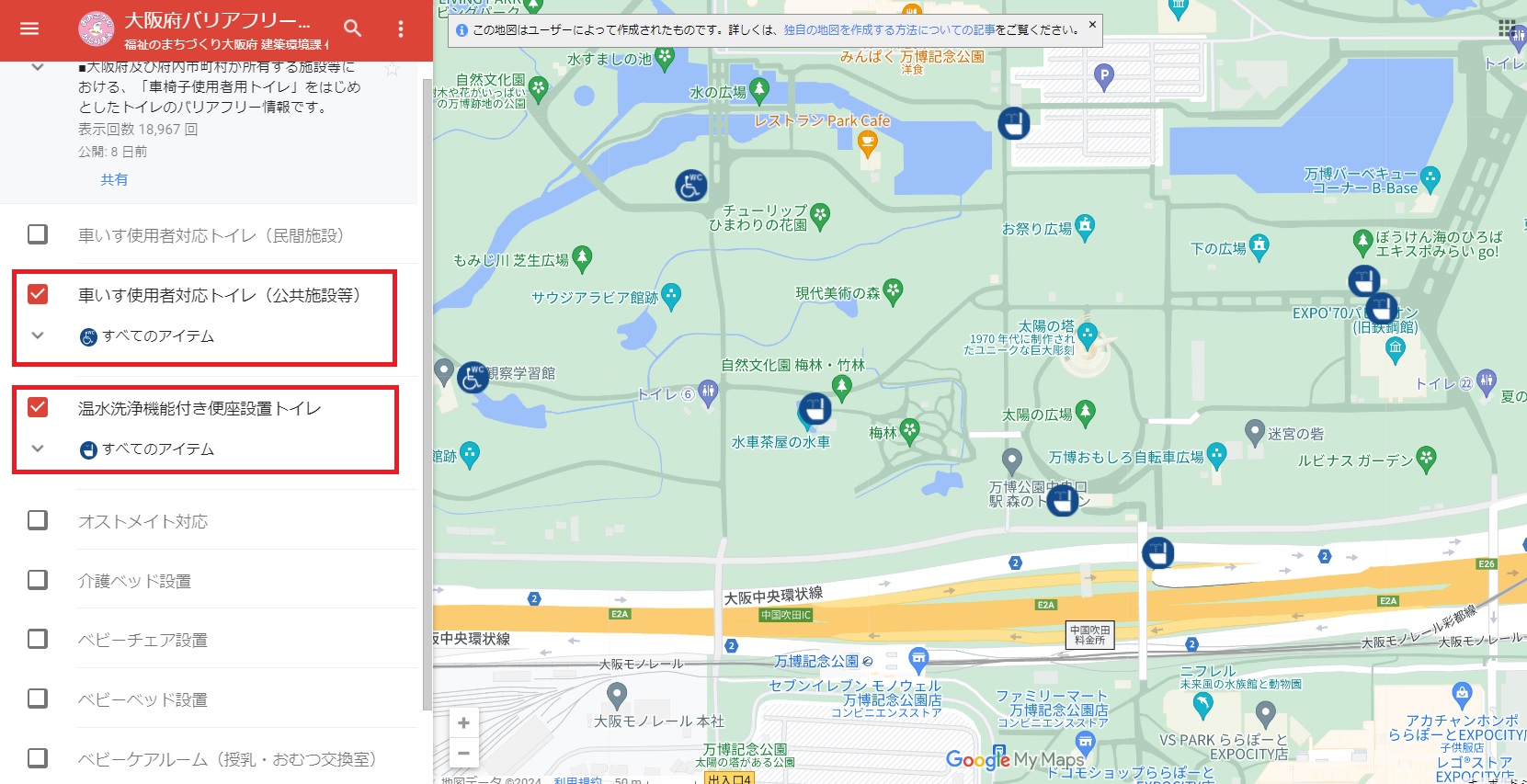
By using the Osaka Prefecture Barrier-Free Toilet Map, you can check in advance which toilets are available around Osaka's tourist spots.You can also quickly find out where the nearest station is by looking at the map.
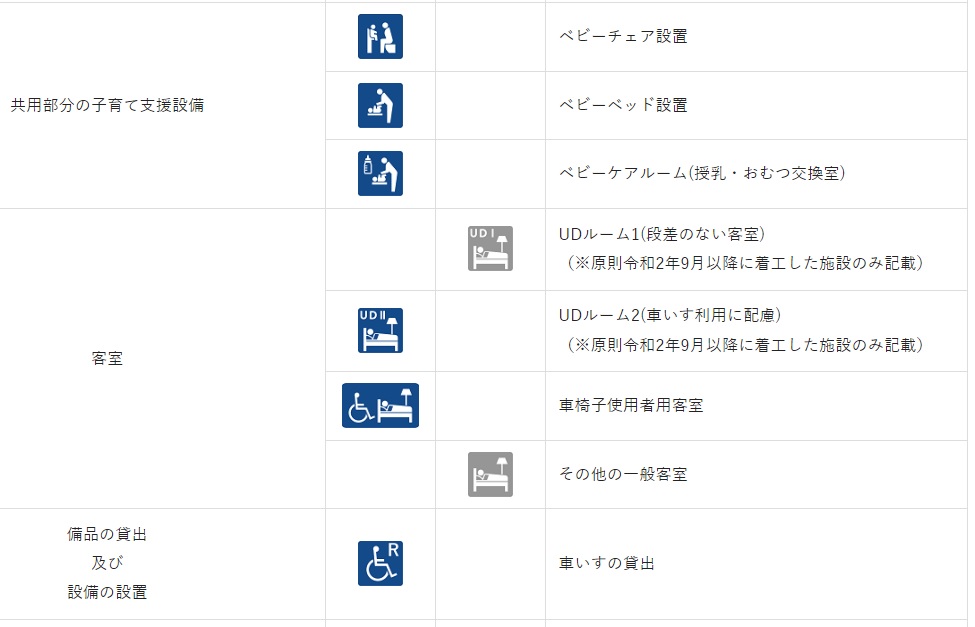
The toilet symbols are organized as shown in the table below.
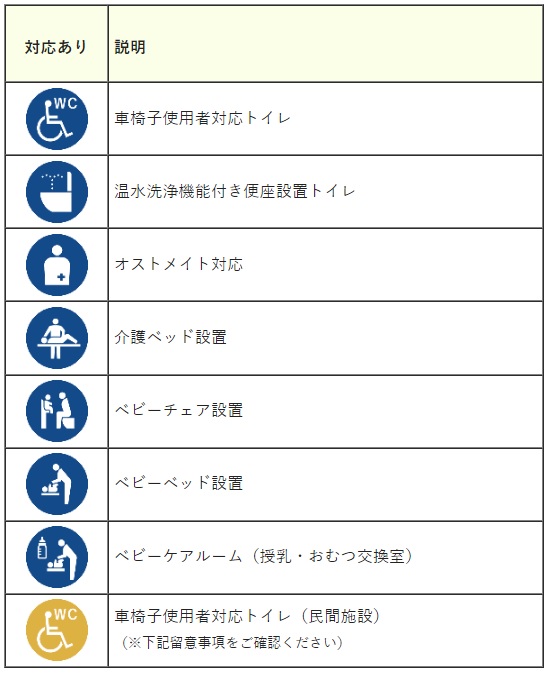
2. How to check whether the nearest station to a tourist destination allows wheelchair users to get on and off without assistance from station staff
One barrier-free aspect of Osaka that many people are not yet aware of is measures to deal with steps and gaps on trains.
There are very few cities with such advanced infrastructure, which means that wheelchair users can travel faster and have more options to go wherever they want.
I will explain using a route map, but I have researched stations where wheelchair users can get on and off without assistance from station staff.
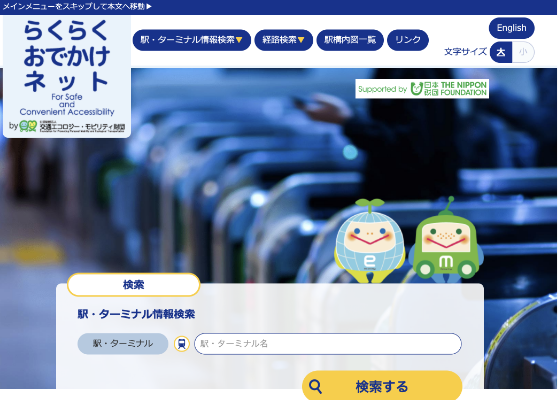
In Osaka, the main tourist destinations are mainly covered by Osaka Metro, Kita-Osaka Kyuko Railway, and Osaka Monorail, and great progress has been made in addressing gaps.
Places marked with a ★ have measures in place to prevent gaps and steps, and are generally places where wheelchair users can get on and off without assistance from station staff.
There are many railway networks that run from Umeda, the center of Osaka, to Namba and other major tourist destinations in the east, west, north and south of Osaka.
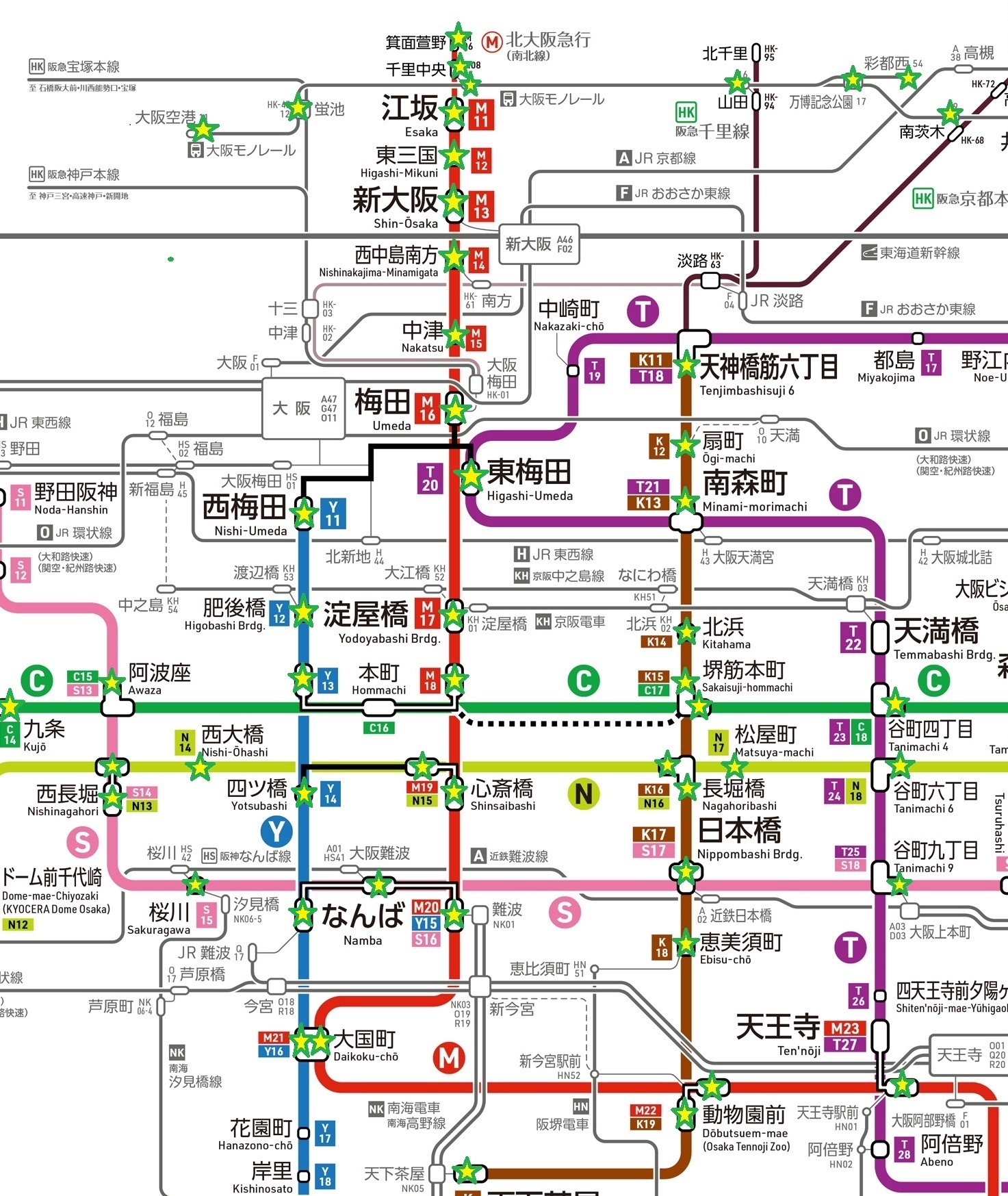
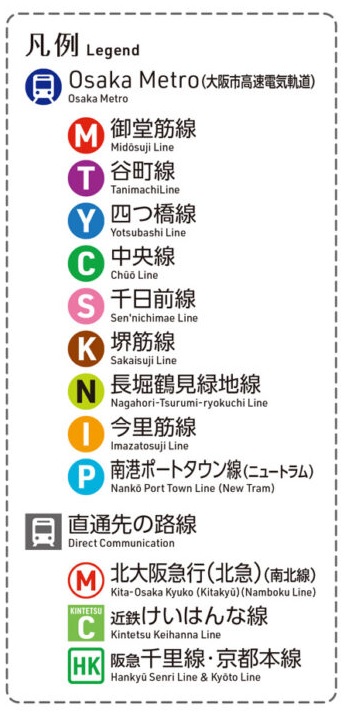
◆ Osaka Metro lines with step and gap countermeasures as of the end of October 2024 ◆
Midosuji Line: All 20 stations
Tanimachi Line: Higashi-Umeda Station
Yotsubashi Line: Nishi-Umeda Station, Higobashi Station, Hommachi Station, Yotsubashi, Namba Station, Daikokucho Station,
Chuo Line: Bentencho Station, Kujo Station, Sakaisuji Hommachi Station, Tanimachi 4-Chome Station, Morinomiya Station
Sakaisuji Line: All 10 stations
Sennichimae Line: All 14 stations
Nagahori Tsurumi-ryokuchi Line: All 17 stations
Imazatosuji Line: All 11 stations
◆ Measures to deal with steps and gaps on Osaka Metro!◆
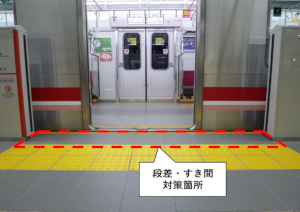
Image courtesy of Osaka Metro
They are working to reduce the steps and gaps between the platform and the train floor so that passengers using wheelchairs or strollers can board and disembark smoothly.
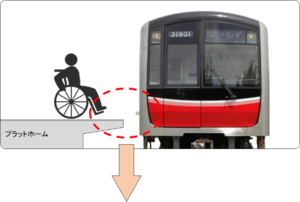
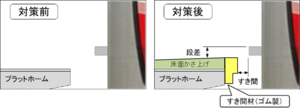
Image courtesy of Osaka Metro
Step prevention
The platform floor is raised in a slope toward the train.
Depending on the line, trains with different floor heights are mixed, and some trains have a step difference of 20 to 70 millimeters, so please be careful when getting on and off.
Gap prevention
Comb-shaped gapping material (made of rubber) has been installed at the end of the platform to create a minimum gap (approximately 20 to 35 millimeters) to prevent contact between the train and the platform.
However, please be careful when getting on and off as there are larger gaps in places where the platform is curved.

Image courtesy of Osaka Metro
Check the official website for the latest information on Osaka Metro 's gap and step countermeasures.
◆Measures to deal with steps and gaps on the Kita-Osaka Kyuko Line◆
Kita-Osaka Kyuko Railway has also implemented many barrier-free measures, and has completed the reduction of gaps.
Please note that there are larger gaps in curved areas of the platform, so please be careful when getting on and off.
Also, the amount of steps varies depending on the vehicle model.
Vehicles with small steps: Kita-Osaka Kyuko 9000 series, Osaka Metro 30000 series
*The number of steps and gaps may vary depending on the traffic situation.
◆Measures to deal with steps and gaps on the Osaka Monorail!◆
Osaka Monorail has also completed measures to prevent steps and gaps at all stations.
3. Check the accommodation's barrier-free information
I was able to research the tourist spots I wanted to visit and the routes I wanted to take, but if I was planning on staying overnight in Osaka rather than just doing a day trip, I would need a place to stay.
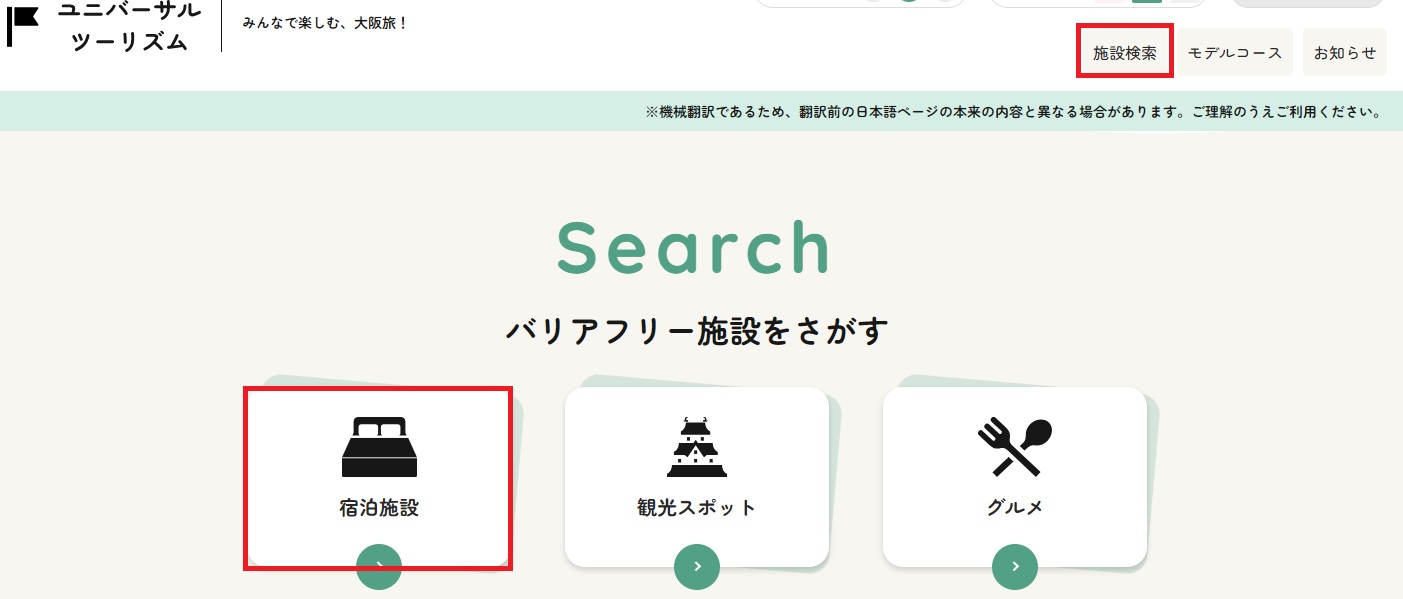
In such cases, three things can be useful: Hotels information on Osaka Convention & Tourism Bureau 's Universal Tourism website, barrier-free information on hotels and inns in Osaka Prefecture, and Osaka City Heartful Web.
① Hotels information on Osaka Convention & Tourism Bureau 's Universal Tourism website
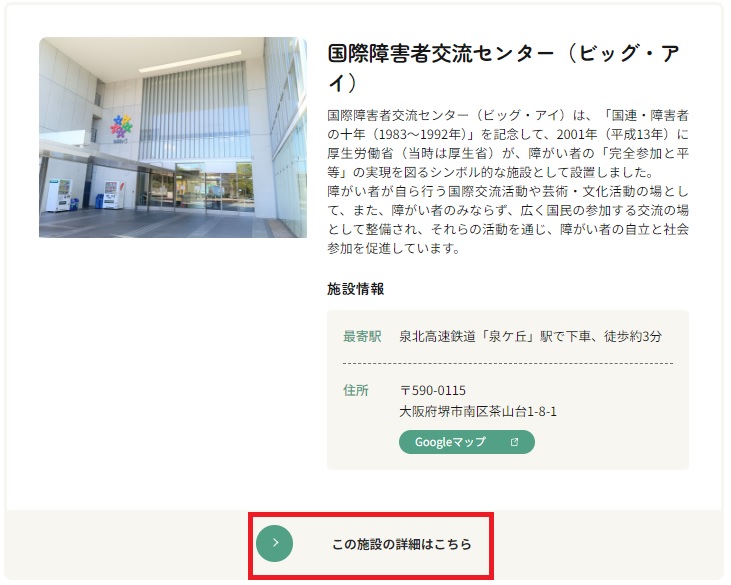
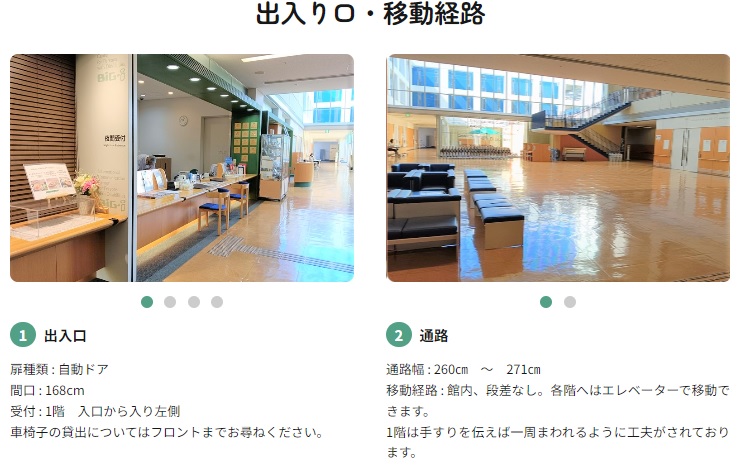
This website not only provides simple information about barrier-free access, but also lists Hotels with many photos and actual measurements of entrance widths and other details.
For example, Hotels called the International Disability Exchange Center (Big Eye), which specializes in accommodating people with disabilities.
All rooms are barrier-free, and some even come with a mobile lift.
②Barrier-free information for hotels, inns, etc. in Osaka Prefecture
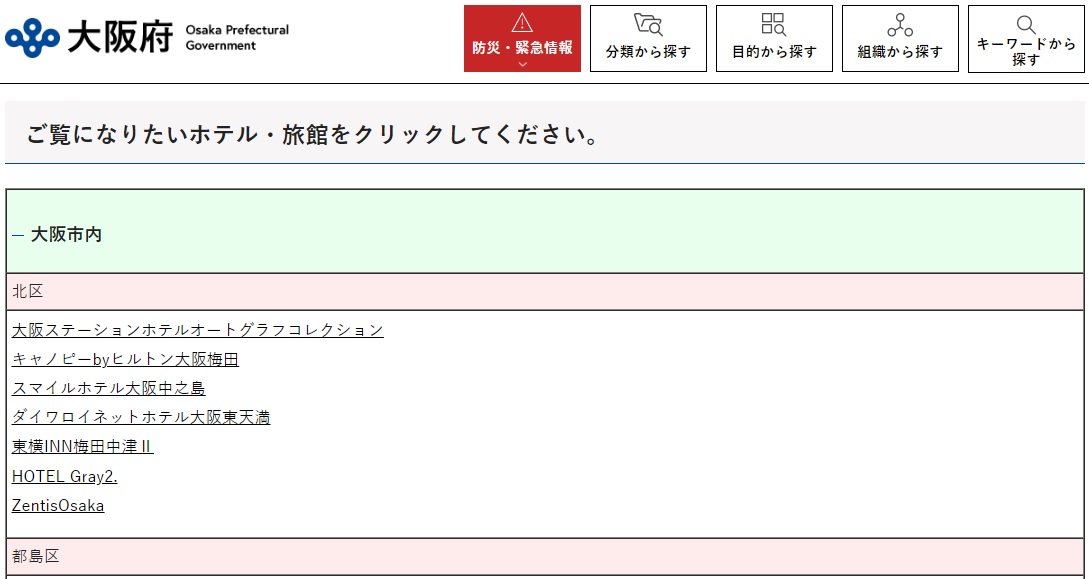
Also on the Osaka Prefecture website Osaka Prefecture Located in Barrier-free information for hotels, inns, etc. are being collected.
Osaka Prefecture is divided into four areas: Osaka City, Kitakawachi region, Senboku region, and Sennan region, and barrier-free information for hotels, inns, etc. is posted here.
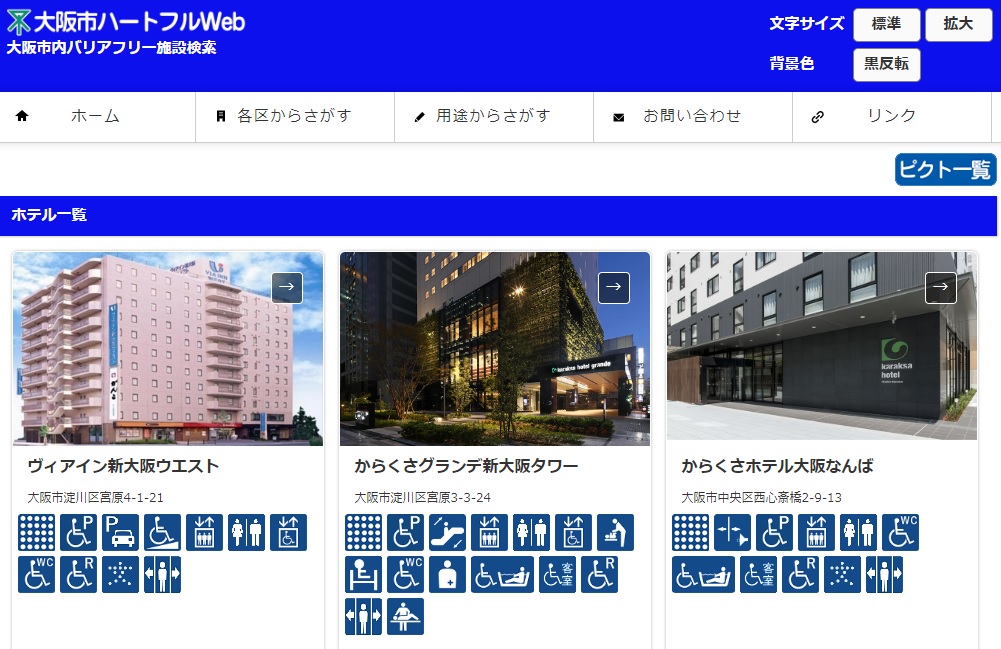
②Osaka City Heartful Web
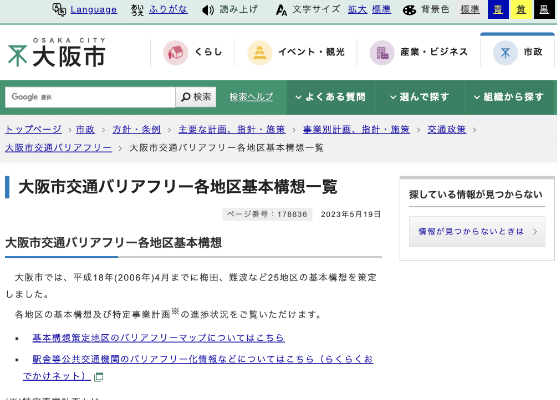
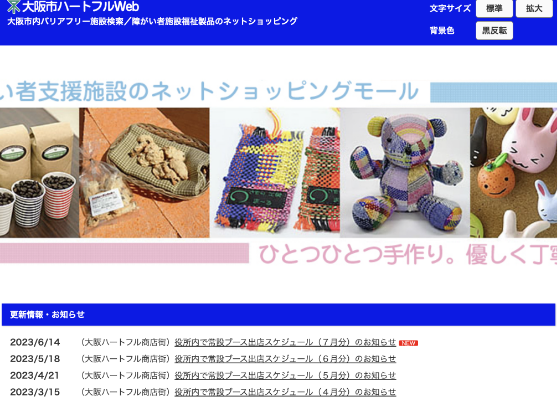
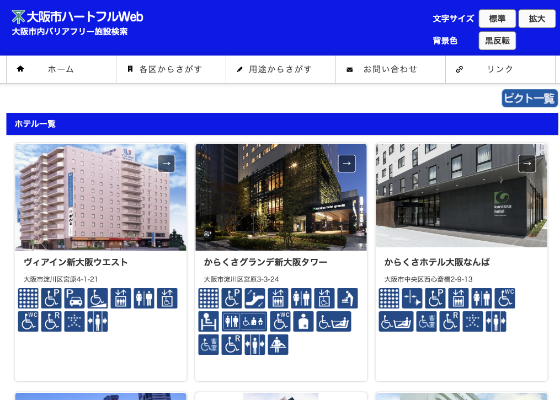
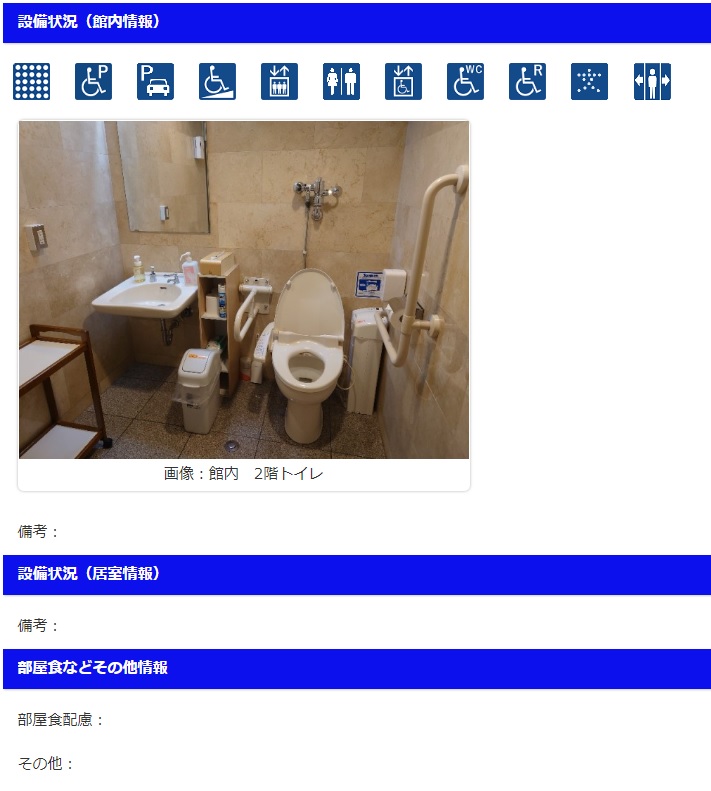
Osaka City Heartful Web also lists hotels in Osaka City that are barrier-free.
Please make use of this information and enjoy a fun and memorable trip to Osaka.
Universal T urism
urism
Universal T urism
urism
Universal Turism
Universal Turism

Tsuruhashi and Tennoji are areas with different charms, but both are representative downtown areas of Osaka and attract many people.
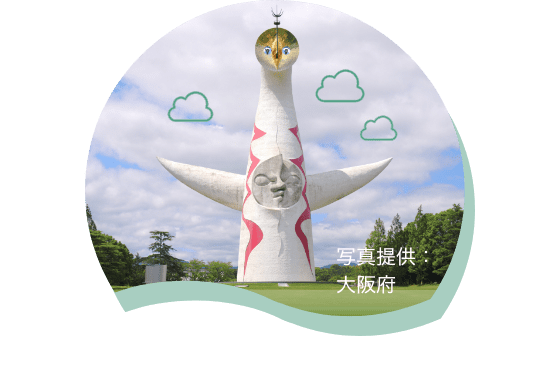
It symbolizes hope and creativity for the future. Different countries are working together to share ideas for a sustainable future.
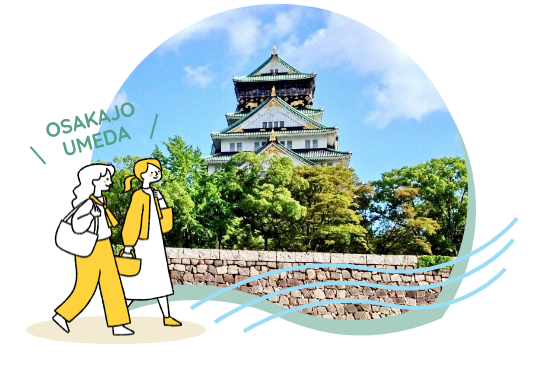
"In the heart of Osaka are two huge landmarks, both old and new, Osaka Castle and Umeda Sky Building, which attract people from both within Japan and overseas..."
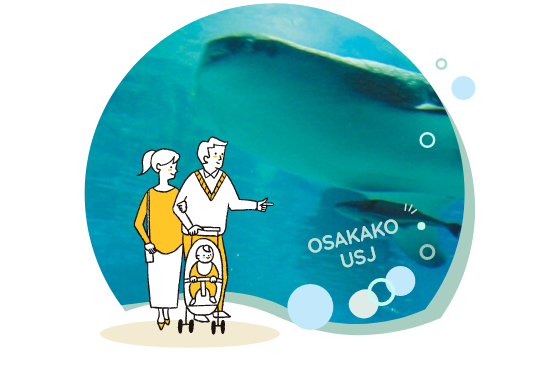
The Bay Area, centered around Osaka Port, is home to some of the Kansai region's leading theme parks.
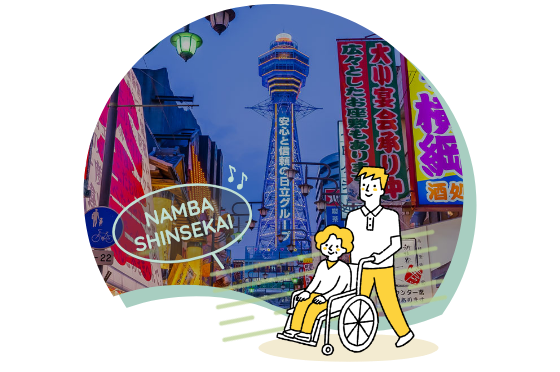
"The Namba area has flourished as an economic center since the days when Osaka was known as the 'Kitchen of the World,' and has been a center of entertainment, culture, and gourmet food...
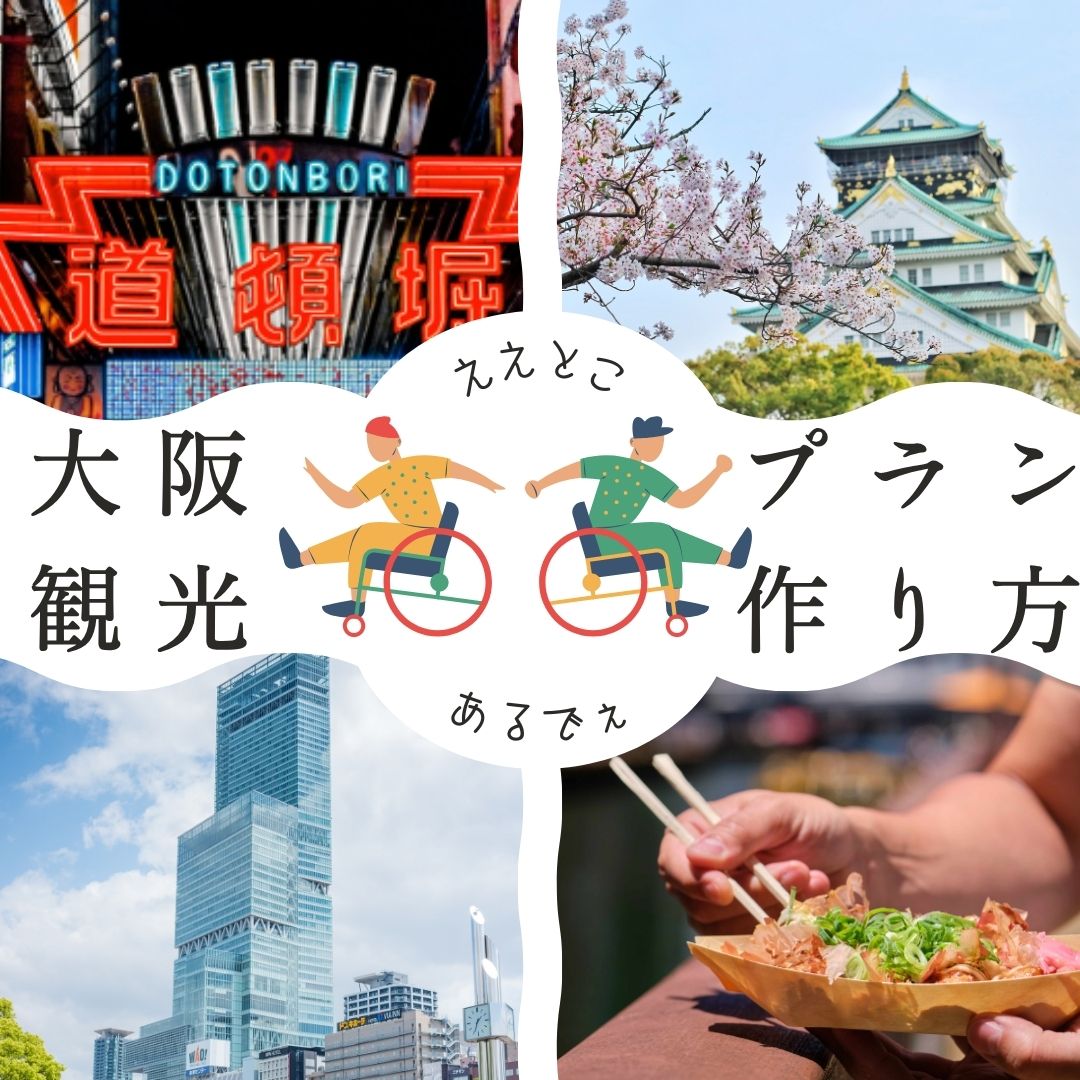
We'll show you how to create a wheelchair travel plan for Osaka! We've gathered and introduced various barrier-free information in one place.
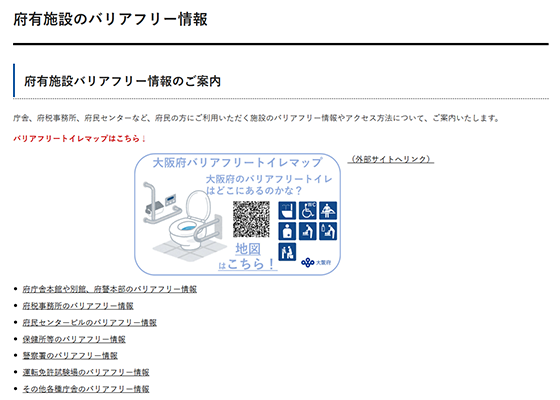
Barrier-free information for prefectural facilities (Housing and Construction Bureau, Building Environment Division)
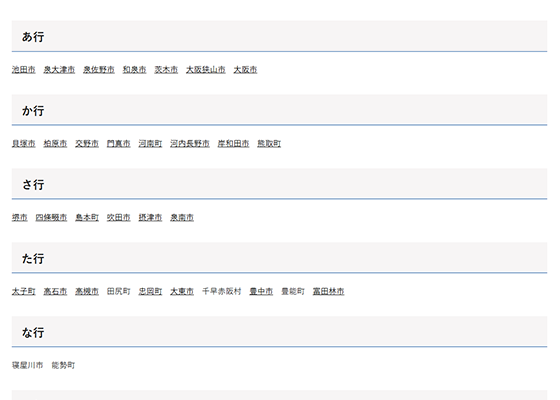
Barrier-free information for municipal facilities (Building Environment Division, Housing and Construction Bureau)
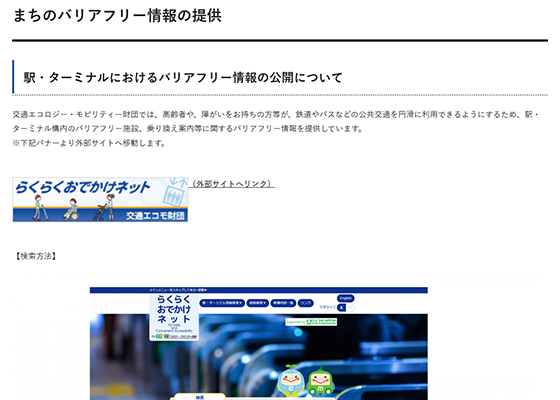
Providing information on barrier-free access in the city (Building Environment Division, Housing and Construction Bureau)
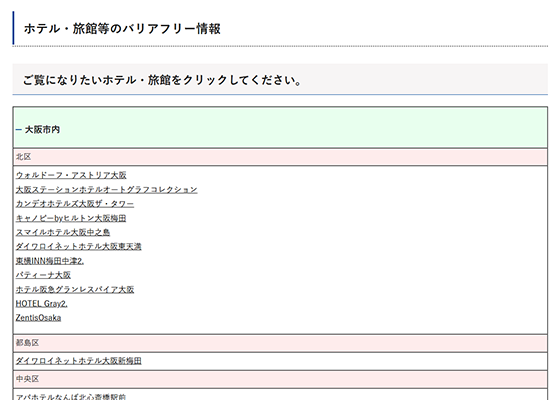
Barrier-free access for hotels and inns
Providing information (Building Environment Division, Housing and Construction Bureau)
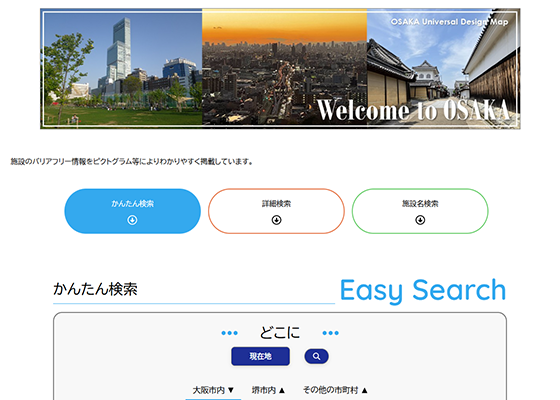
おおさかユニバ―サルデザインマップ
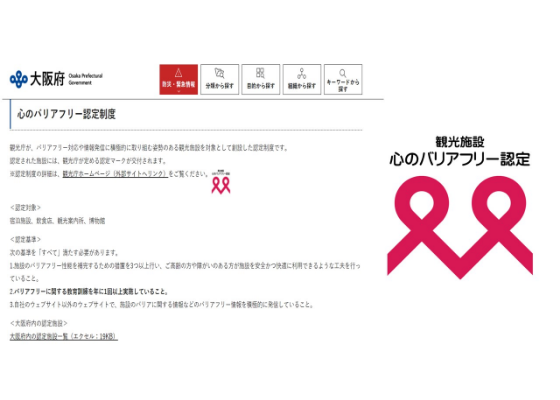
Mental barrier-free certified facilities in Osaka Prefecture