Featured
 Experiences, Events, and Spots
 Itineraries
 notice
 Access
 Guidebook
 お気に入り
お気に入り



Search for experiences, events and spots
Display Switching
-
spot
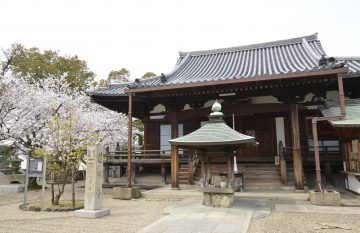
Domyoji
KawachiA temple associated with the Sugawara clan that preserves the national treasure Kannon
This temple is associated with Sugawara no Michizane and enshrines the National Treasure Eleven-Headed Kannon statue, and conveys its history as a nunnery since ancient times.History / culture -
spot
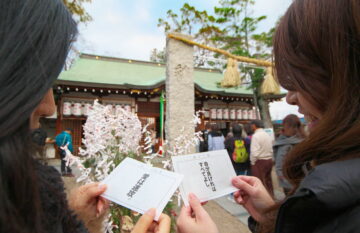
Nunose Shrine
KawachiSince ancient times, there have been legends related to cloth, and he has been praised as a god of healing illnesses and exterminating poisonous insects, and in the modern era he has come to be worshipped as a god of protection from evil, traffic safety, and business prosperity in addition to healing illnesses, and is revered by local people as he is always said to grant wishes. The enshrined deities are the three gods Hayasusanoo no Mikoto, Yae Kotoshironushi no Mikoto, and Takemikazuchio no Mikoto.
History / culture -
spot
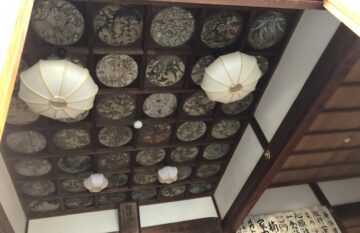
ao Shrine
Kawachiao Shrine enshrines Sugawara no Michizane, Prince ao, and Ichikishimahime (Benzaiten) as its deities. The name "ao" comes from the legend that Prince ao, the son of Emperor Heizei, the 51st emperor of Japan, lived in this area and ruled with good governance in the early Heian period, and a stone monument reading "Historic ao: Site of Prince Ao's Residence" stands within the shrine grounds.
It is also said that a shrine was built here to enshrine the deity Sugawara no Michizane, who passed through ao before going to Dazaifu.History / culture -
spot
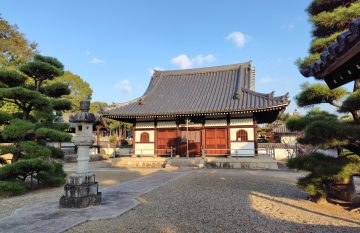
Nonakaji Temple
KawachiIt is said that Prince Shotoku built Nonaka-ji Temple with the assistance of Soga no Umako. The temple grounds are a nationally designated historic site, and once you enter the restored inner gate, you'll find the remains of the main hall and pagoda, giving you a taste of the Asuka period. The gilt-bronze Maitreya Bodhisattva half-seated statue from the Hakuho period and the wooden standing Jizo Bodhisattva statue from the Heian period have been designated Important Cultural Properties and can be viewed on the 18th of each month (9:30-16:00). The graveyard also contains the "Grave of Osome and Hisamatsu," a staple of Joruri and Kabuki plays.
History / culture -
spot

Habikino Visitor Center
KawachiGet off at Furuichi Station on the Kintetsu Minami Osaka Line, exit the ticket gate and immediately to the left, where you will find the Habikino Visitor Center, located along the Takeuchi Kaido, a Japanese Heritage Site. We offer a wide range of tourist information, including the Furuichi Kofun Group, a World Heritage Site, the Takeuchi Kaido, historical heritage sites such as temples and shrines, and local specialties.
History / culture -
spot
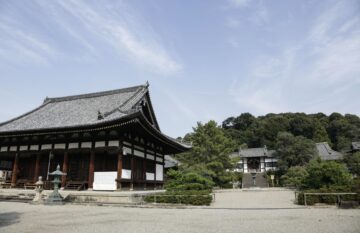
Eifuku-ji Temple (Prince Shotoku's Mausoleum)
KawachiIt was built by Empress Suiko to protect the mausoleum (Sankoichibyo) where Prince Shotoku, his mother, and his wife were buried, and it is said that Emperor Shomu developed the large temple complex in 724 (the first year of the Jinki era). From the Heian period onwards, it developed as a sacred place for Prince Shotoku worship as the "Kaminotaishi," one of the "Three Princes of Kawachi." At the end of the Sengoku period, the entire mountain was burned down in a fire caused by Oda Nobunaga's war, but starting with the reconstruction of the Seireiden (Sacred Spirit Hall) by Toyotomi Hideyori in 1603 (the eighth year of the Keicho era), the temple complex was gradually rebuilt and has continued to the present day.
History / culture -
spot
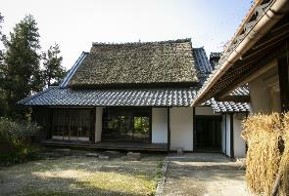
Daido Former Yamamoto Family Residence
KawachiThis old house is located at the foot of Yamada Mochiyabashi Bridge in Taishi Town along the Takeuchi Kaido, Japan's oldest official road. It retains the traditional Yamato-style roof, which is rare in this area during the Edo period, with a tiled roof and thatched roof, and is a house that conveys the atmosphere of the road.
History / culture -
spot
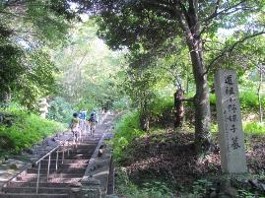
Ono Imoko grave
KawachiThis oval-shaped mound, measuring approximately 15 km from east to west, is located at the foot of the mountains east of the Taiga River and has long been said to be the tomb of Ono no Imoko.
Imoko was a person who was sent to the Sui Dynasty on the Chinese mainland as an envoy during the reign of Empress Suiko. He was entrusted with the protection of the Nyoirin Kannon Bodhisattva, the guardian deity of Prince Shotoku. He built a temple and offered flowers to the Buddha every morning and evening, which is said to be the origin of the Ikenobo school of flower arrangement. Currently, Ikenobo worships this mound as the tomb of Doso.History / culture -
spot
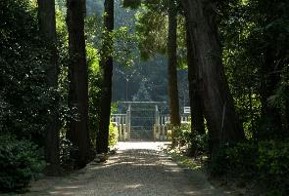
Emperor Bidatsu Mausoleum
KawachiThe 30th Emperor Bidatsu ascended to the throne in 572, and after his death, he was buried in the Isonaga Mausoleum, the tomb of his mother, Empress Ishihime, according to the Nihon Shoki. The tomb of Emperor Bidatsu is the only keyhole-shaped tumulus in the Isonaga Valley, measuring approximately 93 meters in length and surrounded by a dry moat. Nothing is known about the interior, but it is believed to have been built as a horizontal stone chamber. Haniwa clay figures have also been excavated from the surrounding area, which suggests that the tomb was constructed in the first half of the late Kofun period.
History / culture -
spot
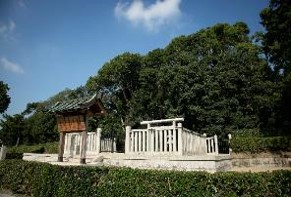
Emperor Yomei's Mausoleum
KawachiAccording to the Nihon Shoki, the 31st Emperor Yomei was buried in the Ikegami Tomb in Iware, but later, in the first year of the reign of Emperor Suiko (593), it is recorded that he was reburied in the Isonaga Tomb in Kawachi. The tomb of Emperor Yomei is a square burial mound measuring 65 meters east to west, 60 meters north to south, and 10 meters high, and is surrounded by a dry moat 7 meters wide. Including the outer bank of this moat, the tomb is enormous, measuring 100 meters on each side. It is noteworthy that the size and shape of the burial mound are very similar to the Ishibutai Tomb, believed to be the tomb of Soga no Umako.
History / culture -
spot
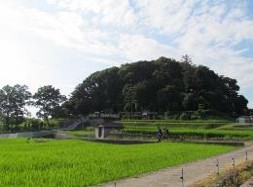
Mausoleum of Empress Suiko
KawachiThe 33rd Empress Suiko, Japan's first female emperor, appointed Prince Shotoku as regent, and actively absorbed advanced political systems, culture, and art through negotiations with the Sui Dynasty on the continent, leading to the flourishing of Asuka culture, which was centered on political reform and Buddhist culture. Upon her death in the 36th year of the reign of Suiko (628), she was buried in the tomb of Prince Takeda in Yamato, and later reburied in the Isonaga mausoleum in Kawachi.
History / culture -
spot
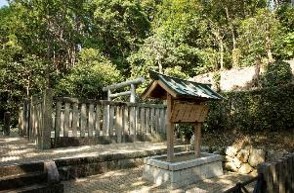
Emperor Kotoku's Mausoleum
KawachiEmperor Kotoku, the 36th emperor, ascended to the throne after the Taika Reforms. He appointed Soga no Kurayamada Ishikawamaro, who had contributed greatly to the reforms, and promoted reform politics. However, the emperor fell out with Prince Nakano Oe and others, and died alone at Naniwa Palace in 654, the fifth year of the Hakuchi era, and was buried at Isonaga no Miya in Osaka. Located along the Takeuchi Kaido road, the tomb is a small circular burial mound with a diameter of approximately 30 meters, also known as the "Uguisu no Mausoleum." It is said that a mirror known as the "Kaiju Budou Kagami" (Sea Beast and Grape Mirror) was once excavated from a secondary tomb.
History / culture
-
spot
Domyoji
Kawachi History / cultureA temple associated with the Sugawara clan that preserves the national treasure Kannon
This temple is associated with Sugawara no Michizane and enshrines the National Treasure Eleven-Headed Kannon statue, and conveys its history as a nunnery since ancient times. -
spot
Nunose Shrine
Kawachi History / cultureSince ancient times, there have been legends related to cloth, and he has been praised as a god of healing illnesses and exterminating poisonous insects, and in the modern era he has come to be worshipped as a god of protection from evil, traffic safety, and business prosperity in addition to healing illnesses, and is revered by local people as he is always said to grant wishes. The enshrined deities are the three gods Hayasusanoo no Mikoto, Yae Kotoshironushi no Mikoto, and Takemikazuchio no Mikoto.
-
spot
ao Shrine
Kawachi History / cultureao Shrine enshrines Sugawara no Michizane, Prince ao, and Ichikishimahime (Benzaiten) as its deities. The name "ao" comes from the legend that Prince ao, the son of Emperor Heizei, the 51st emperor of Japan, lived in this area and ruled with good governance in the early Heian period, and a stone monument reading "Historic ao: Site of Prince Ao's Residence" stands within the shrine grounds.
It is also said that a shrine was built here to enshrine the deity Sugawara no Michizane, who passed through ao before going to Dazaifu. -
spot
Nonakaji Temple
Kawachi History / cultureIt is said that Prince Shotoku built Nonaka-ji Temple with the assistance of Soga no Umako. The temple grounds are a nationally designated historic site, and once you enter the restored inner gate, you'll find the remains of the main hall and pagoda, giving you a taste of the Asuka period. The gilt-bronze Maitreya Bodhisattva half-seated statue from the Hakuho period and the wooden standing Jizo Bodhisattva statue from the Heian period have been designated Important Cultural Properties and can be viewed on the 18th of each month (9:30-16:00). The graveyard also contains the "Grave of Osome and Hisamatsu," a staple of Joruri and Kabuki plays.
-
spot
Habikino Visitor Center
Kawachi History / cultureGet off at Furuichi Station on the Kintetsu Minami Osaka Line, exit the ticket gate and immediately to the left, where you will find the Habikino Visitor Center, located along the Takeuchi Kaido, a Japanese Heritage Site. We offer a wide range of tourist information, including the Furuichi Kofun Group, a World Heritage Site, the Takeuchi Kaido, historical heritage sites such as temples and shrines, and local specialties.
-
spot
Eifuku-ji Temple (Prince Shotoku's Mausoleum)
Kawachi History / cultureIt was built by Empress Suiko to protect the mausoleum (Sankoichibyo) where Prince Shotoku, his mother, and his wife were buried, and it is said that Emperor Shomu developed the large temple complex in 724 (the first year of the Jinki era). From the Heian period onwards, it developed as a sacred place for Prince Shotoku worship as the "Kaminotaishi," one of the "Three Princes of Kawachi." At the end of the Sengoku period, the entire mountain was burned down in a fire caused by Oda Nobunaga's war, but starting with the reconstruction of the Seireiden (Sacred Spirit Hall) by Toyotomi Hideyori in 1603 (the eighth year of the Keicho era), the temple complex was gradually rebuilt and has continued to the present day.
-
spot
Daido Former Yamamoto Family Residence
Kawachi History / cultureThis old house is located at the foot of Yamada Mochiyabashi Bridge in Taishi Town along the Takeuchi Kaido, Japan's oldest official road. It retains the traditional Yamato-style roof, which is rare in this area during the Edo period, with a tiled roof and thatched roof, and is a house that conveys the atmosphere of the road.
-
spot
Ono Imoko grave
Kawachi History / cultureThis oval-shaped mound, measuring approximately 15 km from east to west, is located at the foot of the mountains east of the Taiga River and has long been said to be the tomb of Ono no Imoko.
Imoko was a person who was sent to the Sui Dynasty on the Chinese mainland as an envoy during the reign of Empress Suiko. He was entrusted with the protection of the Nyoirin Kannon Bodhisattva, the guardian deity of Prince Shotoku. He built a temple and offered flowers to the Buddha every morning and evening, which is said to be the origin of the Ikenobo school of flower arrangement. Currently, Ikenobo worships this mound as the tomb of Doso. -
spot
Emperor Bidatsu Mausoleum
Kawachi History / cultureThe 30th Emperor Bidatsu ascended to the throne in 572, and after his death, he was buried in the Isonaga Mausoleum, the tomb of his mother, Empress Ishihime, according to the Nihon Shoki. The tomb of Emperor Bidatsu is the only keyhole-shaped tumulus in the Isonaga Valley, measuring approximately 93 meters in length and surrounded by a dry moat. Nothing is known about the interior, but it is believed to have been built as a horizontal stone chamber. Haniwa clay figures have also been excavated from the surrounding area, which suggests that the tomb was constructed in the first half of the late Kofun period.
-
spot
Emperor Yomei's Mausoleum
Kawachi History / cultureAccording to the Nihon Shoki, the 31st Emperor Yomei was buried in the Ikegami Tomb in Iware, but later, in the first year of the reign of Emperor Suiko (593), it is recorded that he was reburied in the Isonaga Tomb in Kawachi. The tomb of Emperor Yomei is a square burial mound measuring 65 meters east to west, 60 meters north to south, and 10 meters high, and is surrounded by a dry moat 7 meters wide. Including the outer bank of this moat, the tomb is enormous, measuring 100 meters on each side. It is noteworthy that the size and shape of the burial mound are very similar to the Ishibutai Tomb, believed to be the tomb of Soga no Umako.
-
spot
Mausoleum of Empress Suiko
Kawachi History / cultureThe 33rd Empress Suiko, Japan's first female emperor, appointed Prince Shotoku as regent, and actively absorbed advanced political systems, culture, and art through negotiations with the Sui Dynasty on the continent, leading to the flourishing of Asuka culture, which was centered on political reform and Buddhist culture. Upon her death in the 36th year of the reign of Suiko (628), she was buried in the tomb of Prince Takeda in Yamato, and later reburied in the Isonaga mausoleum in Kawachi.
-
spot
Emperor Kotoku's Mausoleum
Kawachi History / cultureEmperor Kotoku, the 36th emperor, ascended to the throne after the Taika Reforms. He appointed Soga no Kurayamada Ishikawamaro, who had contributed greatly to the reforms, and promoted reform politics. However, the emperor fell out with Prince Nakano Oe and others, and died alone at Naniwa Palace in 654, the fifth year of the Hakuchi era, and was buried at Isonaga no Miya in Osaka. Located along the Takeuchi Kaido road, the tomb is a small circular burial mound with a diameter of approximately 30 meters, also known as the "Uguisu no Mausoleum." It is said that a mirror known as the "Kaiju Budou Kagami" (Sea Beast and Grape Mirror) was once excavated from a secondary tomb.