Featured
 Experiences, Events, and Spots
 Itineraries
 notice
 Access
 Guidebook
 お気に入り
お気に入り



Search for experiences, events and spots
Display Switching
-
spot
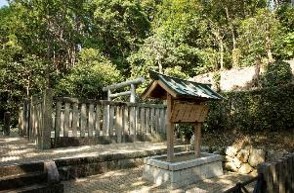
Emperor Kotoku's Mausoleum
KawachiEmperor Kotoku, the 36th emperor, ascended to the throne after the Taika Reforms. He appointed Soga no Kurayamada Ishikawamaro, who had contributed greatly to the reforms, and promoted reform politics. However, the emperor fell out with Prince Nakano Oe and others, and died alone at Naniwa Palace in 654, the fifth year of the Hakuchi era, and was buried at Isonaga no Miya in Osaka. Located along the Takeuchi Kaido road, the tomb is a small circular burial mound with a diameter of approximately 30 meters, also known as the "Uguisu no Mausoleum." It is said that a mirror known as the "Kaiju Budou Kagami" (Sea Beast and Grape Mirror) was once excavated from a secondary tomb.
History / culture -
spot
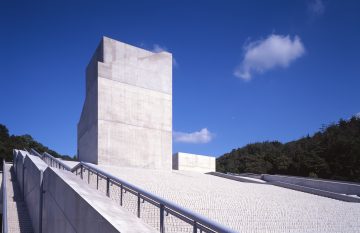
Osaka Prefecture Chikatsu Asuka Museum
KawachiUnraveling the secrets of Japan's ancient nation in Osaka
The museum, designed by Tadao Ando, focuses on the history of the early days of Japan's ancient state. It is currently undergoing renovations until March 2026, and is scheduled to reopen in April.History / culture -
Event
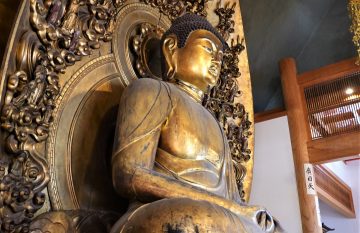
Tokujoji Temple's Important Cultural Property Amida Buddha Statue Opened to the Public
KawachiThe Amida Buddha statue, known as the "Kawachi Great Buddha," is a gigantic statue of approximately 2.5 meters tall. It was designated a national treasure during the Meiji period (now an important cultural property following the implementation of the Cultural Properties Protection Act), and will be open to the public as part of the after-sales campaign, with no prior reservations required.
History / culture -
spot
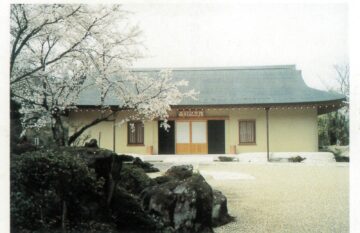
The final resting place of Saigyo Hoshi, Kokawa-dera Temple, Saigyo Memorial Museum
KawachiThe temple is known as the place where Saigyo, a poet from the late Heian period, ended his life during the cherry blossom season, as he wrote in his poem, "I wish to die in spring beneath the flowers, around the time of the full moon in Kisaragi." Within the temple grounds, you will find Saigyo's tomb and the Saigyo Hall, and at the back of the main temple is the Saigyo Memorial Museum, which houses a statue of Saigyo and a collection of paintings, calligraphy, and materials related to Saigyo, and is open for a limited time only.
Art History / culture -
spot
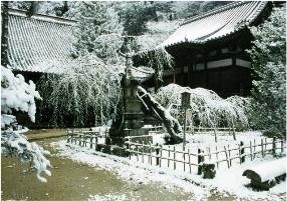
Kokiji Temple
KawachiIt is said to have been founded by En no Gyoja, who is said to be the founder of Shugendo, and is a famous temple where Kobo Daishi and other high priests practiced their asceticism. The temple is home to the 25th sutra mound of the Katsuragi Shugendo, which has been designated a Japan Heritage Site, and is also known as "Kokaji Temple," and is worthy of its name, as the temple is decorated with a 110-year-old weeping cherry tree, as well as sasanquas, camellias, and camellias that change color throughout the seasons. In this tranquil atmosphere, you can try out activities such as copying sutras and zazen meditation.
History / culture -
spot
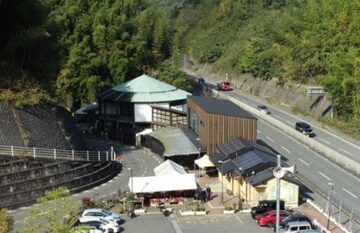
Kanan Roadside Station
KawachiKanan Roadside Station is located along National Route 309, a major regional highway that runs from central Osaka through the southern Osaka region and directly to Nara. The parking area is equipped with a car park, toilets, a rest area and other facilities, providing a place for drivers to relax. In addition, the adjacent direct sales store (Kanan Town Rural Revitalization Center) sells fresh, locally-sourced vegetables picked that morning, as well as processed products made with local ingredients, such as mochi rice cakes, rice flour bread and jam.
Gourmet and other -
spot
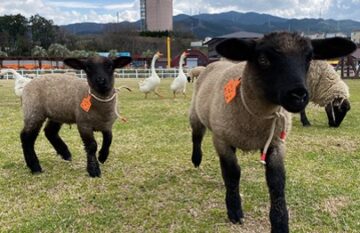
World Ranch
KawachiThis Western-style leisure spot opened in 1989 with the concept of creating a heart-to-heart connection between people, nature, and animals. Many animals live here, including a corner where you can try horseback riding, a grazing area where you can interact with sheep, goats, ponies, mini pigs, and ducks, and a corner where you can interact with small animals like rabbits. There are plenty of activities that children will enjoy, such as fishing and cow milking. The park also has barbecues, natural hot springs, and log cabins and cottages where you can stay overnight, making it a fun place for the whole family to spend the day.
Nature Activities -
spot
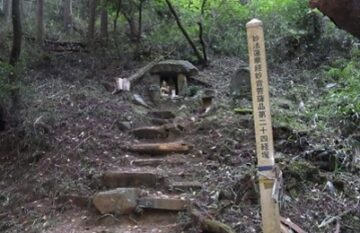
Iwahashiyama and the Japan Heritage "Katsuragi Shugen 24th and 25th Sutra Mounds"
KawachiThe name "Iwahashiyama" comes from a legend that En no Gyoja once commanded Japanese gods, including Hitokotonushi no Kami, who is enshrined in present-day Gose City, Nara Prefecture, to build a rock bridge to Mount Kinpu in the Yoshino region of Nara Prefecture. A rock called "Kume no Iwahashi" near the summit is said to be a remnant of this bridge. The mountainside is also dotted with megaliths and unusual rocks, such as the "Nabekamaishi," "Hokotateishi," and "Tainai Kuguri," allowing visitors to explore these megaliths, evoking the romance of ancient times. In 2020, the Shugendo (Katsuragi Shugendo) path, which stretches from Wakayama Prefecture to Nara Prefecture, where En no Gyoja first trained, was designated a Japan Heritage Site.
History / culture -
spot
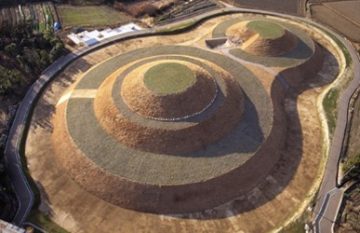
Kanayama Kofun Park: A rare double-circular burial mound in Japan
KawachiThis gourd-shaped twin-circular tomb is rare nationwide, and is believed to have been constructed in the late Kofun period (late 6th century to early 7th century), when keyhole-shaped tombs were on the decline. With a mound length of 85.8m and a total length including the surrounding moat of 102m, it is the largest twin-circular tomb in Japan and is a nationally designated historic site. Within the stone chamber on the northern hill is a horizontal-type stone chamber, where two house-shaped stone coffins were placed, and grave goods were excavated. A stone chamber was also confirmed to exist on the southern hill, but as it has not been investigated, its contents are unknown. It was designated a national historic site in 1991, and is maintained and preserved as a park, popular as a place to relax and learn about history.
History / culture -
spot
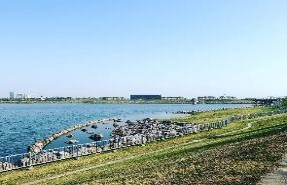
Osaka Prefectural Sayamaike Museum
KawachiOsaka Prefectural Sayamaike Museum is an outdoor museum that emphasizes the integrated use of the historic Sayamaike Pond, Japan's oldest dam-type reservoir.Operated in collaboration with Osaka Prefecture, Osaka Sayama City, and the Sayamaike Festival Executive Committee, the museum is open to the local community and aims to create new value and appeal for Sayamaike Pond.
This museum specializes in the history of land development, exploring the relationship between water and the earth, focusing on the banks of Sayama Pond and excavated cultural assets. We strive to collect all materials and information related to land development history from an East Asian perspective, and we will publicize and disseminate the results through permanent and special exhibitions. We also aim to become a learning and research center for land development history.Art -
spot
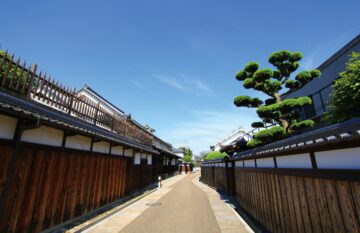
Tondabayashi Jinanimachi
KawachiThe only Important Preservation District for Groups of Traditional Buildings in the prefecture
Tondabayashi Jinaimachi is the only Jinanimachi in the prefecture designated as an Important Preservation District for Groups of Traditional Buildings. It is perfect for a historical stroll.History / culture -
spot
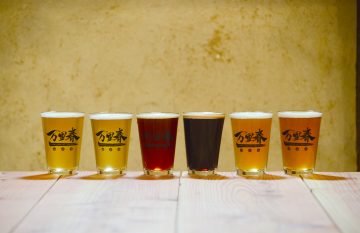
Banri no Haru Beer Hall
KawachiA sake brewery reborn as a beer brewery
This historic building, which was used for sake brewing until the 1970s, has been revived as a beer brewery and beer hall.Gourmet
-
spot
Emperor Kotoku's Mausoleum
Kawachi History / cultureEmperor Kotoku, the 36th emperor, ascended to the throne after the Taika Reforms. He appointed Soga no Kurayamada Ishikawamaro, who had contributed greatly to the reforms, and promoted reform politics. However, the emperor fell out with Prince Nakano Oe and others, and died alone at Naniwa Palace in 654, the fifth year of the Hakuchi era, and was buried at Isonaga no Miya in Osaka. Located along the Takeuchi Kaido road, the tomb is a small circular burial mound with a diameter of approximately 30 meters, also known as the "Uguisu no Mausoleum." It is said that a mirror known as the "Kaiju Budou Kagami" (Sea Beast and Grape Mirror) was once excavated from a secondary tomb.
-
spot
Osaka Prefecture Chikatsu Asuka Museum
Kawachi History / cultureUnraveling the secrets of Japan's ancient nation in Osaka
The museum, designed by Tadao Ando, focuses on the history of the early days of Japan's ancient state. It is currently undergoing renovations until March 2026, and is scheduled to reopen in April. -
Event
Tokujoji Temple's Important Cultural Property Amida Buddha Statue Opened to the Public
Kawachi History / cultureThe Amida Buddha statue, known as the "Kawachi Great Buddha," is a gigantic statue of approximately 2.5 meters tall. It was designated a national treasure during the Meiji period (now an important cultural property following the implementation of the Cultural Properties Protection Act), and will be open to the public as part of the after-sales campaign, with no prior reservations required.
-
spot
The final resting place of Saigyo Hoshi, Kokawa-dera Temple, Saigyo Memorial Museum
Kawachi Art History / cultureThe temple is known as the place where Saigyo, a poet from the late Heian period, ended his life during the cherry blossom season, as he wrote in his poem, "I wish to die in spring beneath the flowers, around the time of the full moon in Kisaragi." Within the temple grounds, you will find Saigyo's tomb and the Saigyo Hall, and at the back of the main temple is the Saigyo Memorial Museum, which houses a statue of Saigyo and a collection of paintings, calligraphy, and materials related to Saigyo, and is open for a limited time only.
-
spot
Kokiji Temple
Kawachi History / cultureIt is said to have been founded by En no Gyoja, who is said to be the founder of Shugendo, and is a famous temple where Kobo Daishi and other high priests practiced their asceticism. The temple is home to the 25th sutra mound of the Katsuragi Shugendo, which has been designated a Japan Heritage Site, and is also known as "Kokaji Temple," and is worthy of its name, as the temple is decorated with a 110-year-old weeping cherry tree, as well as sasanquas, camellias, and camellias that change color throughout the seasons. In this tranquil atmosphere, you can try out activities such as copying sutras and zazen meditation.
-
spot
Kanan Roadside Station
Kawachi Gourmet and OthersKanan Roadside Station is located along National Route 309, a major regional highway that runs from central Osaka through the southern Osaka region and directly to Nara. The parking area is equipped with a car park, toilets, a rest area and other facilities, providing a place for drivers to relax. In addition, the adjacent direct sales store (Kanan Town Rural Revitalization Center) sells fresh, locally-sourced vegetables picked that morning, as well as processed products made with local ingredients, such as mochi rice cakes, rice flour bread and jam.
-
spot
World Ranch
Kawachi Nature ActivitiesThis Western-style leisure spot opened in 1989 with the concept of creating a heart-to-heart connection between people, nature, and animals. Many animals live here, including a corner where you can try horseback riding, a grazing area where you can interact with sheep, goats, ponies, mini pigs, and ducks, and a corner where you can interact with small animals like rabbits. There are plenty of activities that children will enjoy, such as fishing and cow milking. The park also has barbecues, natural hot springs, and log cabins and cottages where you can stay overnight, making it a fun place for the whole family to spend the day.
-
spot
Iwahashiyama and the Japan Heritage "Katsuragi Shugen 24th and 25th Sutra Mounds"
Kawachi History / cultureThe name "Iwahashiyama" comes from a legend that En no Gyoja once commanded Japanese gods, including Hitokotonushi no Kami, who is enshrined in present-day Gose City, Nara Prefecture, to build a rock bridge to Mount Kinpu in the Yoshino region of Nara Prefecture. A rock called "Kume no Iwahashi" near the summit is said to be a remnant of this bridge. The mountainside is also dotted with megaliths and unusual rocks, such as the "Nabekamaishi," "Hokotateishi," and "Tainai Kuguri," allowing visitors to explore these megaliths, evoking the romance of ancient times. In 2020, the Shugendo (Katsuragi Shugendo) path, which stretches from Wakayama Prefecture to Nara Prefecture, where En no Gyoja first trained, was designated a Japan Heritage Site.
-
spot
Kanayama Kofun Park: A rare double-circular burial mound in Japan
Kawachi History / cultureThis gourd-shaped twin-circular tomb is rare nationwide, and is believed to have been constructed in the late Kofun period (late 6th century to early 7th century), when keyhole-shaped tombs were on the decline. With a mound length of 85.8m and a total length including the surrounding moat of 102m, it is the largest twin-circular tomb in Japan and is a nationally designated historic site. Within the stone chamber on the northern hill is a horizontal-type stone chamber, where two house-shaped stone coffins were placed, and grave goods were excavated. A stone chamber was also confirmed to exist on the southern hill, but as it has not been investigated, its contents are unknown. It was designated a national historic site in 1991, and is maintained and preserved as a park, popular as a place to relax and learn about history.
-
spot
Osaka Prefectural Sayamaike Museum
Kawachi ArtOsaka Prefectural Sayamaike Museum is an outdoor museum that emphasizes the integrated use of the historic Sayamaike Pond, Japan's oldest dam-type reservoir.Operated in collaboration with Osaka Prefecture, Osaka Sayama City, and the Sayamaike Festival Executive Committee, the museum is open to the local community and aims to create new value and appeal for Sayamaike Pond.
This museum specializes in the history of land development, exploring the relationship between water and the earth, focusing on the banks of Sayama Pond and excavated cultural assets. We strive to collect all materials and information related to land development history from an East Asian perspective, and we will publicize and disseminate the results through permanent and special exhibitions. We also aim to become a learning and research center for land development history. -
spot
Tondabayashi Jinanimachi
Kawachi History / cultureThe only Important Preservation District for Groups of Traditional Buildings in the prefecture
Tondabayashi Jinaimachi is the only Jinanimachi in the prefecture designated as an Important Preservation District for Groups of Traditional Buildings. It is perfect for a historical stroll. -
spot
Banri no Haru Beer Hall
Kawachi GourmetA sake brewery reborn as a beer brewery
This historic building, which was used for sake brewing until the 1970s, has been revived as a beer brewery and beer hall.