Featured
 Experiences, Events, and Spots
 Itineraries
 notice
 Access
 Guidebook
 お気に入り
お気に入り



Search for experiences, events and spots
Display Switching
-
spot

Habikino Visitor Center
KawachiGet off at Furuichi Station on the Kintetsu Minami Osaka Line, exit the ticket gate and immediately to the left, where you will find the Habikino Visitor Center, located along the Takeuchi Kaido, a Japanese Heritage Site. We offer a wide range of tourist information, including the Furuichi Kofun Group, a World Heritage Site, the Takeuchi Kaido, historical heritage sites such as temples and shrines, and local specialties.
History / culture -
spot
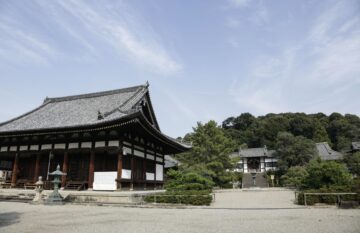
Eifuku-ji Temple (Prince Shotoku's Mausoleum)
KawachiIt was built by Empress Suiko to protect the mausoleum (Sankoichibyo) where Prince Shotoku, his mother, and his wife were buried, and it is said that Emperor Shomu developed the large temple complex in 724 (the first year of the Jinki era). From the Heian period onwards, it developed as a sacred place for Prince Shotoku worship as the "Kaminotaishi," one of the "Three Princes of Kawachi." At the end of the Sengoku period, the entire mountain was burned down in a fire caused by Oda Nobunaga's war, but starting with the reconstruction of the Seireiden (Sacred Spirit Hall) by Toyotomi Hideyori in 1603 (the eighth year of the Keicho era), the temple complex was gradually rebuilt and has continued to the present day.
History / culture -
Event
Eifukuji Temple Treasure Museum Special Opening
KawachiTemple associated with Prince Shotoku
This famous temple is home to the tombs of Prince Shotoku and three other people. The Takaya Renhihito gravestone will be on special display.History / culture -
spot
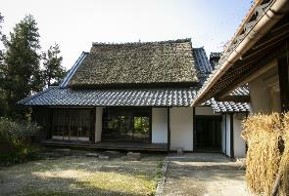
Daido Former Yamamoto Family Residence
KawachiThis old house is located at the foot of Yamada Mochiyabashi Bridge in Taishi Town along the Takeuchi Kaido, Japan's oldest official road. It retains the traditional Yamato-style roof, which is rare in this area during the Edo period, with a tiled roof and thatched roof, and is a house that conveys the atmosphere of the road.
History / culture -
spot
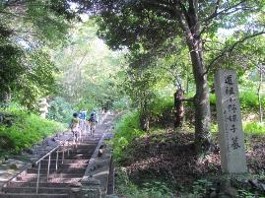
Ono Imoko grave
KawachiThis oval-shaped mound, measuring approximately 15 km from east to west, is located at the foot of the mountains east of the Taiga River and has long been said to be the tomb of Ono no Imoko.
Imoko was a person who was sent to the Sui Dynasty on the Chinese mainland as an envoy during the reign of Empress Suiko. He was entrusted with the protection of the Nyoirin Kannon Bodhisattva, the guardian deity of Prince Shotoku. He built a temple and offered flowers to the Buddha every morning and evening, which is said to be the origin of the Ikenobo school of flower arrangement. Currently, Ikenobo worships this mound as the tomb of Doso.History / culture -
spot
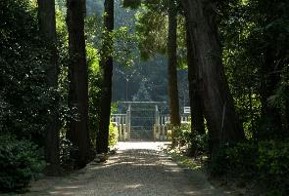
Emperor Bidatsu Mausoleum
KawachiThe 30th Emperor Bidatsu ascended to the throne in 572, and after his death, he was buried in the Isonaga Mausoleum, the tomb of his mother, Empress Ishihime, according to the Nihon Shoki. The tomb of Emperor Bidatsu is the only keyhole-shaped tumulus in the Isonaga Valley, measuring approximately 93 meters in length and surrounded by a dry moat. Nothing is known about the interior, but it is believed to have been built as a horizontal stone chamber. Haniwa clay figures have also been excavated from the surrounding area, which suggests that the tomb was constructed in the first half of the late Kofun period.
History / culture -
spot
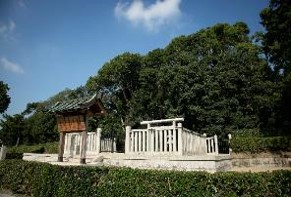
Emperor Yomei's Mausoleum
KawachiAccording to the Nihon Shoki, the 31st Emperor Yomei was buried in the Ikegami Tomb in Iware, but later, in the first year of the reign of Emperor Suiko (593), it is recorded that he was reburied in the Isonaga Tomb in Kawachi. The tomb of Emperor Yomei is a square burial mound measuring 65 meters east to west, 60 meters north to south, and 10 meters high, and is surrounded by a dry moat 7 meters wide. Including the outer bank of this moat, the tomb is enormous, measuring 100 meters on each side. It is noteworthy that the size and shape of the burial mound are very similar to the Ishibutai Tomb, believed to be the tomb of Soga no Umako.
History / culture -
spot
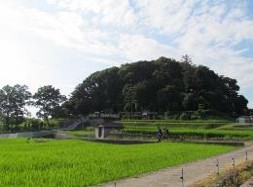
Mausoleum of Empress Suiko
KawachiThe 33rd Empress Suiko, Japan's first female emperor, appointed Prince Shotoku as regent, and actively absorbed advanced political systems, culture, and art through negotiations with the Sui Dynasty on the continent, leading to the flourishing of Asuka culture, which was centered on political reform and Buddhist culture. Upon her death in the 36th year of the reign of Suiko (628), she was buried in the tomb of Prince Takeda in Yamato, and later reburied in the Isonaga mausoleum in Kawachi.
History / culture -
spot
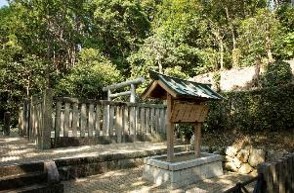
Emperor Kotoku's Mausoleum
KawachiEmperor Kotoku, the 36th emperor, ascended to the throne after the Taika Reforms. He appointed Soga no Kurayamada Ishikawamaro, who had contributed greatly to the reforms, and promoted reform politics. However, the emperor fell out with Prince Nakano Oe and others, and died alone at Naniwa Palace in 654, the fifth year of the Hakuchi era, and was buried at Isonaga no Miya in Osaka. Located along the Takeuchi Kaido road, the tomb is a small circular burial mound with a diameter of approximately 30 meters, also known as the "Uguisu no Mausoleum." It is said that a mirror known as the "Kaiju Budou Kagami" (Sea Beast and Grape Mirror) was once excavated from a secondary tomb.
History / culture -
spot
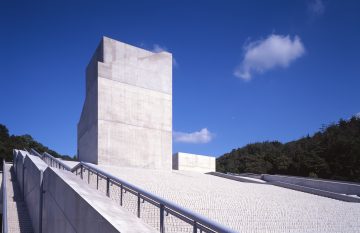
Osaka Prefecture Chikatsu Asuka Museum
KawachiUnraveling the secrets of Japan's ancient nation in Osaka
The museum, designed by Tadao Ando, focuses on the history of the early days of Japan's ancient state. It is currently undergoing renovations until March 2026, and is scheduled to reopen in April.History / culture -
Event
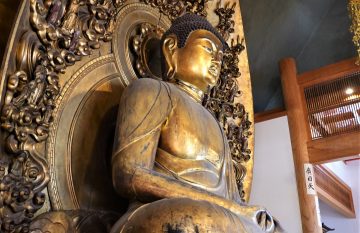
Tokujoji Temple's Important Cultural Property Amida Buddha Statue Opened to the Public
KawachiThe Amida Buddha statue, known as the "Kawachi Great Buddha," is a gigantic statue of approximately 2.5 meters tall. It was designated a national treasure during the Meiji period (now an important cultural property following the implementation of the Cultural Properties Protection Act), and will be open to the public as part of the after-sales campaign, with no prior reservations required.
History / culture -
spot
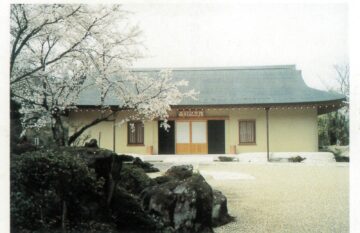
The final resting place of Saigyo Hoshi, Kokawa-dera Temple, Saigyo Memorial Museum
KawachiThe temple is known as the place where Saigyo, a poet from the late Heian period, ended his life during the cherry blossom season, as he wrote in his poem, "I wish to die in spring beneath the flowers, around the time of the full moon in Kisaragi." Within the temple grounds, you will find Saigyo's tomb and the Saigyo Hall, and at the back of the main temple is the Saigyo Memorial Museum, which houses a statue of Saigyo and a collection of paintings, calligraphy, and materials related to Saigyo, and is open for a limited time only.
Art History / culture
-
spot
Habikino Visitor Center
Kawachi History / cultureGet off at Furuichi Station on the Kintetsu Minami Osaka Line, exit the ticket gate and immediately to the left, where you will find the Habikino Visitor Center, located along the Takeuchi Kaido, a Japanese Heritage Site. We offer a wide range of tourist information, including the Furuichi Kofun Group, a World Heritage Site, the Takeuchi Kaido, historical heritage sites such as temples and shrines, and local specialties.
-
spot
Eifuku-ji Temple (Prince Shotoku's Mausoleum)
Kawachi History / cultureIt was built by Empress Suiko to protect the mausoleum (Sankoichibyo) where Prince Shotoku, his mother, and his wife were buried, and it is said that Emperor Shomu developed the large temple complex in 724 (the first year of the Jinki era). From the Heian period onwards, it developed as a sacred place for Prince Shotoku worship as the "Kaminotaishi," one of the "Three Princes of Kawachi." At the end of the Sengoku period, the entire mountain was burned down in a fire caused by Oda Nobunaga's war, but starting with the reconstruction of the Seireiden (Sacred Spirit Hall) by Toyotomi Hideyori in 1603 (the eighth year of the Keicho era), the temple complex was gradually rebuilt and has continued to the present day.
-
Event
Eifukuji Temple Treasure Museum Special Opening
Kawachi History / cultureTemple associated with Prince Shotoku
This famous temple is home to the tombs of Prince Shotoku and three other people. The Takaya Renhihito gravestone will be on special display. -
spot
Daido Former Yamamoto Family Residence
Kawachi History / cultureThis old house is located at the foot of Yamada Mochiyabashi Bridge in Taishi Town along the Takeuchi Kaido, Japan's oldest official road. It retains the traditional Yamato-style roof, which is rare in this area during the Edo period, with a tiled roof and thatched roof, and is a house that conveys the atmosphere of the road.
-
spot
Ono Imoko grave
Kawachi History / cultureThis oval-shaped mound, measuring approximately 15 km from east to west, is located at the foot of the mountains east of the Taiga River and has long been said to be the tomb of Ono no Imoko.
Imoko was a person who was sent to the Sui Dynasty on the Chinese mainland as an envoy during the reign of Empress Suiko. He was entrusted with the protection of the Nyoirin Kannon Bodhisattva, the guardian deity of Prince Shotoku. He built a temple and offered flowers to the Buddha every morning and evening, which is said to be the origin of the Ikenobo school of flower arrangement. Currently, Ikenobo worships this mound as the tomb of Doso. -
spot
Emperor Bidatsu Mausoleum
Kawachi History / cultureThe 30th Emperor Bidatsu ascended to the throne in 572, and after his death, he was buried in the Isonaga Mausoleum, the tomb of his mother, Empress Ishihime, according to the Nihon Shoki. The tomb of Emperor Bidatsu is the only keyhole-shaped tumulus in the Isonaga Valley, measuring approximately 93 meters in length and surrounded by a dry moat. Nothing is known about the interior, but it is believed to have been built as a horizontal stone chamber. Haniwa clay figures have also been excavated from the surrounding area, which suggests that the tomb was constructed in the first half of the late Kofun period.
-
spot
Emperor Yomei's Mausoleum
Kawachi History / cultureAccording to the Nihon Shoki, the 31st Emperor Yomei was buried in the Ikegami Tomb in Iware, but later, in the first year of the reign of Emperor Suiko (593), it is recorded that he was reburied in the Isonaga Tomb in Kawachi. The tomb of Emperor Yomei is a square burial mound measuring 65 meters east to west, 60 meters north to south, and 10 meters high, and is surrounded by a dry moat 7 meters wide. Including the outer bank of this moat, the tomb is enormous, measuring 100 meters on each side. It is noteworthy that the size and shape of the burial mound are very similar to the Ishibutai Tomb, believed to be the tomb of Soga no Umako.
-
spot
Mausoleum of Empress Suiko
Kawachi History / cultureThe 33rd Empress Suiko, Japan's first female emperor, appointed Prince Shotoku as regent, and actively absorbed advanced political systems, culture, and art through negotiations with the Sui Dynasty on the continent, leading to the flourishing of Asuka culture, which was centered on political reform and Buddhist culture. Upon her death in the 36th year of the reign of Suiko (628), she was buried in the tomb of Prince Takeda in Yamato, and later reburied in the Isonaga mausoleum in Kawachi.
-
spot
Emperor Kotoku's Mausoleum
Kawachi History / cultureEmperor Kotoku, the 36th emperor, ascended to the throne after the Taika Reforms. He appointed Soga no Kurayamada Ishikawamaro, who had contributed greatly to the reforms, and promoted reform politics. However, the emperor fell out with Prince Nakano Oe and others, and died alone at Naniwa Palace in 654, the fifth year of the Hakuchi era, and was buried at Isonaga no Miya in Osaka. Located along the Takeuchi Kaido road, the tomb is a small circular burial mound with a diameter of approximately 30 meters, also known as the "Uguisu no Mausoleum." It is said that a mirror known as the "Kaiju Budou Kagami" (Sea Beast and Grape Mirror) was once excavated from a secondary tomb.
-
spot
Osaka Prefecture Chikatsu Asuka Museum
Kawachi History / cultureUnraveling the secrets of Japan's ancient nation in Osaka
The museum, designed by Tadao Ando, focuses on the history of the early days of Japan's ancient state. It is currently undergoing renovations until March 2026, and is scheduled to reopen in April. -
Event
Tokujoji Temple's Important Cultural Property Amida Buddha Statue Opened to the Public
Kawachi History / cultureThe Amida Buddha statue, known as the "Kawachi Great Buddha," is a gigantic statue of approximately 2.5 meters tall. It was designated a national treasure during the Meiji period (now an important cultural property following the implementation of the Cultural Properties Protection Act), and will be open to the public as part of the after-sales campaign, with no prior reservations required.
-
spot
The final resting place of Saigyo Hoshi, Kokawa-dera Temple, Saigyo Memorial Museum
Kawachi Art History / cultureThe temple is known as the place where Saigyo, a poet from the late Heian period, ended his life during the cherry blossom season, as he wrote in his poem, "I wish to die in spring beneath the flowers, around the time of the full moon in Kisaragi." Within the temple grounds, you will find Saigyo's tomb and the Saigyo Hall, and at the back of the main temple is the Saigyo Memorial Museum, which houses a statue of Saigyo and a collection of paintings, calligraphy, and materials related to Saigyo, and is open for a limited time only.