



 …Immediate Booking
  …Request Booking
Experience details
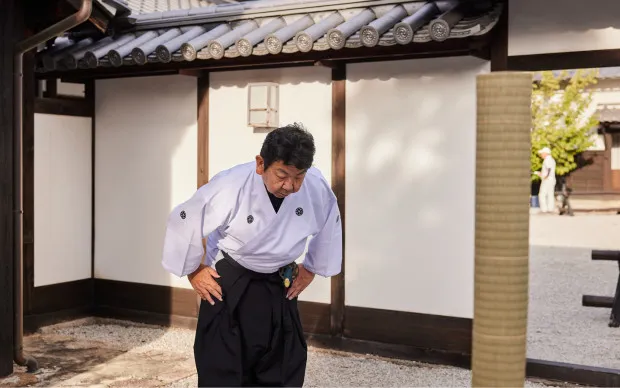
【Portent of bushido】What is the most important thing for a samurai to know? Wearing hakama, sandals, and a sword to learn courtesy, manners, and kata.
The samurai’s ideal of honor is often expressed with terms like “face” or “appearance“, but ultimately everything comes down to the concept of “shame”. “Don’t embarrass yourself”, “do not sully your name”, “don’t become a laughingstock”, since the very beginning the samurai are taught about the concept of shame and humiliation. Next, they learn that “martial arts begin with manners and end with manners”. Samurai are also efficient, effective, and graceful in their movements. As a result, traditional Japanese swordsmanship has few flashy moves and minimal movement. Spinning swords, jumping kicks, and exaggerated movements have no place in true Japanese swordsmanship.
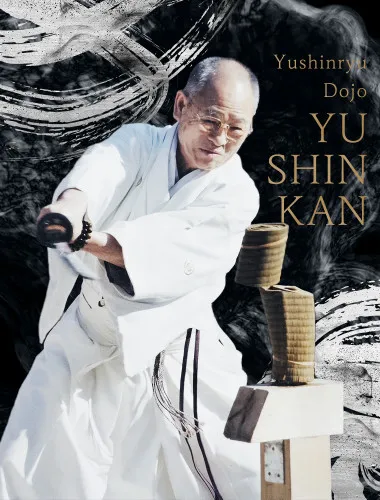
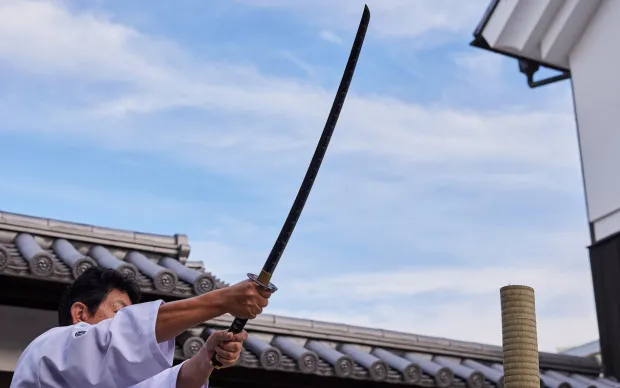
【Understanding of bushido】Experience the weight and sharpness of an authentic Japanese sword and learn the basic techniques of swordsmanship (drawing and sheathing the sword).
~A warrior is prepared to die every morning. In the quiet of the morning, he imagines himself being struck by lightning, doused by fire, or cut to pieces with a sword or spear. Whether he is prepared to face death, waiting just outside his doorstep.~
The most important thing for a samurai to be able to put his very life and soul on the line, every waking minute and second, for the goal he is aiming to accomplish.
The practice of swordsmanship was intended above all to nurture the mind. The samurai, through diligent practice and extreme concentration, desired to attain a state of detachment, free of attachments and preconceptions, and thus able to respond immediately.
The most important thing for a samurai to be able to put his very life and soul on the line, every waking minute and second, for the goal he is aiming to accomplish.
The practice of swordsmanship was intended above all to nurture the mind. The samurai, through diligent practice and extreme concentration, desired to attain a state of detachment, free of attachments and preconceptions, and thus able to respond immediately.
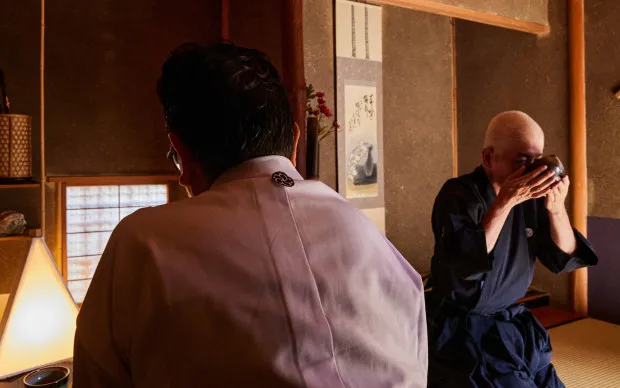
【Warrior tea ceremony】Samurai risked their lives to offer hospitality. which you will experience through the traditional tea ceremony.
Samurai is a term used to refer to warriors in general, but not just any warriors. In the past, a samurai was a proud title denoting a highly respected person. The Warrior tea ceremony is a tea ceremony that spread among the samurai during the Edo period as a part of their training and character development. Being highly spiritual it commands a certain degree of dignity.
One of the key tenets of the tea ceremony is hospitality. Failure to provide hospitality would be a disgrace to a samurai and would be punishable by death. Samurai risked their lives to offer hospitality, as well as to receive it.
If you are enlightened in one thing, you will be well versed in and understanding of anything.
The tea ceremony was a form of culture that cultivated social etiquette and was also linked to the honor of the samurai.
One of the key tenets of the tea ceremony is hospitality. Failure to provide hospitality would be a disgrace to a samurai and would be punishable by death. Samurai risked their lives to offer hospitality, as well as to receive it.
If you are enlightened in one thing, you will be well versed in and understanding of anything.
The tea ceremony was a form of culture that cultivated social etiquette and was also linked to the honor of the samurai.
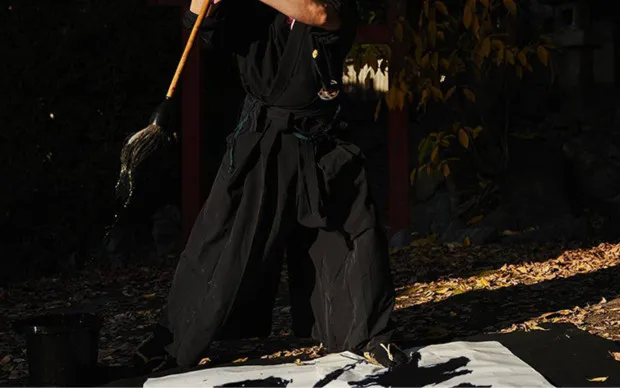
【Parting poem】Before the battle of Osaka, he looked back on his life in anticipation of his death and wrote the last word on all the papers with a large brush!
"Final words" are texts written by a samurai facing his death, in which he reflects on his life to date and writes down the last words of his life.
For example, Sanada Yukimura wrote "In this world of floating, we do not know what the next day will bring" meaning that everything is permeable and uncertain, including his own survival.
The parting poem of Toyotomi Hideyoshi reads “Appearing like dew, vanishing like dew - such is my life. Even Naniwa's splendor is a dream within a dream” and implies that even his life and reaching the seat of the imperial regent was ultimately but a fleeting moment.
For example, Sanada Yukimura wrote "In this world of floating, we do not know what the next day will bring" meaning that everything is permeable and uncertain, including his own survival.
The parting poem of Toyotomi Hideyoshi reads “Appearing like dew, vanishing like dew - such is my life. Even Naniwa's splendor is a dream within a dream” and implies that even his life and reaching the seat of the imperial regent was ultimately but a fleeting moment.
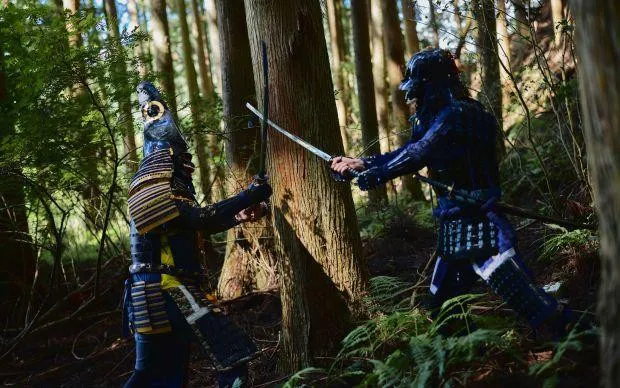
【Zenith of bushido】Don a helmet and armor and prove your worth at the battle of Osaka Castle!
During the Warring States Period, achievements on the battlefield were for the samurai the proof of their worth. Their military exploits, valor and merit. Simply put, going to war and proving themselves on the battlefield.
The Osaka Winter Campaign and Summer Campaign were a series of battles in which Tokugawa Ieyasu destroyed the Toyotomi family based in Osaka Castle, paving his way to supremacy and reign over Japan as the shogun. The battles took place in winter of 1614 and the summer of 1615 respectively and are collectively known as the Battle of Osaka. You will don your armor and helmet and take part in the battles at the same spots they were waged, at the Osaka Castle. ※The prosperous Toyotomi family, was destroyed in this battle. Afterward Tokugawa Ieyasu and later Tokugawa Hidetada ushered in a period of peace and stability that lasted for about 260 years.
The Osaka Winter Campaign and Summer Campaign were a series of battles in which Tokugawa Ieyasu destroyed the Toyotomi family based in Osaka Castle, paving his way to supremacy and reign over Japan as the shogun. The battles took place in winter of 1614 and the summer of 1615 respectively and are collectively known as the Battle of Osaka. You will don your armor and helmet and take part in the battles at the same spots they were waged, at the Osaka Castle. ※The prosperous Toyotomi family, was destroyed in this battle. Afterward Tokugawa Ieyasu and later Tokugawa Hidetada ushered in a period of peace and stability that lasted for about 260 years.
【Harakiri】Samurai do not suffer the shame of the noose even if they lose a battle out of honor, but die by disembowelment before they are captured.
“Bushido is realised in death”.
Samurai live a virtuous life not ashamed of themselves. They are willing to die for a cause and to risk their lives for the sake of honor, of which seppuku is a typical example. A warrior is prepared to die each morning, and in that moment of morning stillness, he imagines himself being struck by lightning, doused by fire, or cut to pieces with a sword or spear. Every morning and evening, we should always act as if we are prepared for death. By doing so, we will be able to fulfill our duties without fail for the rest of our lives. Pursuit of a beautiful death with those ideals in mind is a crucial part of bushido.
Samurai live a virtuous life not ashamed of themselves. They are willing to die for a cause and to risk their lives for the sake of honor, of which seppuku is a typical example. A warrior is prepared to die each morning, and in that moment of morning stillness, he imagines himself being struck by lightning, doused by fire, or cut to pieces with a sword or spear. Every morning and evening, we should always act as if we are prepared for death. By doing so, we will be able to fulfill our duties without fail for the rest of our lives. Pursuit of a beautiful death with those ideals in mind is a crucial part of bushido.
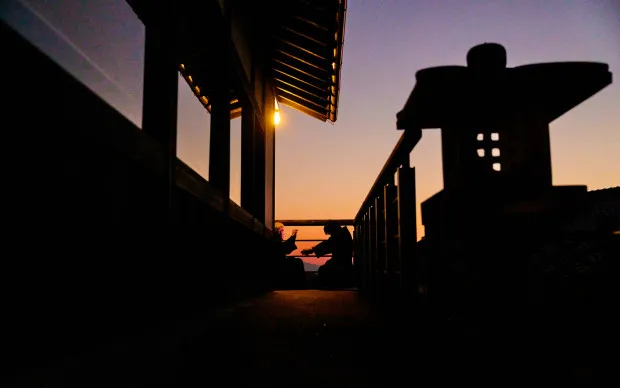
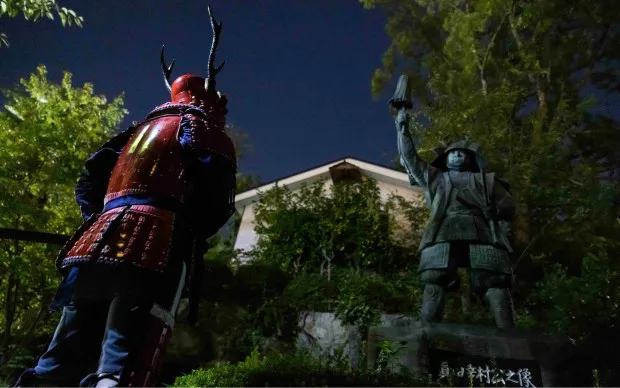
【Pilgrimage】Visit places connected to the Osaka Castle and the Siege of Osaka Castle at night
You can venture on a small pilgrimage of special spots closely related to the Osaka Castle and the Winter Campaign of 1614 and Summer Campaign of 1615.
For example,
【Osaka Castle: Suicide spot】 A monument erected in honor of Toyotomi Hideyori and his mother Yododono, who committed suicide on this spot when cornered by the Tokugawa forces during the Osaka Summer Campaign.
【Sanko Shrine】The bronze statue of Yukimura Sanada as well as the remains of the "Sanada's escape tunnel" leading to the main castle keep can be found here.
【Shingen-ji】It is said to be the site where Sanada Yukimura built his fortification for the Osaka Winter Campaign. A stone monument, "Ruins of Demaru Castle," stands in front of the gate.
【Yasui shrine】It is said that on this spot Sanada Yukimura came close to Tokugawa Ieyasu but was not able to reach him, he himself later succumbing here from battle exhaustion.
For example,
【Osaka Castle: Suicide spot】 A monument erected in honor of Toyotomi Hideyori and his mother Yododono, who committed suicide on this spot when cornered by the Tokugawa forces during the Osaka Summer Campaign.
【Sanko Shrine】The bronze statue of Yukimura Sanada as well as the remains of the "Sanada's escape tunnel" leading to the main castle keep can be found here.
【Shingen-ji】It is said to be the site where Sanada Yukimura built his fortification for the Osaka Winter Campaign. A stone monument, "Ruins of Demaru Castle," stands in front of the gate.
【Yasui shrine】It is said that on this spot Sanada Yukimura came close to Tokugawa Ieyasu but was not able to reach him, he himself later succumbing here from battle exhaustion.
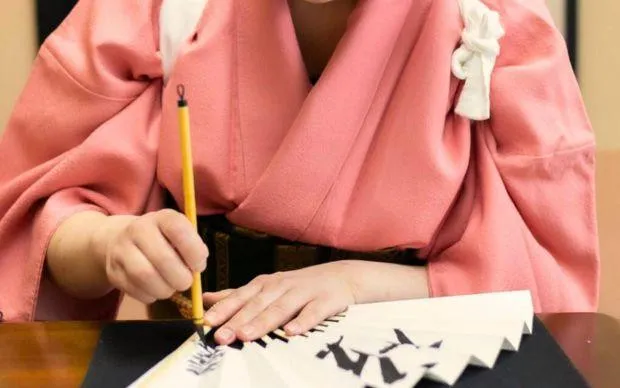
[Osaka Castle] Experience calligraphy class by the number one master in Japan whilst wearing a kimono (as couples or families). Take home a fan or scroll to commemorate the experience.
In addition to writing your favorite Kanji characters in calligraphy, have the calligraphy master create your own unique phonetic reading of your name using various kanji. Each kanji character has its own meaning, making each name fun and unique.
Write your favorite words or your own name on an authentic Japanese fan. The result is a one-of-a-kind fan or hanging scroll that can be taken home as a souvenir.
Write your favorite words or your own name on an authentic Japanese fan. The result is a one-of-a-kind fan or hanging scroll that can be taken home as a souvenir.