





Higashiosaka City, located on the eastern side of Osaka, is a "city of manufacturing" where artisan culture has been deeply rooted since ancient times.
From everyday items essential to daily life to space technology,
A wide variety of products are produced in this town.
In Higashi Osaka City,
The area at the foot of Mt. Ikoma is
"A town of faith and fortune-telling"
It is known as.
A rare shimenawa rope,
One hundred-step pilgrimage (Ohyakudo Mairi),
Ancient Tomb Shrine
Unique scenery appears one after another,
I feel a sense of familiarity somehow.
To experience the special atmosphere of Higashi-Osaka,
Audio guide to visit three shrines
There is a "Tour of the Three Shrines of Higashi-Osaka" tour.
Laughter brings good luck to the new year
"Hiraoka Shrine"
Watch passersby and perform "tsujiuranai" to read the gods' will
"Hyotanyama Inari Shrine
(Gourd and Mainari Shrine)
He is affectionately known as "Ishikiri-san" and "God of the Dragonfly"
"Ishikiri Tsurugiya Shrine
(Ishikiri Tsurugiya Shrine)."
Just by joining hands,
It never ends
A story awaits.
If you go around with an audio guide,
Why faith and fortune telling in Higashi Osaka?
Has it become part of everyday life?
The reason for this is quietly becoming apparent.
Discover the mysterious charm of Higashi-Osaka
Let's go and check it out while walking.
Introduction |
Before starting the tour of the three shrines
Higashi Osaka, located on the east side of Osaka at the foot of Mount Ikoma, is a region known as Higashi Osaka. Shrines line the area as if to protect the mountain, and merchants in the Edo period would pray in the morning, facing the direction of Mount Ikoma. This land, where faith was an integral part of daily life, still has a mysterious atmosphere where prayer and fortune-telling, the ordinary and the extraordinary, gently intertwine.
The Higashiosaka Three Shrines Tour is an audio guided tour of Higashiosaka. You can tour the shrines scattered around the foot of Mount Ikoma at your own pace with the audio guide. The Three Shrines Tour is a pilgrimage that visits three different shrines to ensure that the gods will more fully hear and answer your prayers.
Mount Ikoma has been an object of worship since ancient times. At its base are Hiraoka Shrine, Hyōtanyama Inari Shrine, and Ishikiri Tsurugiya Shrine. As you visit these three shrines, you will gradually begin to understand why faith and fortune-telling are so closely intertwined in this town.
Even if you're not used to visiting shrines, the audio guide will gently guide you through the proper etiquette, from how to wash your hands in the chozuya to how to pray. Before you head out into the streets of Higashi-Osaka, start by listening to this guide.
As you walk through the three shrines, the true face of Higashi-Osaka comes into view. Listen to the audio guide as you explore this town where daily life and prayer intersect.
Ishikiri Sando Shopping Street |
A hill where fortune telling and shopping streets intersect
The tour of the three shrines begins at Ishikiri Tsurugiya Shrine. As you get off at Kintetsu Ishikiri Station and start walking down the slope, you will be greeted by a row of lanterns on the road beside the tracks and a large torii gate.
"Welcome to Ishikiri-san."
When you see the welcoming archway, you have reached the beginning of the approach to Ishikiri Tsurugi Shrine. Put your earphones in and start the audio guide.
As I slowly walked down the slope, I came to a faint glimpse of the Osaka skyline beyond the approach, and I couldn't help but stop in my tracks. As I was captivated by the view of the city from above, the guide's voice spoke softly to me.
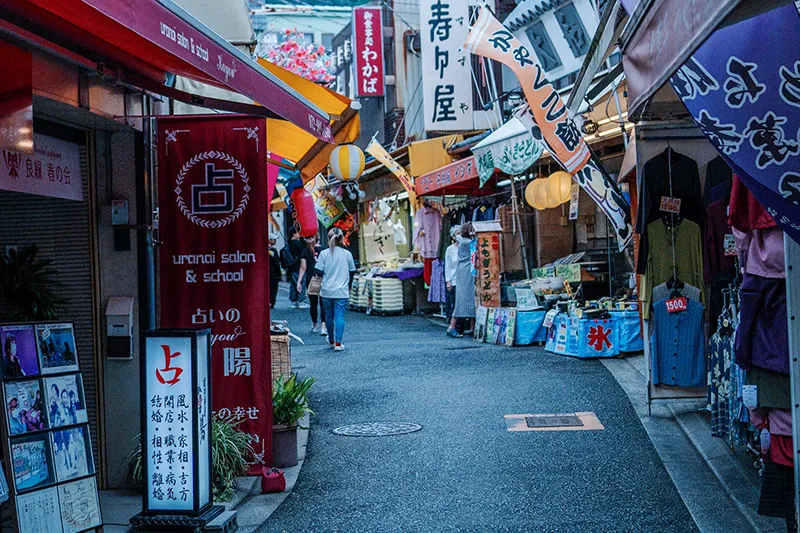
As I walked along, listening to the guide's narration, I suddenly noticed a Chinese herbal medicine store. As the guide said, perhaps this store is a remnant of that time. As I walked along with this thought in mind, the scenery of the shopping street gradually changed.
"Good luck," "Fortune telling," "Resolve worries"... With signs appearing one after the other, you'll feel as if you've stepped into the world of fortune telling.
However, when the audio guide said, "This is a life counseling center for worshippers praying for recovery from illness," the way I saw the scenery in front of me seemed to change.
As she supported people with feelings that had nowhere to go, her business eventually took on the form of "fortune telling." When you hear the story behind this, each fortune telling sign seems more than just a business, but like the footprints of someone's wishes.
When the voice of the audio guide blends with the atmosphere of the town, this place gradually transforms from a slightly mysterious tourist spot into a gentle approach to the shrine. Prayers and everyday life are gently connected. It felt as if that atmosphere was floating throughout the entire road.
Ishikiri Sando Shopping Street
1-4-14 Higashiishikiricho, Higashiosaka City, Osaka Prefecture
Ishikiri Sando Shopping District Promotion Association Office
Approximately 10 minutes walk from Shin-Ishikiri Station on the Kintetsu Keihanna Line
Ishikiri Tsurugiya Shrine |
Entrust your wishes with a 100-step pilgrimage
Once you pass through the shopping street, the grounds of Ishikiri Tsurugiya Shrine come into view. Before praying at the main shrine, let's first stop by the impressive Ema-den Hall, located to the south of the worship hall.
As we approached the Emadono, our guide slowly began to speak to us.
When you arrive at the Ema-den, take a moment to look up at the roof. There, you’ll find a magnificent sword and arrow. The name of the shrine reflects the powerful abilities of the enshrined deity, “Goshin’i,” who is believed to have the ability to cut through and penetrate even the strongest rocks.
A long time ago, during the period of myths in the “Kojiki” and “Nihon Shoki,” the deity Nigihayahi-no-Mikoto received the Ten Divine Treasures from Amaterasu Omikami. When Mikoto came to this land, he married and had a child with the sister of Nagasunehiko, who was the leader of the clan that lived there before. Ishikiri Shrine honors both of these deities.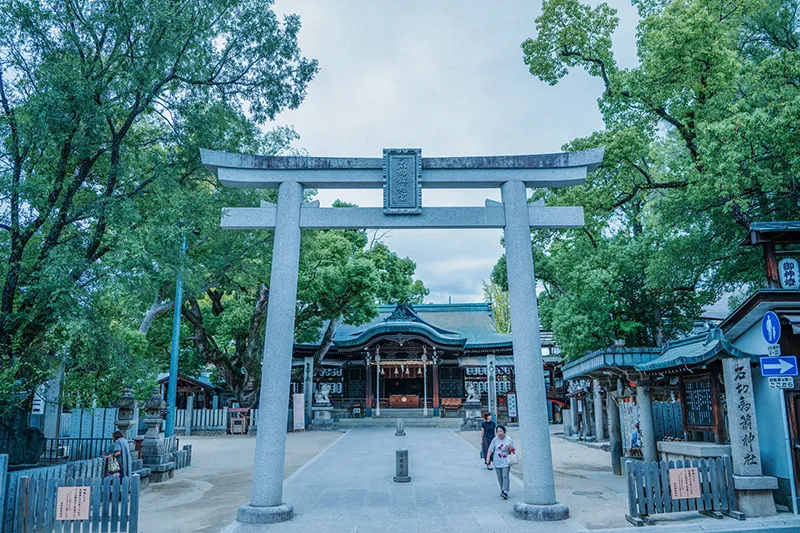
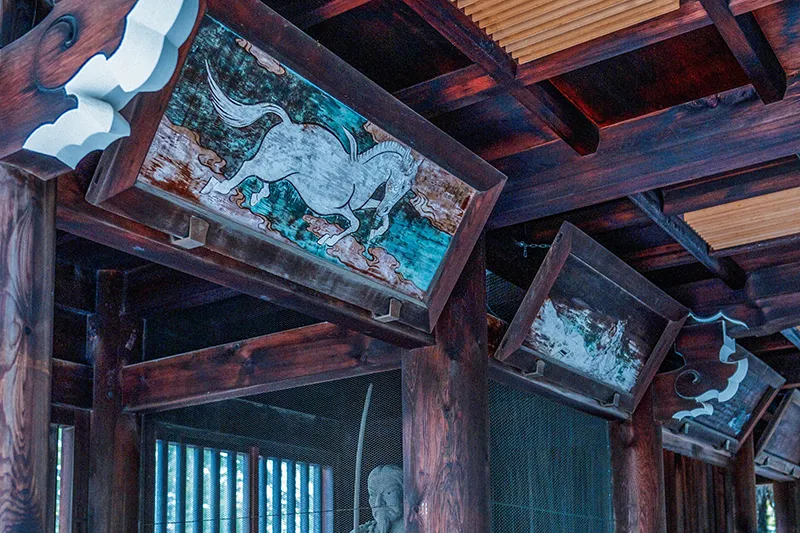
Along with the main hall, the Emadonna is registered as a national tangible cultural property. When we looked up at the roof as prompted by the guide's voice, we saw a row of golden swords and arrows standing straight up.
As the guide said, this Ema-den represents "the power to cut through and pierce even rocks," and stands powerfully yet quietly as the shrine that truly symbolizes Ishikiri Tsurugiya Shrine. After getting some background information about the shrine, we headed to the worship hall to offer our greetings to the two gods.
Once you pass through the torii gate, you'll find yourself stopping in your tracks at the strange sight within the temple grounds. Worshippers repeatedly walk back and forth quietly in front of the main hall. Perhaps they are praying for something powerfully - their earnest expressions and quiet movements naturally draw your eye.
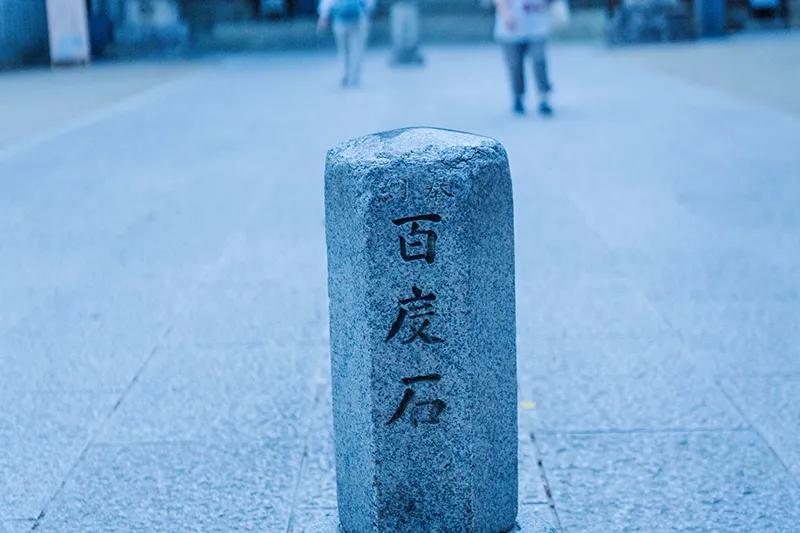
As I watched the people coming and going, the guide explained to me why the worshippers were going back and forth.
The guide then told us that Ishikiri Tsurugiya Shrine is also worshipped as the "god of cancer prevention." From treating swellings to preventing cancer, Ishikiri Shrine has become a source of comfort for people living with illness.
Staying healthy is surely the most important thing for everyone. Listening to Ishikiri's story, it seems that the people quietly going back and forth within the temple grounds are praying for the recovery of themselves or someone important to them.
People take turns reaching out and gently touching the Ohyakudo Stone. When they notice that the top of the stone is worn away, the number of prayers entrusted to this stone and their earnestness seem to emerge.
Ishikiri-san has always been considerate of the feelings of each and every person, and its generosity and warmth can be felt not only within the temple grounds, but also in the quiet atmosphere of the Ishikiri Sando Shopping Street.
After paying your respects at the main hall of Ishikiri Tsurugiya Shrine, head to the next shrine, feeling the prayers of the people quietly going back and forth within the grounds.
Ishikiri-Tsurugiya Shrine
1-1-1 Higashiishikiricho, Higashiosaka City, Osaka Prefecture
10 minutes walk from Shin-Ishikiri Station on the Kintetsu Keihanna Line
Hiraoka Shrine |
A comedic ritual that illuminates the world
Hiraoka Shrine is located at the top of Mount Ikoma, with Hiraoka Station on the Kintetsu Nara Line behind you. As you pass through the torii gate and walk along the wide approach to the shrine, the air around you slowly changes. Just moments ago, you could hear the sounds of trains running on the tracks and their horns, but as you walk along the approach to the shrine, these sounds seem to fade away. Hiraoka Shrine has long been a place of worship as the Ichinomiya of Kawachi Province. The reason it is called an "ancient sanctuary" seems to be evident throughout the entire approach to the shrine.
I slowly walked up the approach to the shrine and when I came out into an open area like a plaza, a voice began to play quietly from my earphones.
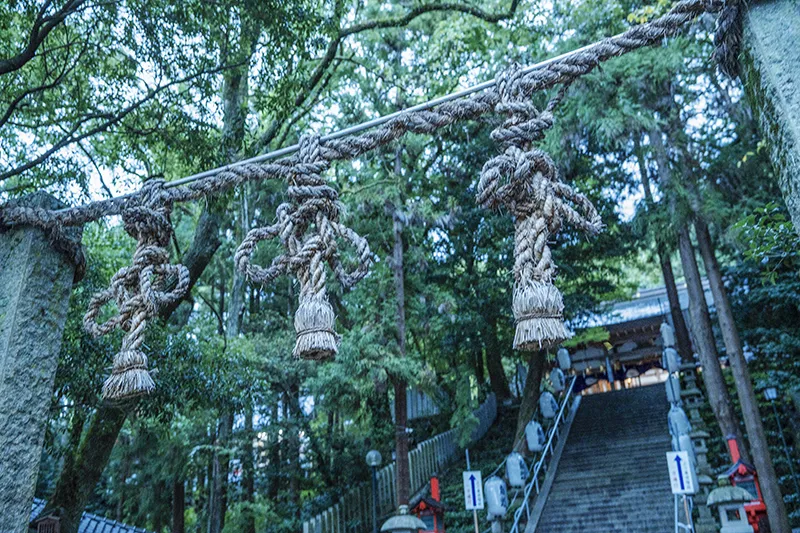
As you pass through the second torii gate and stroll along the wide approach, you’ll reach the shrine plaza. There, you'll find a special type of sacred “shimenawa” rope called “agemaki musubi” tied in the plaza. The main deity of Hiraoka Shrine is Amenokoyane-no-Mikoto, a god who oversees religious ceremonies and is closely connected to the myths involving the shimenawa rope.
In honor of this deity, Hiraoka Shrine hosts a festival called “Shimekake Shinji” every December, during which the shimenawa is replaced with a new one. This ritual is also known as the “Owarai Shinto Ritual.” At the beginning of the ritual, the chief priest laughs heartily, exclaiming “Ah-ha-ha,” and the worshippers join in. This laughing ritual continues for 20 minutes, as participants each laugh in their own way. People from all over the country come to this event to laugh away the misfortunes of the year and attract good fortune.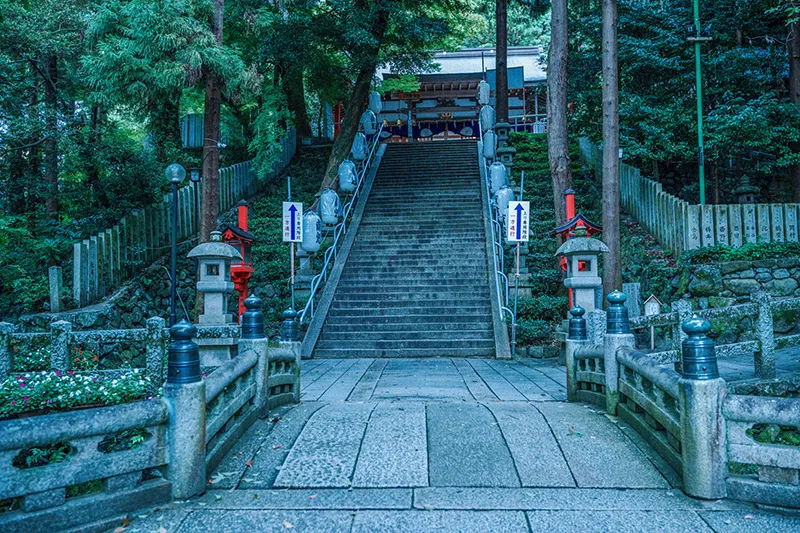
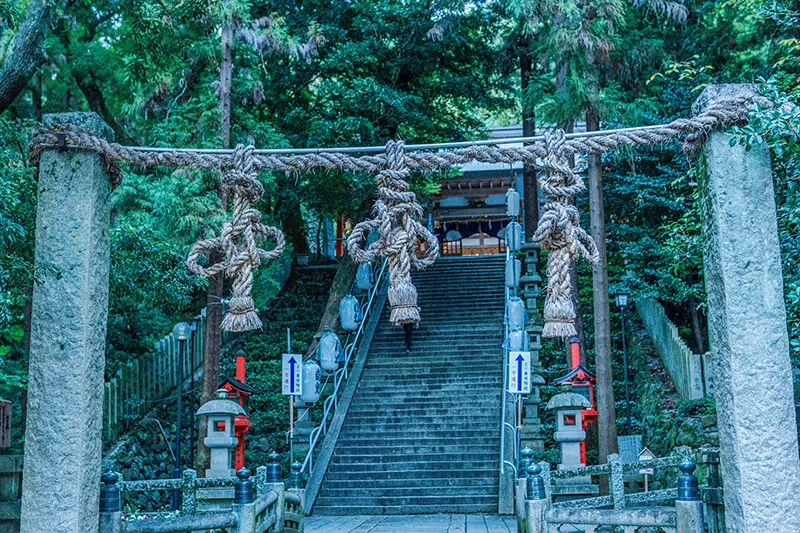
I listened carefully to the guide's voice as I looked up at the "agemaki knot" that I was seeing for the first time.
Our guide then explained that this ritual is based on the myth that "light returned to the world through prayer and laughter." What kind of ritual is a comedy ritual? Laughing heartily in front of the gods while praying for happiness in the new year - our imaginations running wild as we climbed the stairs to the main shrine.
Once we reached the top of the stairs, the guide began to tell us the story of the shrine.
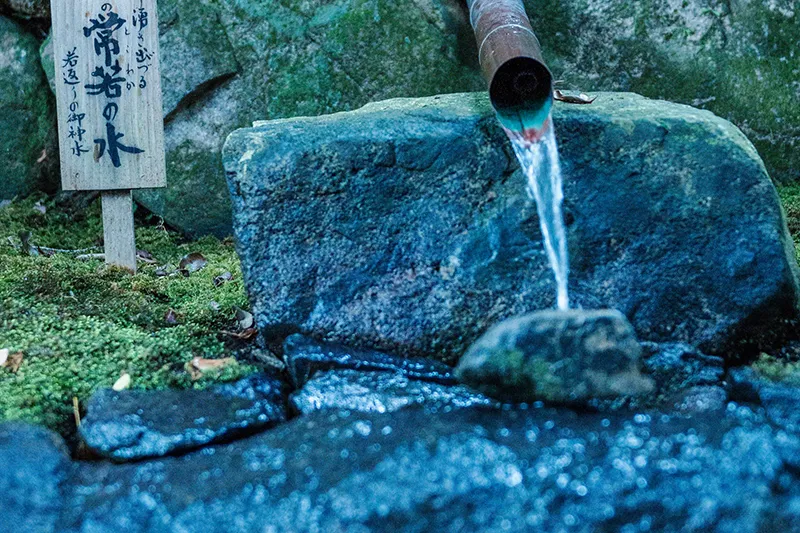
Within the temple grounds, there is also a misogiba (purification area) where you can purify yourself in the waterfall, and the abundant waters of Mount Ikoma continue to provide a blessing to this day. As you are surrounded by the clear air and deep silence of the temple grounds, it slowly becomes clear that this is a special place.
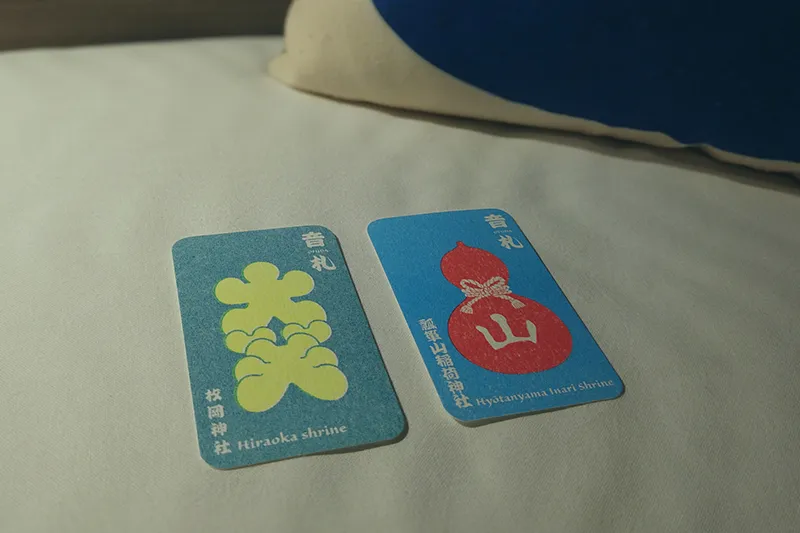
Hiraoka Shrine has a unique sound charm called an "Ofuda" that is linked to an audio guide. It allows you to take home the sounds of nature and rituals recorded within the shrine grounds.
The Hiraoka Shrine sound card contains the sounds that echo through the shrine grounds, as well as the sounds of the comedy rituals that I was curious about. If you recall the quiet times at Hiraoka Shrine through the sound, the silence of the shrine grounds may return no matter where you listen to it. If you play it on a speaker, a refreshing breeze will blow through your home.
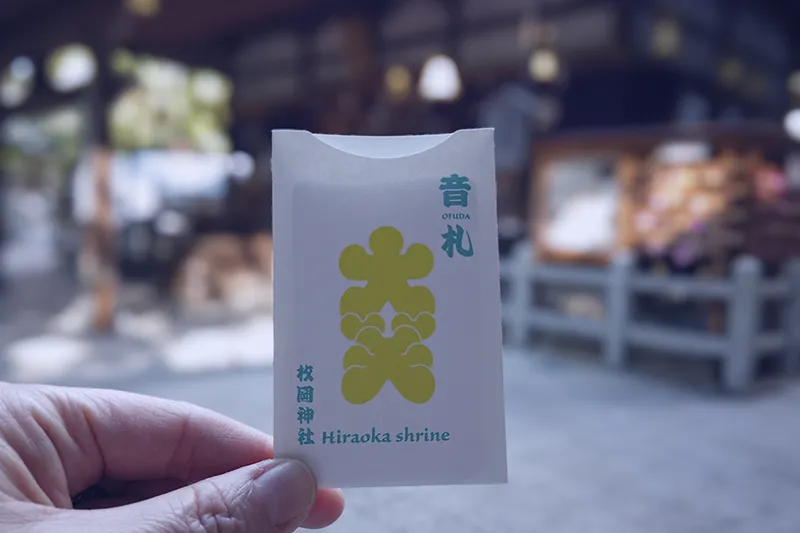
Hiraoka Shrine's sound plaque
First offering: 800 yen
Gift Shop | Shrine Office
Hiraoka Shrine
7-16 Izumoicho, Higashiosaka City, Osaka Prefecture
Hyōtanyama Inari Shrine |
Memories of people dwelling in the torii gates
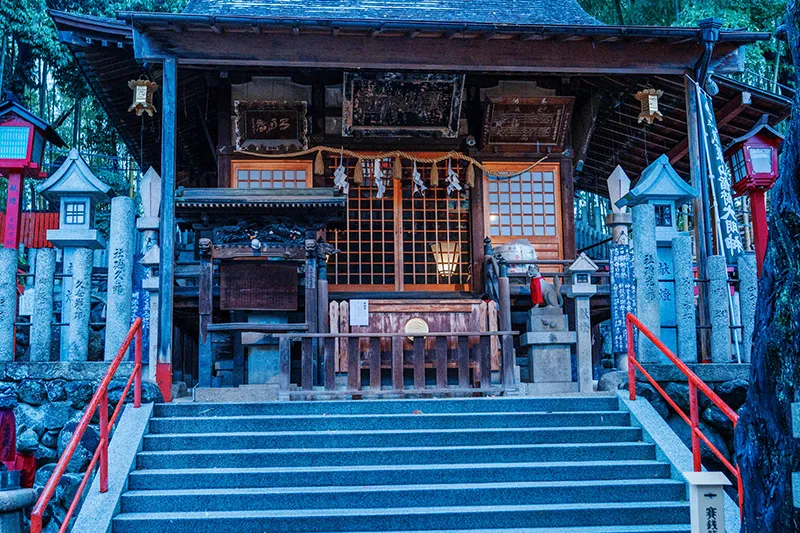
The entrance to the shrine path to Hyotanyama Inari Shrine is located in the arcade shopping street right next to Hyotanyama Station on the Kintetsu Nara Line. As you walk along the bustling arcade street lined with shops, you will suddenly come across a torii gate. This is where the shrine path begins. After passing through the solemn torii gate, continue along the path that runs through a quiet residential area.
Once you pass through the second large red torii gate, an audio guide begins to tell you about the history of the shrine.
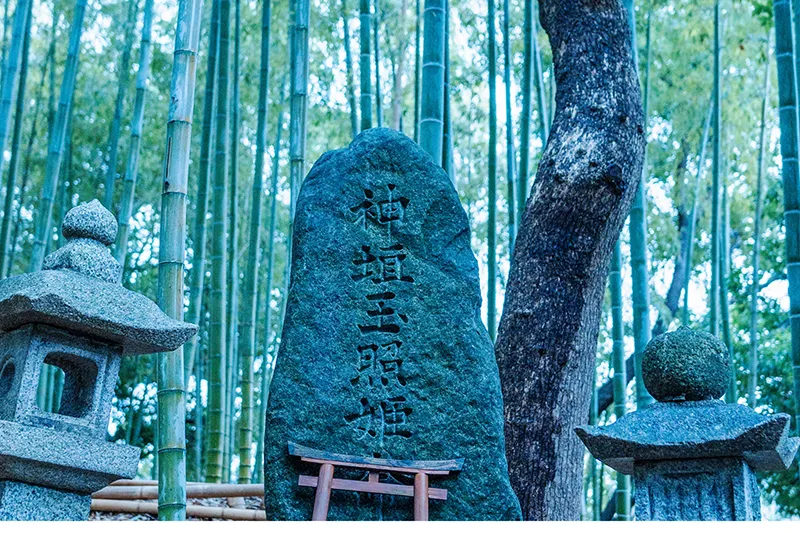
As we walked through the temple grounds, listening carefully to the guide, foxes and torii gates appeared everywhere. The torii gates were lined up, almost overlapping, and the foxes had expressive faces. Each one was so unique that it was hard to decide where to direct your gaze. When I looked up, I saw a bamboo forest spreading out behind the foxes.
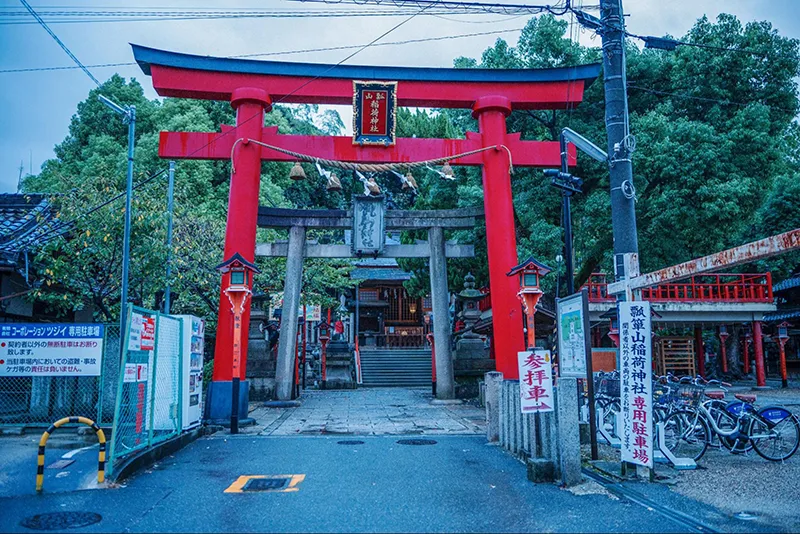
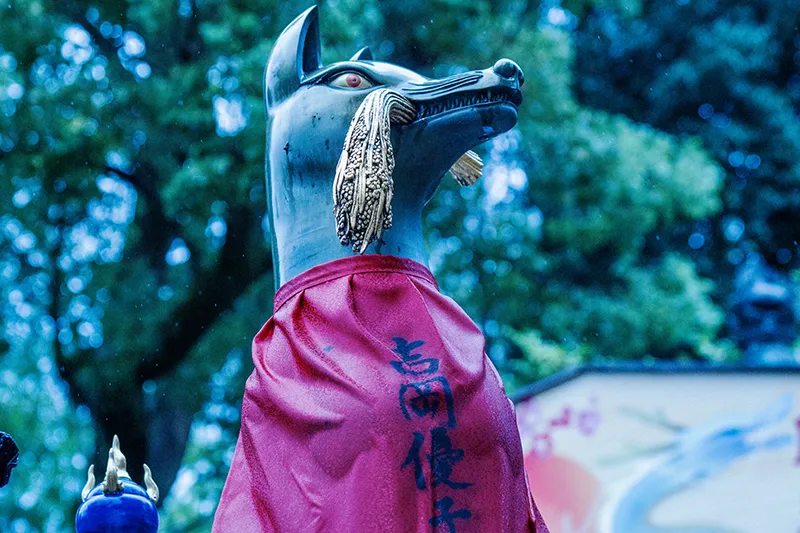
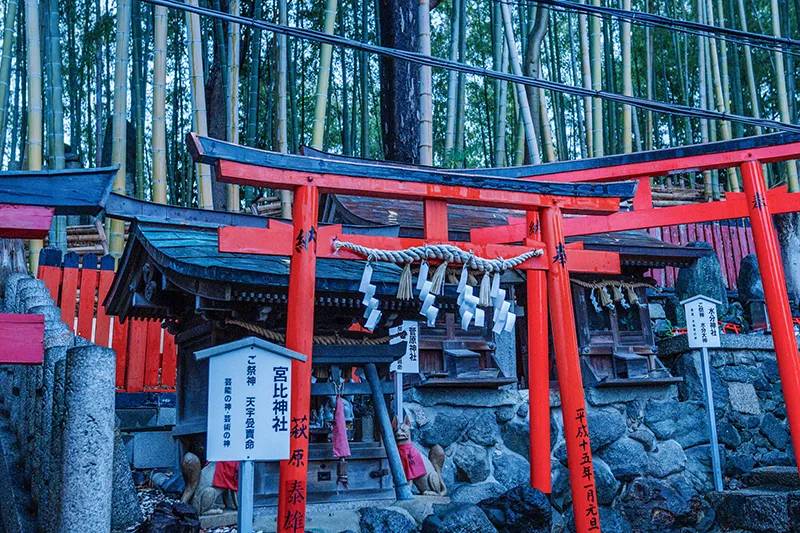
At Hyōtanyama Inari Shrine, there is a form of fortune-telling called "tsujiuranai," which has been passed down since ancient times through the chief priest's family and the Kudensho (Oral Records of Oral Tradition). This is a form of fortune-telling called "tsujiuranai," in which the will of the gods is judged by observing passersby. During the Edo period, Hyōtanyama Inari Shrine was located on Koyakaido leading from Kyoto to Mount Koya, and was a place where many travelers on pilgrimages came and went. The reputation of tsujiuranai, which was born there, is said to have spread beyond Osaka and become widely known.
*One-son transmission: A tradition passed down to only one successor
*Oral transmission: Oral transmission of teachings and knowledge
The audio guide tells the following story about fortune-telling at the end of the tour of the three shrines.
Perhaps the torii gates and tamagaki fences within the temple grounds were offered as a token of gratitude for a fortune-telling session that turned someone's life around. When the story our guide shared with us overlapped with the scenery within the temple grounds, it seemed as if we could catch a glimpse of someone's wish among the countless torii gates and tamagaki fences.
This shrine is located in a residential area, and even within the grounds, you can hear the sounds of everyday life, such as the sound of cars. The arcade shopping street leading to the shrine is also named "Jinja Mall Hyōtanyama," and the shrine blends naturally into the daily life of the area. Prayers are right next to everyday life. Hyōtanyama Inari Shrine makes you feel the closeness between prayer and daily life.
Hyōtanyama Inari Shrine also has sound cards that record the sounds of the shrine grounds. The compassionate god who has supported people at crossroads in life may give you the courage to take a new step.
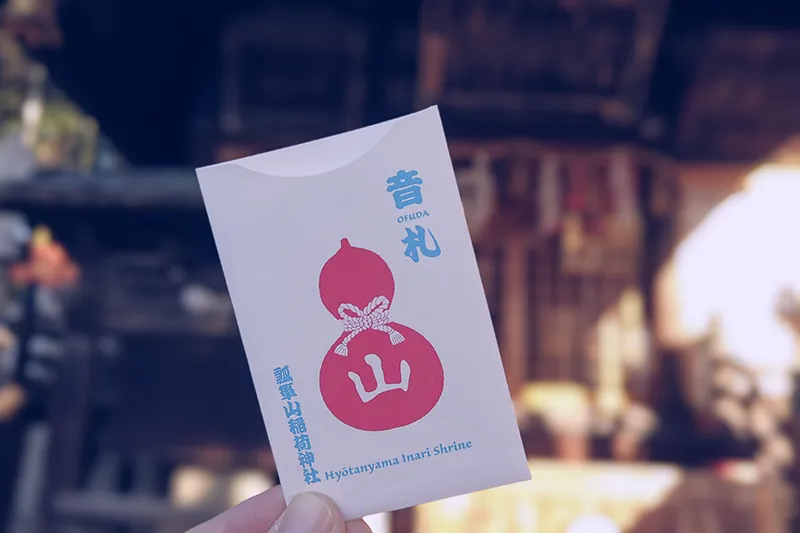
Hyōtanyama Inari Shrine's sound plaque
First offering: 800 yen
Gift Shop | Shrine Office
Hyōtanyama Inari Shrine
8-1 Hyōtanyamacho, Higashiosaka City, Osaka Prefecture
Sound card experience |
Listening to the music brings to mind memories of the town
Two sound tablets (ofuda) that contain the sounds of prayers from Hiraoka Shrine and Hyōtanyama Inari Shrine.
After visiting the three shrines, I decided to give it a listen right away.
The sound cards are very easy to use. Simply scan the QR code on the back of the card with your smartphone to start playing the music. By connecting it to a speaker via Bluetooth, the sound will resonate throughout the space, making you feel like you're inside the temple grounds.
Let's start with Hiraoka Shrine. The sound of water, evocative of the abundance of Mount Ikoma, blends naturally with the comedic "wahaha" sounds of the ritual. In the background, the chirps of various birds, the footsteps of worshippers, and the sound of a train passing in the distance all blend together, creating a space filled with sounds yet somehow still retaining a sense of tranquility. When you want to concentrate on work or study, the rich sound of water is a gentle sound that helps you concentrate.
Next, I listened to the sound cards at Hyōtanyama Inari Shrine.
Also known as "Oyama," the Hyōtanyama Kofun is a forbidden area, a sacred area that cannot be entered. The only sound that can be heard there is the rustling of bamboo leaves from the Imitake bamboo. Mixed with the sacred sounds are the sound of someone's footsteps, birds chirping, and the faint sound of a factory in the distance. The occasional ringing of the bells in the temple grounds reminds me of the prayers I have made and gives me a small measure of strength. It's the kind of sound you want to listen to when you need a little push, whether it's for something you prayed for at Hyōtanyama Inari Shrine or something new you've started.
Listening to the sound cards, it seemed to remind me of the scenery of the temple grounds and the feelings I had at the time. As time passes, the memories of the trip fade. In the midst of our busy daily lives, we can suddenly forget the feelings we had on our trip and the wishes we had made in our prayers. Looking back on the memories of our trip through the sounds, it felt as if the time we spent in Higashi-Osaka was quietly connected to our daily lives.
Conclusion
Walking through the streets of Higashi-Osaka with the audio guide, the word "prayer" somehow seems familiar and warm. Shrines are not places to visit only on special occasions, but places to drop in when you are troubled or lost. Though solemn, there is also a warmth and a generous acceptance - an atmosphere that evokes human kindness spreads out at the foot of Mount Ikoma.
Higashi-Osaka, where fortune telling and faith blend into everyday life, is sure to gently support your wishes.
( APP DOWNLOAD )
ON THE TRIP
Download the app
By installing the ON THE TRIP app, you can experience stories from all over Japan in each location. Listening to stories as you travel around temples, shrines, art museums, and towns will open up a whole new world to you. The future of tourism will be to explore the history and culture of each place while learning about its stories. Embark on a new journey with the app.
-
HIGASHI OSAKA
-
IKEDA

-
SAKAI