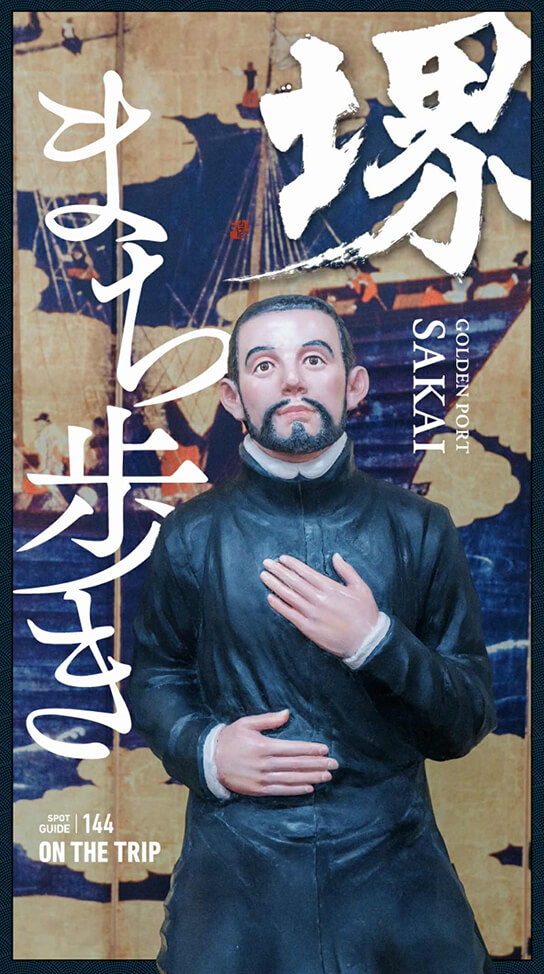






Once known as "Golden Days,"
Sakai is a port town that prospered through trade with the world.
When you get off at Sakai Station,
The townscape still retains traces of the past
You may not be able to see it.
But when you learn of the invisible story.
The scenery in front of me begins to move.
While touring the city with an audio guide,
The merchants who lived in Sakai,
And the Nanban culture brought
Let's go find a story.
The golden memories of the port town of Sakai
Sakai City is a port town located south of Osaka.
The east side of Sakai Station is a calm townscape.
A quiet town spreads out before you, with no hint of the sea.
However, this city once had trade connections with the world,
There was a time when it flourished as an international trading city.
Nanban ships came and went, merchants traded across the sea,
A golden age when guns and foreign cultures were brought to Sakai - people
This was an era known as the "Golden Days."
Sen no Rikyu refined his aesthetic sense, and Xavier visited the temple to preach.
Oda Nobunaga and Toyotomi Hideyoshi
A special town that values its existence.
There is so much that one city cannot contain it all.
Numerous stories are piled up like layers of rock.
In this article, along with the audio guide "Sakai Town Walk,"
We will introduce a walking tour of Sakai that will unravel the stories that lie hidden within the city.
While observing the changes of the times,
Let's dig up the stories that lie dormant in this city.
Sakai Station |
"The Beginning of Golden Days"
Your journey through Sakai's history begins at Sakai Station. Once you arrive at the station platform, prepare to begin your walk around the city. Launch the audio guide app and insert your earphones. The app will automatically play using GPS, so keep the guide open as you go.
As soon as you exit the East Exit ticket gate, you will hear a guide's voice coming through the earphones. Since you're in front of the ticket gate, try standing in a place where you won't be in the way and listen to it.
At the guide's urging, I turned around and looked up at the ticket gate, where I saw a huge painting studded with gold. It showed what appeared to be a Nanban ship, people disembarking and heading towards the station, and the whole thing surrounded by shining gold. It truly embodied the impression of the "golden country" that the guide had spoken of.
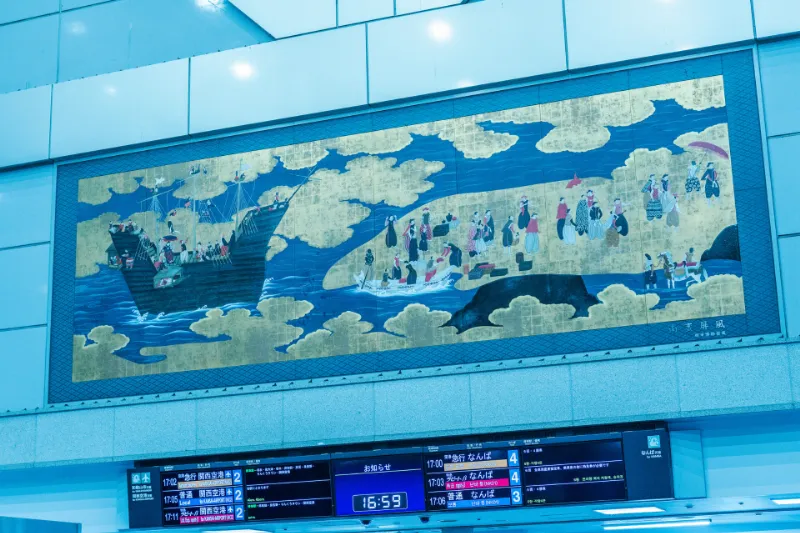
With the painting behind me, I followed the guide's voice to the tourist information center on the first floor of the east exit of Sakai Station. The guide's voice talking about Sakai at the time and the impersonal view of the station building. Feeling a slight sense of discomfort at the difference, I slowly made my way down the stairs.
As the glass case next to the tourist information center came into view, the guide began speaking again.
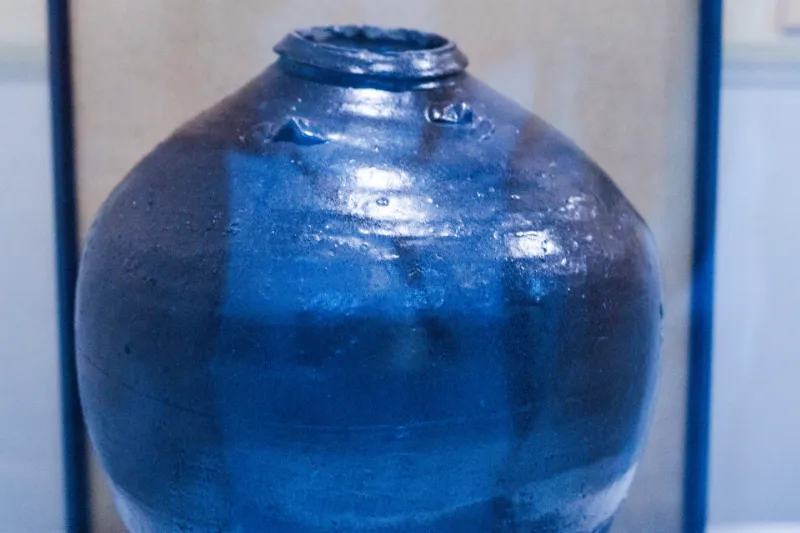
This jar was brought from Luzon Island in the Philippines by a merchant from Sakai named Luzon Sukezaemon. Luzon, who managed a warehouse that stored goods at the port, used his business acumen to run a trading business. When he brought the jar back and showed it to Toyotomi Hideyoshi, the ruler of Japan, he was delighted, saying, "What a rare find!" Famous feudal lords also flocked to buy the jar.
At first glance, the vase appears simple and unremarkable. However, the story of how it was appreciated by Toyotomi Hideyoshi and other feudal lords allows us to imagine the cultural differences between then and today. If Sakai had not become a trading city, this vase may still be rare today. It makes us imagine another world.
This walk begins the moment you arrive at Sakai Station. As you listen to the guide's voice, your mind will naturally turn to the history of Sakai.
At the tourist information center where you can find the Luzon Vase, they will introduce you to the history and charms of Sakai from a different perspective than the audio guide. Be sure to stop by after listening to the guide. You'll be sure to gain an even greater understanding of the city's depth.
Nankai Main Line "Sakai" Station
3-22-1 Ebisujimacho, Sakai Ward, Sakai City, Osaka Prefecture
From JR Osaka Station, go to Shin-Imamiya Station and then to Sakai Station on the Nankai Main Line.
Sakai Station Tourist Information Center
Xavier Park |
"What the Nanban Ships Brought"
After leaving Sakai Station, we head to the next guided spot while looking at the map on the audio guide. One way to enjoy walking around the city is to walk slowly and observe the town. Even if it means taking a detour to reach your destination, it will lead to small discoveries of history.
As I walked along the quiet riverside road, Xavier Park appeared in a residential area. As I walked towards my destination, the spot pin, the following guide came on through my earphones.
The path we walked from the station to here was once the sea. The area inland from the coastline indicated in Xavier Park was the city of Sakai at that time. I would like you to climb the stepped seawall and look around. Can you see the difference in elevation?
The Nanban ships brought more than just tableware to Japan. They also brought Christianity. The missionary Francis Xavier stopped in Sakai during his missionary work and stayed at a merchant's house there. The merchant was baptized and turned the tiled building into a church. It is said that Christmas was first celebrated there in Japan.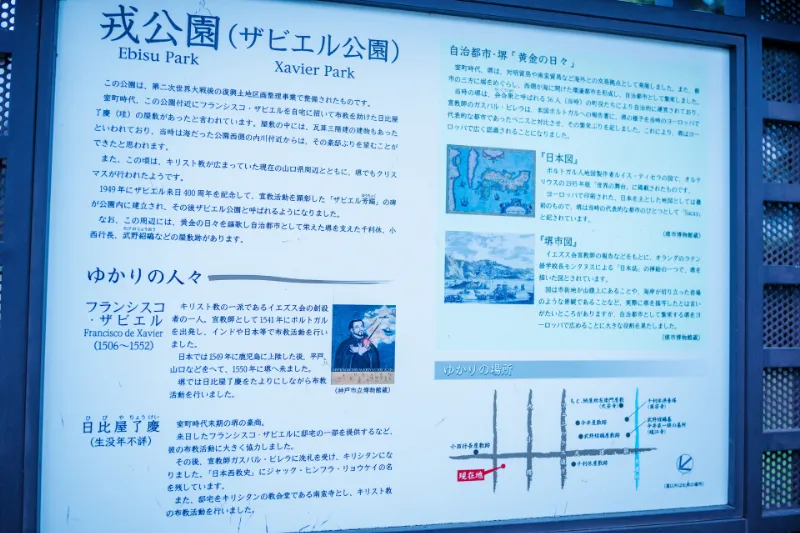

As I looked around following the guide's instructions, I noticed the difference in elevation that I hadn't noticed before. I was surprised at the difference in scenery before me, realizing that the place I had walked up to was the sea. There was no trace of the sea here.
When I picture Sakai as a prosperous port town, the streets and parks I have walked through so far seem like a slightly different place. Looking around again, it seems as though the atmosphere of life in a distant time overlaps with this place.
As I walked, imagining the surrounding area as it was when it was a sea, a large monument appeared before my eyes. At that very moment, a new story began to play through my earphones.
The trade culture that Sakai thrived also brought about major changes in society. As the guide begins to explain, it becomes clear how the introduction of firearms and new values brought by Nanban culture influenced people's lives. Learning about the other side of Sakai that was behind this glorious era will make you see the monuments in front of you in a slightly different light.
Once you've gazed upon this piece of history, head to the next spot.
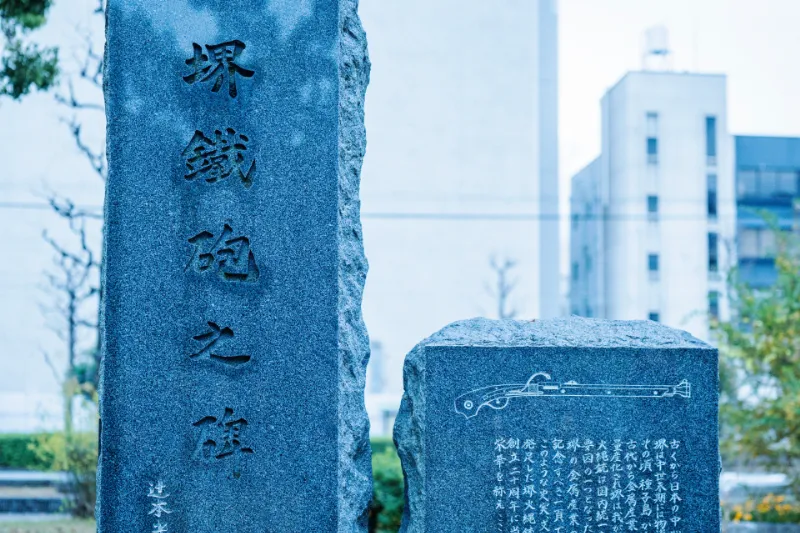
Xavier Park (Ebisu Park)
1-1 Kushiyacho Nishi, Sakai Ward, Sakai City, Osaka Prefecture
Sakai Toshiaki Forest |
"In the footsteps of Sen no Rikyu"
Here we would like to introduce a guide related to Sen no Rikyu, a tea master from Sakai.
Sakai Rikyu no Mori is a place where you can learn about Sakai's history and tea ceremony culture. It is a place that unravels the history of Sakai in an easy-to-understand way, from the upbringing of Sen no Rikyu, which unfolds alongside the history of Sakai, to the beginnings of tea ceremony culture. There are plenty of models and materials from that time on display that convey what things were like back then, so it is an easy place to deepen your understanding as a preparatory or review for a walk around the town.
As you step inside the facility, the audio guide tells you an anecdote that gives you a glimpse into Rikyu's personality.
Here is an anecdote about Rikyu. Rikyu had a friend named Nekan who had the same teacher. One day, Rikyu was invited to a tea ceremony and visited Nekan. When he looked at the ground, he saw traces of a pitfall. Moreover, he noticed smoke rising from the bath.
Rikyu realized Nekan's intention, but pretended not to notice and fell into the trap. Nekan himself said, "I've prepared a bath," with a look on his face as if to say, "Who would do something like that?"
Rikyu decided to go along with Nekan's logic that tea tastes best after taking a bath to wash away the sweat.Even if he was aware of the host's scheme, he respected his host's wishes and tried to create a good atmosphere together. This attitude embodied the spirit of the tea ceremony that he held dear.
Leaving Sakai Rikyu no Mori, you will come across the former site of Sen no Rikyu's residence. Once you pass through the gate and step into the gaping hole, the guide will begin to tell you the final story of Rikyu and Toyotomi Hideyoshi, the great ruler of Japan.
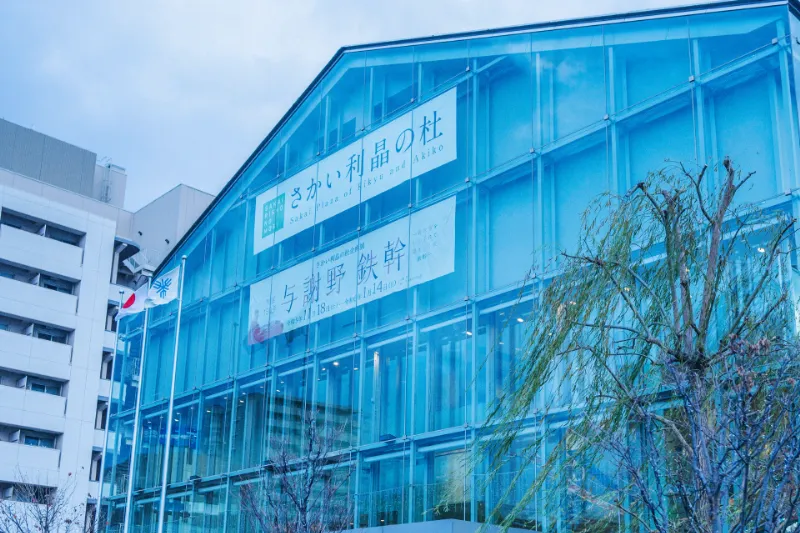
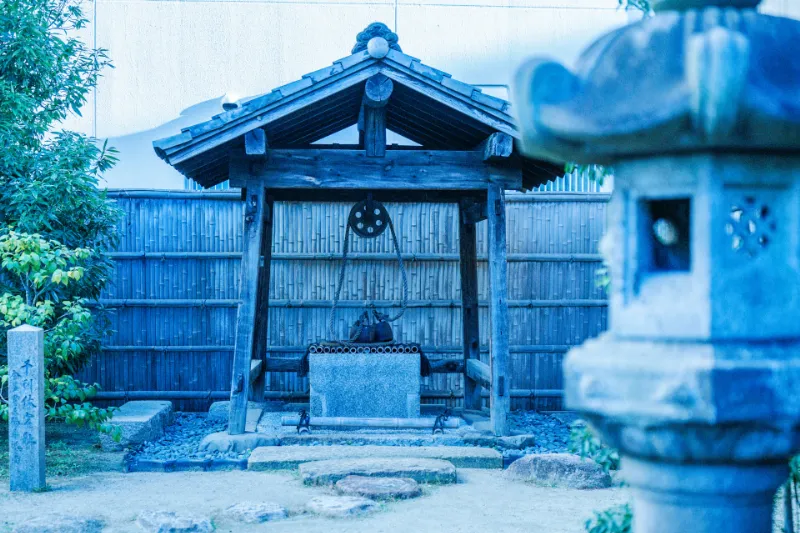
The well roof that remains at the site of the mansion also looks a little different after listening to the guide's narration.
At the two Sen no Rikyu-related facilities, local volunteers will guide you as storytellers. If you have time, we recommend listening to their stories. Their words, spoken from the perspective of people who love the area, may give you a glimpse of a different side of Sakai.
“Sakai Risho no Mori”
Osaka Prefecture Sakai City Sakai Ward Shukuincho Nishi 2-1-1
Third Tuesday (if a public holiday falls on a Tuesday, the next day will be a substitute), New Year's holiday
Adults (including university students): 300 yen High school students: 200 yen
Junior high school students and younger: Free
Approximately 10 minutes walk from the east exit of Sakai Station on the Nankai Main Line
By bus: Approximately 3 to 5 minutes
Get off at the nearest bus stop "Shukuin" and walk for about 1 minute
"The End of the Golden Days"
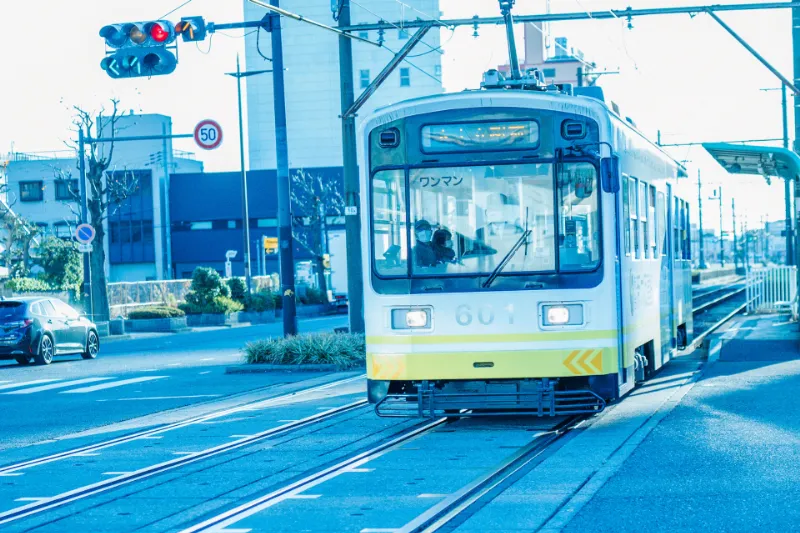
The last guide spot is Terachimachi Station. The tram that we saw several times during our walk around the city connects Sakai with Osaka city.
As I approached the platform at Terajimachi Station, I heard a quiet voice coming from my earphones.
As if concluding the story, the guide continues quietly to tell us how Sakai's prosperity came to an end. Beyond the tracks in front of us lies the cityscape of Osaka, the current central city. Sakai, a port town once open to the world, and modern-day Osaka. This single track seems to continue to quietly connect the two eras.
As I listened carefully to the guide's voice and gazed blankly at the platform in front of me, I was left with the feeling that I had spent time a little differently from my everyday life.
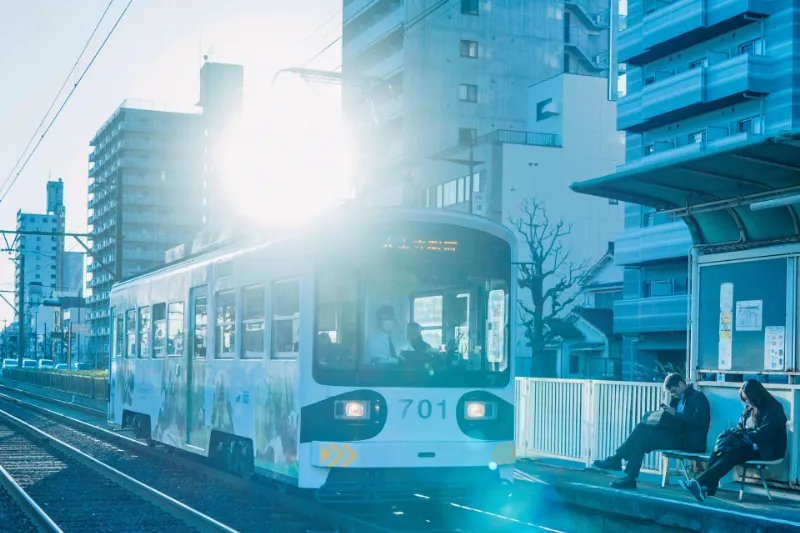
Hankai Tramway Hankai Line Terachimachi Station
1-1 Higashi Terachicho, Sakai Ward, Sakai City, Osaka Prefecture
Approximately 20 minutes walk from the east exit of Sakai Station
Conclusion
The moment you change your perspective, Sakai presents a completely different face. Here, glory and shadow seem to blend quietly together over the course of time, continuing to live on in the depths of the city's atmosphere.
As you walk along with the audio guide, dormant memories will awaken and quietly overlap with the current cityscape.
We hope you will also experience the feeling of encountering two worlds. What stories will you discover when you visit the city of Sakai?
( APP DOWNLOAD )
ON THE TRIP
Download the app
By installing the ON THE TRIP app, you can experience stories from all over Japan in each location. Listening to stories as you travel around temples, shrines, art museums, and towns will open up a whole new world to you. The future of tourism will be to explore the history and culture of each place while learning about its stories. Embark on a new journey with the app.
-
HIGASHI OSAKA
-
IKEDA
-
SAKAI