






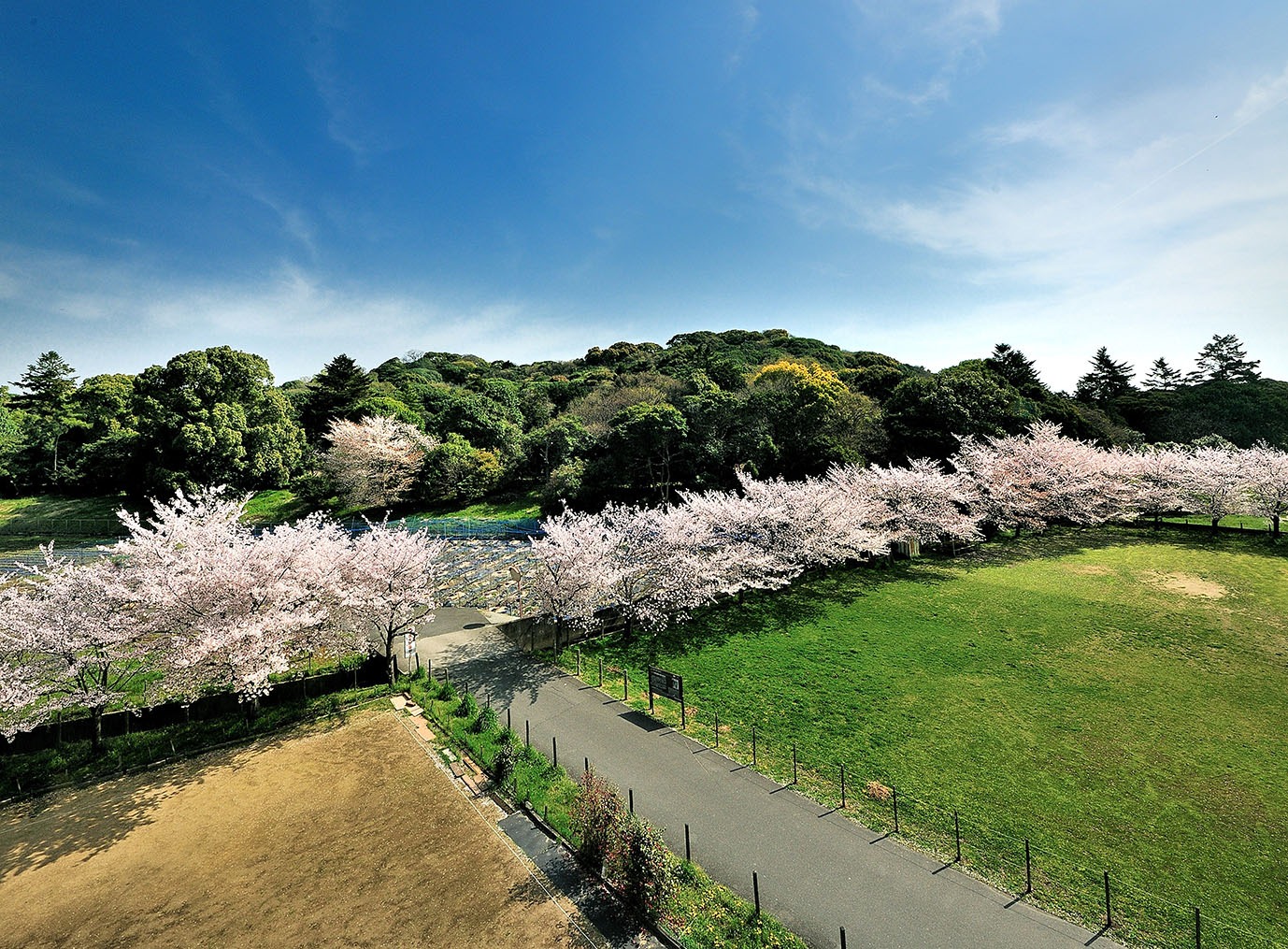
Visit ancient heritage
The Kumano Kodo is a pilgrimage route that aristocrats and commoners have used since the Heian period to visit the Kumano Sanzan (Kumano Hongu Taisha, Kumano Hayatama Taisha, and Nachi Taisha) in Wakayama. There are various routes from various regions, including the Kii Road connecting Osaka and Kumano, the Ise Road connecting Ise and Kumano in Mie Prefecture, and the Koya Road over Mount Koya, but all are rugged. The Kii Road from Kyoto took about a month round trip, covering approximately 600 km. However, as the Ryōjin Hisho states, "Which of the Kii Road and the Ise Road is closer to Kumano? Which is farther? Because they are both vast paths of compassion, the Kii Road and the Ise Road are not far away" (Ryōjin Hisho), it was certainly not all suffering, but rather an important path of salvation. The overland route of the Kii Road begins around Hachikenya Funabashi near Tenmabashi in Osaka. In the city, the ancient road, passing through Shitennoji, Abeno, and Sumiyoshi Taisha, remains with signposts, inviting travelers to explore. Let's walk this ancient road in the 21st century with our wishes in mind.
-
START
OSAKA METRO Tenmabashi Station
-
3 minutes On FootHachikenya Pier

The group, arriving by boat from Kyoto, disembarked near Tenmabashi, formerly known as Watanabetsu. They first visited Kubotsu Oji, located behind the beach, before beginning their journey toward Kumano. During the Edo period, 30-koku ships sailed through the area, bustling with people and goods. Currently, the area is undergoing redevelopment and is slated to become a new water metropolis. A monument to the former Hachikenya Boat Dock sits quietly in front of Nagata Konbu Shop, located on the road west of Keihan Tenmabashi Station. From the former Hachikenya Boat Dock, head south. After passing three parks—Kita-Oe, Naka-Oe, and Minami-Oe—you'll emerge onto Nagahori Street. Head east and you'll connect to the old road route of Kamisiosuji. From here, your destination is Shitennoji. Signposts for the old road are scattered throughout, so walk carefully. By train, return to Osaka Metro Tenmabashi Station from the former Hachikenya Boat Dock and take the Tanimachi Line to Shitennoji mae-Yuhigaoka Station. It takes about 3 minutes on foot to reach Shitennoji.
View the spotApproximately 15 minutes on footAbout 15 minutes by train -
SHITENNOJI

Shitennoji is Japan's oldest official temple, built by Prince Shotoku. Among its many gates, the "West Great Gate" offers a perfect view of the sun setting over Osaka Bay on the middle day of the equinox, attracting the faith of common people praying for the Western Pure Land. This gate is also known as the "Gokurakumon Gate." Listen carefully to the sound of the bells, clear your mind, and pray for a moment... It's about a 15-minute walk from Shitennoji to Tennoji. It's one stop from Shitennoji-Yuhigaoka Station on the Osaka Metro Tanimachi Line. Once you arrive at Tennoji's massive terminal, take a jolt on the Hankai Electric Tramway, Osaka's only streetcar.
View the spotApproximately 7 minutes from Matsumushi Station on the Hankai Electric Tramway -
Matsumushizuka

From the busy Abeno-suji thoroughfare, turn onto a narrow track that brushes against the eaves of residential houses. Get off at Matsumushi Station on the streetcar and walk about 100 meters west along the wide Kizugawa-Hirano line to find Matsumushizuka. It was on the verge of being cut down as part of Osaka City's road planning, but was preserved at the strong request of local residents. Matsumushi refers to the bell crickets, whose beautiful chirps are said to have been built by travelers who felt pity for the insects that lost their short lives. Perhaps the 800-year-old hawthorn tree standing next to the mound has also been watching over the pilgrims on their Kumano pilgrimage for many years... Returning to the station and walking down the narrow road, I came across a signpost for the "Kumano Kaido" (Kumano Kaidō) trail. Heading for Abe no Seimei Shrine.
Approximately 15 minutes on foot -
Abe no Seimei Shrine

Abe no Seimei Shrine is located along the Kumano Kaido, about 7 kilometers from Hachikenya Pier. It's said to be the birthplace of Abe no Seimei, the genius onmyoji (magician) who served six emperors during the Heian period. It's said to have been founded in 1007 (Kanko 4), two years after Seimei's death. What exactly are onmyoji? They're mysterious beings who are described as natural scientists who made astronomical observations and created calendars using the Chinese theory of the Yin-Yang and Five Elements, as well as sorcerers who predict good and bad fortune and manipulate the gods. The success of the novel and film "Onmyoji" has made this shrine popular as the birthplace of fortune-telling, but the grounds are lined with large camphor and ginkgo trees, creating a dim atmosphere even during the day. It's a little thrilling.
View the spotApproximately 2 minutes on foot -
Abeno Oji Shrine

Abe Oji Shrine is about a two-minute walk south from Abe Seimei Shrine. Said to have been founded by Emperor Nintoku, during the height of Kumano pilgrimages, it was a popular "Oji" along the Kumano Kodo trail, bustling with pilgrims. What is an Oji? It refers to a remote worship site, a sort of resting place, established along the Kii Road from Hachikenya to Kumano. Because there were so many Oji, it was called "Tsukujuku Oji." There are many large trees within the shrine grounds. I wonder if there were any soothing shade trees for travelers even back in the days when the area was known as the "ant pilgrimage to Kumano." I found myself pondering this question while sitting in the quiet grounds. From Abe Oji Shrine, head south again along the wide road that runs along the Uemachi Line tracks. If you're a good runner, you can walk. For those who enjoy transportation, a ride on the tram from Himematsu Station to Tezukayama 3-chome and Tezukayama 4-chome is a fun experience.
View the spotApproximately 10 minutes on the Hankai Electric Tramway -
Sumiyoshi Taisha Shrine

Get off at Sumiyoshi Station or Sumiyoshi-Toriimae Station on the Hankai Electric Tramway and you'll find Sumiyoshi Taisha Shrine right in front of you. Known affectionately as "Sumiyossan" and for its vermilion-painted arched bridge, this shrine is one of the most popular in the Kansai region for annual New Year's visits. In ancient times, the sea came right up to the shrine, and due to its beautiful scenery, it was also called "Suminoe" (Clear River). Even today, it attracts worshippers as a god for the protection of the nation and maritime navigation. The beautiful main hall, with its gabled roof and cypress bark roof, is known as Sumiyoshi-zukuri and is designated a National Treasure. The vast grounds are lined with more than 600 stone lanterns, donated by merchants from Osaka and Sakai in hopes of prospering their businesses, creating a spectacular sight.
View the spot - GOAL!
Additional Information
- Tasting spot
- Hirota, a famous restaurant whose catchphrase is "Always Bean Rice"
- souvenir
- The lucky cat of Sumiyoshi Taisha Shrine and Suminoe Miso from Ikeda-ya Honpo.
Related information
-
 A town with ancient tombs that can be enjoyed with all five sensesSouthern Area World Heritage Mozu–Furuichi Kofun Course
 -
 Visiting ancient heritage sitesSouthern Area World Heritage Mozu–Furuichi Kofun Course
 -
 Tour the beautifully reflected tomb of Emperor ChuaiSouthern Area World Heritage Mozu–Furuichi Kofun Course


