





Walk, laugh and have twice the fun! Stroll around the city with Naniwa Rakugo
The numerous rakugo theaters that once existed in Dotonbori and Tenma have disappeared over the years. However, the light of Kamigata rakugo remains alive! Rakugo artists continue to hone their storytelling skills and expand their circle of fans in temples, shrines, and small halls throughout Osaka City. Tenma Tenjin Hanjotei, a regular rakugo venue, is located right next to Osaka Tenmangu Shrine. Explore the famous Osaka sites featured in Kamigata rakugo to infuse your imagination, then enjoy live storytelling at a theater up close. Laughter is good for the brain, too. This is the way a true connoisseur enjoys it.
*The photo is of Tenma Tenjin Hanjotei
-
START
JR Tenma Station
-
1minute on footTenma Market and "Senryo Mikan"

First, we head to Tenma, an essential location for Kamigata rakugo. Located right next to the north gate of Osaka Tenmangu Shrine is the Tenma Tenjin Hanjotei, a rakugo venue. The light of comedy is finally being revived in the heart of Tenjin Shrine. Let's take a look at the rakugo scenes in the Tenma area. During the Edo period, Osaka (previously called Osaka before the Meiji era) was known as the kitchen of the nation. Its three major markets thrived: the Dojima rice market, the Zakoba fish market, and the Tenma vegetable market. The rakugo story "Senryo Mikan" features the Tenma Akamono Market, located directly south of Tenjin Shrine. Akamono (red goods) refers to fruit, as opposed to "aomono" (green goods) for vegetables. Apparently, fruit shops were also called "akamonoya" (red goods stores) before the war. Tenma Market, located behind JR Tenma Station, has been rebuilt and is now part of a high-rise building, but it remains bustling with local shoppers.
"Senryo Mikan" It's a hot summer. The young master of a large store falls ill. When asked why, he says, "I want to eat plump, shiny, soft mandarins!" The exasperated storekeeper runs around saying, "I'll go look for you!" but, being the hot season, he can't find any anywhere. He goes to the red goods market in Tenma as a last resort, and finds just one mandarin orange at a wholesaler. "I found one!" he says, but the store owner tells him, "One costs 1,000 ryo." So what will the storekeeper do...?5minutes on foot -
Osaka Museum of Living (Housing Museum)

Tenjinbashisuji Shopping Street, just a short walk from Osaka Tenmangu Shrine and Tenma Market, is a 2-kilometer shopping street. As you walk along the rows of shops until you reach the Tenjinbashisuji 6-chome intersection, you'll come across the building housing the Osaka Museum of Living Then and Now. Inside, the museum features unique exhibits showcasing modern Osaka from the Edo period through the Meiji, Taisho, and Showa periods. The floor, which recreates Osaka in the 1830s in a space of approximately 1,100 square meters, is like a set for a period drama! After passing through kimono shops, haberdashers, and Chinese goods stores, and narrow alleys, you'll come across a series of back alleys where familiar rakugo characters like "Donburiike no Jinbei-han," "Apprentice Sadakichi," and "Nagaya no Kiyoyan" seem like they could appear in the story... A "machiya yose" performance featuring young rakugo performers is also held (irregularly) in the pharmacy's tatami room.
Osaka Museum of Living Then and NowView the spotAdults: ¥600, High school and university students: ¥300 *Free for junior high school students and younger, people with disabilities, and city residents aged 65 and over (proof required) *Separate fees apply during special exhibitions.
JR Osaka Station & Osaka Metro Tanimachi Line
3 minutes walk from Tanimachi 9-chome Station -
Kozugu Shrine and "The Wealth of Kozu"

Take Osaka Metro Tanimachi Line from the Tenma area and get off at Tanimachi 9-chome Station. After a five-minute walk, you'll arrive at Takatsumiya Shrine, a shrine associated with Naniwa Takatsumiya, founded by Emperor Nintoku. Today, it's a quiet place of relaxation for local residents, but in the past, lotteries were held within the shrine grounds, and it was said to be a very lively event for ordinary people wishing for a little happiness. There's even a story about Takatsumiya Shrine...
"The Wealth of Takatsu"
The story is set in an inn in Okawa-cho, Osaka. There is a man who brags about being extremely rich, but in fact he only has one percent of the total fortune. At the innkeeper's request, the man uses his last minute to buy a Takatsu lottery ticket. He promises the innkeeper that he will not win anyway, saying, "If I win, I'll give you half of it," and the next day he goes to Takatsu Shrine. When he looks at the winning ticket number posted, which reads "Children's number 1,365, Children's number 1,365..." he finds out, "Whoa! A jackpot of 1,000 ryo!" Now, this is where it gets tricky...
Kozugu Shrine appears in the classic rakugo story "Takatsu no Tomi," as well as "Takakura Fox" and "Sutokuin." In an effort to become a lively cultural center where people gather like in the past, the temple grounds host the "Takatsumiyatei Kuromon Yose" every month. Other regular rakugo events include "Mogitatei," a new selection of rakugo stories by a group of professional rakugo creators, and "Kotohogi Yose" and "Rakugo Group Ichigo-kai," both of which are run by groups of working rakugo storytellers, and are very popular among rakugo fans. A monument to Master Katsura Bunshi, who passed away in 2005, has also been erected within the temple grounds.3 minutes walk from Tanimachi 9-chome Station on Osaka Metro Tanimachi Line -
Ikutama Shrine

Ikutama Shrine, commonly known as "Ikutama-san," is just a few minutes' walk from Takatsumiya Shrine. It was originally built to enshrine the land gods Ikushima-no-kami and Tarushima-no-kami when Emperor Jimmu arrived in Osaka from Kyushu. Within the shrine grounds is a monument to Yonezawa Hikohachi, the founder of Kamigata Rakugo, who is said to have performed in the area. Every September, Kamigata Rakugo performers gather together to hold the Hikohachi Festival. It's a lavish fan appreciation day, with well-known Rakugo performers setting up stalls, singing, and dancing.
View the spot4 minutes walk from Shitennoji-Yuhigaoka Station on Osaka Metro Tanimachi Line -
Isshinji Temple and Tenjinyama

From Takatsunomiya, take Osaka Metro Tanimachi Line again, get off at Shitennoji Yuhigaoka-mae and walk for 7 minutes. Isshinji Temple was founded in 1185 and is eye-catching for its innovative, artistically designed building and A-un statues. The temple has a long history as it served as the headquarters of Tokugawa Ieyasu during the Winter and Summer Sieges of Osaka. It is also known for its Amida Buddha statues and bone Buddha statues made from the remains of deceased, and is visited by many visitors. Incidentally, a skull (skeleton) also appears in the rakugo story "Tenjinyama."
"Tenjinyama" A strange man named Gensuke comes to Isshinji Temple on Tenjinyama, saying, "If the world drinks while looking at flowers, I will drink while looking at graves." He drinks in front of a young girl's grave, picks up a skull nearby, and returns home that night. That night, a beautiful girl comes to Gensuke's house and asks him to marry her. His neighbor, Hohei, hears this and heads off to Isshinji, saying he too wants a wife...12 minutes Nipponbashi Station on Osaka Metro Sennichimae Line -
Nipponbashi and "Revenge at the Inn"

The day is drawing to a close. From Isshinji Temple, I transferred from Osaka Metro Tanimachi Line to the Sennichimae Line and arrived Nipponbashi. Nowadays, Nihonbashi is close to the electronics district, Kuromon Market, and the National Bunraku Theater, and is a place where a diverse range of people pass by, but in the Edo period, it was the starting point of travel. Rows of inns line the street, and strangers would brush shoulders with each other. There's a story like this, I suppose.
"Revenge at the Inn"
A samurai staying at an inn in Nipponbashi, Osaka, requested a quiet room, but a group of three men from Hyogo arrived later, bringing in a geisha and causing a commotion. They got excited talking about sumo and sex, and one of the men, Genbei, bragged about someone else's story as if it were his own, saying, "Eight years ago in Takatsuki, I had an affair with the wife of a samurai named Koyanagi Hikokuro, and I killed her and her brother-in-law and stole their money." The samurai in the next room heard this and exclaimed, "That Koyanagi Hikokuro is me. I'm going to behead all three of you tomorrow in Nipponbashi!" "Eek!" - GOAL!
Additional Information
- Stop-in spots
- Be sure to stop by the Tenma Lullaby Monument in Minami Tenma Park.
- Tasting spot
- We recommend Biwatomo, a greengrocer and restaurant that uses traditional vegetables passed down in Naniwa.
At Ikutama Shrine, the Ikutama Summer Festival (featuring children's portable shrines, lion dances, pillow drums, and procession festivals) will be held on July 11th and 12th, and the Osaka Takigi Noh will be held on August 11th and 12th.
Related information

-
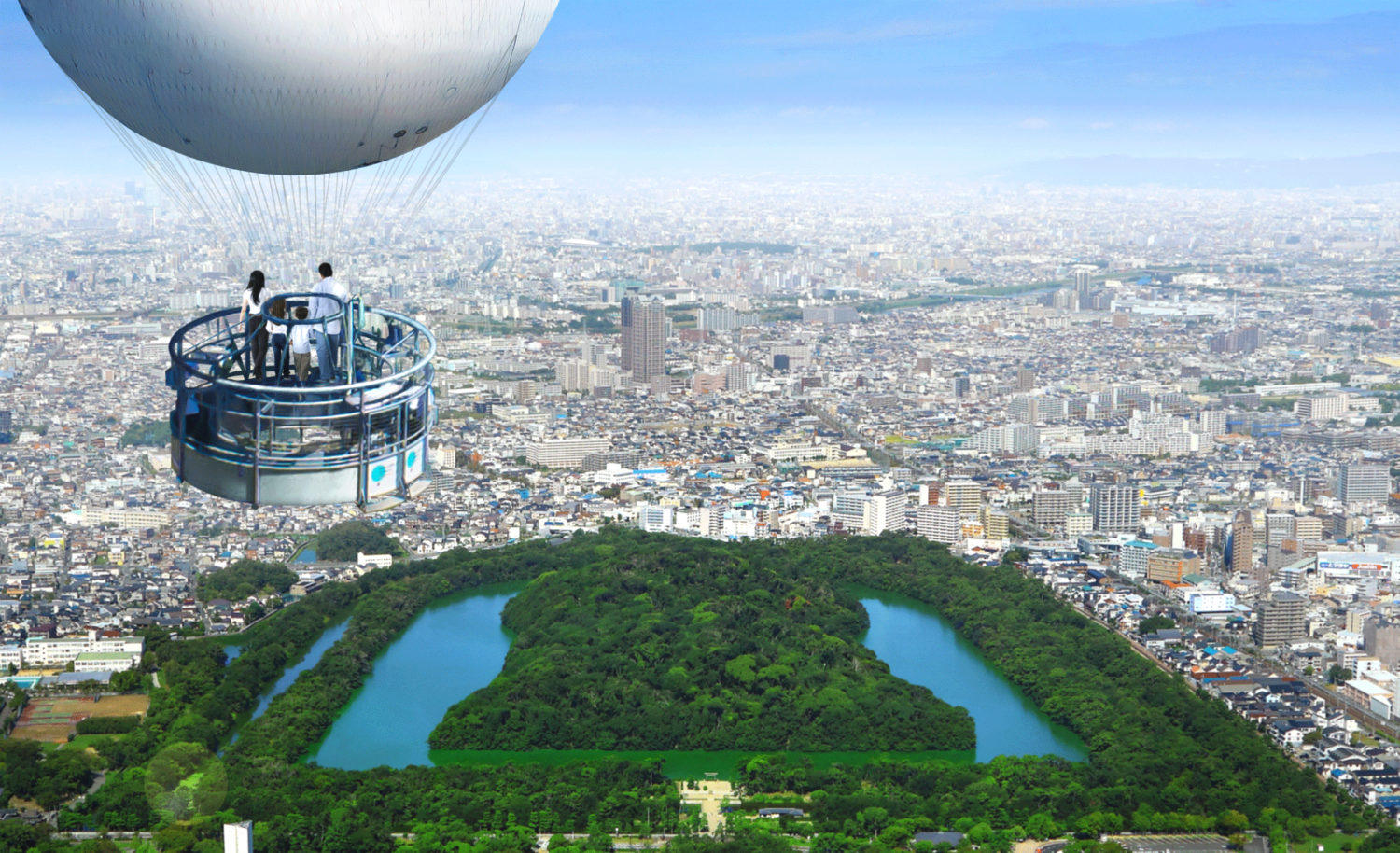
 A town with ancient tombs that can be enjoyed with all five sensesSouthern Area World Heritage Mozu–Furuichi Kofun Course
 -
 Once upon a time, Osaka was the sea! A journey back to ancient times on the Uemachi PlateauHistorical Tour
 -
 A trip to the era of "Big Osaka"Enjoy Construction / Art of the Kita area


