






Tradition and history create delicious food

Kelp Road
During the Edo period, when Kitamaebune ships were in operation, kelp harvested in Hokkaido was transported via the "Konbu Road" of the Sea of Japan, then via the Nishikigoi route from Shimonoseki to the Seto Inland Sea, bound for Osaka and Sakai, the "Kitchen of the Nation." It is said that Osaka shipping wholesaler Konbuya Ihei brought kelp back from Hokkaido on the Kitamaebune ships, trading it for specialty products like Kawachi cotton, and landed it in Sakai. Since this time, Osaka has chosen "true kelp." Its rich, umami-rich broth, distinct from Kyoto's "Rishiri kelp," underpins Osaka's "delicious!" reputation. Sakai's kelp processing industry reached its peak from the Taisho period to the beginning of the Showa period, becoming a major production center with approximately 150 kelp processors. Sakai's proximity to Osaka, a major consumer market, and the knives needed for processing, another Sakai specialty, fueled its thriving kelp processing industry. Hand-spun, extremely thin Oboro konbu is the crown jewel of Osaka's kelp culture. In addition to dashi konbu, salted konbu (tsukudani) and tororo konbu are also Osaka specialties.

Naniwa Downstream Sake
~Fine sake that goes hand in hand with the food~
During the Edo period, Osaka was known as the nation's leading sake-producing region. Known as the "Kitchen of the Nation," Osaka boasts the famous sake towns of Nada, Ikeda, and Itami. Sake is a food source, and food is a food source. Large quantities of sake were shipped to Edo from the three provinces known as Settsu, Kawachi, and Izumi, and were highly acclaimed as high-quality "kudari-zake." Osaka sake, brewed with high-quality rice from nearby areas and pure water from the surrounding mountains, is cultivated and refined by Osaka's rich food culture, resulting in a refreshing taste yet a unique, assertive depth of flavor. It's sake that enhances the flavor of food and is enhanced by the food it's served with. Akishika and Goshun (breweries named after an artist active in the late Edo period, known for being difficult to obtain even locally) Some of the names include Katano Sakura, Amano Sake, Okushika, and Kuninocho.

The taste of Osaka is the taste of dashi
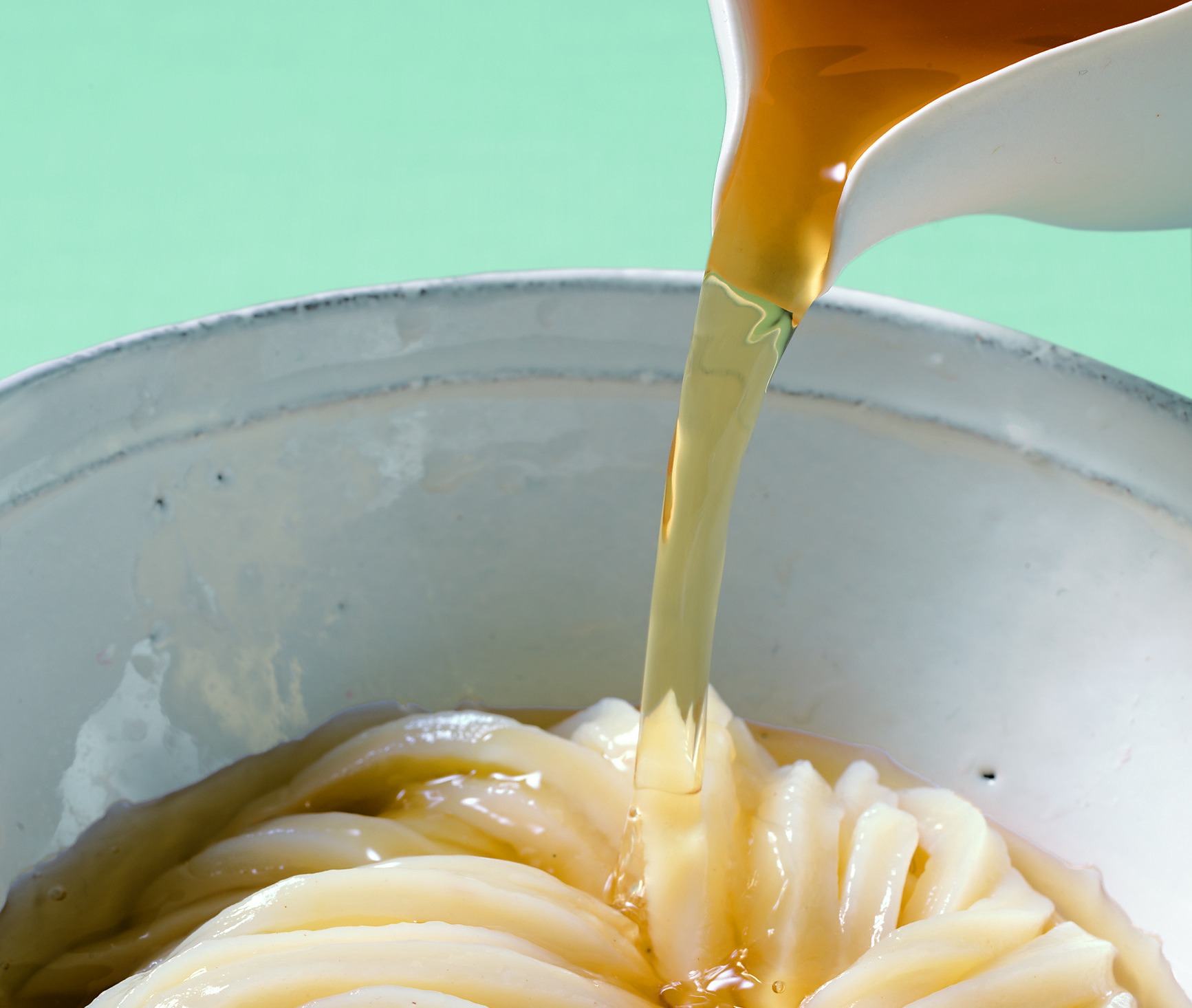
"Umami" has now become an international word. Dashi, the origin of the word, is a foundation of Japanese food culture and unique to Japan. This dashi originated in Osaka. Even today, the golden dashi remains a defining feature of Osaka’s Food Culture. Dashi is a combination of kelp and bonito flakes. It is also combined with dried baby sardines, dried shiitake mushrooms, and dried jaco shrimp to form the base of a variety of dishes. Dashi is also essential for udon, takoyaki, and okonomiyaki, famous Osaka local cuisine, known as "konamon." Dashi is used daily at home, even in simpler ways. The foundation of Osaka's flavor is a combination of kelp and bonito flakes. Kelp was transported to Osaka from its source in Hokkaido via the Kitamaebune shipping route, a shipping route on the Sea of Japan that began during the Edo period. The cargoes arriving from Hokkaido were seafood such as kelp and herring, while the cargoes arriving from Hokkaido were rice, salt, sake, and second-hand clothing. Not only did merchants make huge profits, but the exchange of cultures between the north and west of the country was also a major factor. Hokkaido kelp was perhaps the prime example of this, giving birth to dashi, the foundation of Japanese cuisine. Rishiri kelp was easily transported to Kyoto, while ma kelp from southern Hokkaido was directly shipped in large quantities to Osaka. The mellow, rich flavor of ma kelp, which is stronger than Rishiri kelp, was well-received in Osaka. When ma kelp came into contact with bonito flakes (katsuobushi), which are made from bonito landed in Kishu, Tosa, and Satsuma (present-day Wakayama, Kochi, and Kagoshima), combined dashi was born.
This is a perfectly reasonable concept, as the synergistic effect of the glutamic acid in kelp and the inosinic acid in bonito flakes creates a strong umami flavor. Top-class restaurants proudly serve the first dashi brewed using the finest ma konbu and bonito flakes as their "house flavor." The leftover dashi is also put to good use. Kelp is finely chopped and combined with bonito flakes to create a sweet and spicy furikake (topping) dish, or cooked with soy sauce and mirin to make tsukudani (simmered food). Osaka is the number one consumer of kelp in Japan. It is thanks to processing technology that northern kelp has become a specialty of Osaka. Sakai's knife-making techniques allowed it to be processed into grated yam and oboro konbu, and Wakayama's soy sauce led to the creation of shio konbu (salted kelp). A variety of kelp products, in addition to dashi, are still being made today.
Naniwa's fermentation culture
--The key to the flavor is "light soy sauce"
There are two types of soy sauce: light soy sauce and dark soy sauce, but the Kansai flavor is light soy sauce. Light soy sauce is lighter in color and saltier than dark soy sauce. However, it's not just salty; amazake (sweet sake) is added to enhance the flavor, which reduces the "soy sauce smell." This is what has led to the development of "Naniwa cuisine," which brings out the natural flavors of the ingredients and has a beautiful color. The existence of this light soy sauce has nurtured Naniwa cuisine, which is refined, delicious, and beautiful to look at.
-
 Naniwa Artisans - The Craftsman Spirit that Supports Food Culture
Sakai, located in the southern part of Osaka and a satellite city of Osaka City, has been a source of technology and culture, to the point that it is known as "Sakai, where everything begins."
-
 Seafood and mountain bounty from Naniwa terroir
Osaka Bay was once so rich in fish that it was called the "fish garden." The name "Naniwa" is written as "fish garden" and pronounced "Naniwa." This is said to be the origin of Osaka's other name, "Naniwa."
-
 Osaka Gastronomy
The rational idea of frugality permeated merchant households, and simple, lean meals became the norm. However, at the same time, restaurants used for business meetings and other occasions…